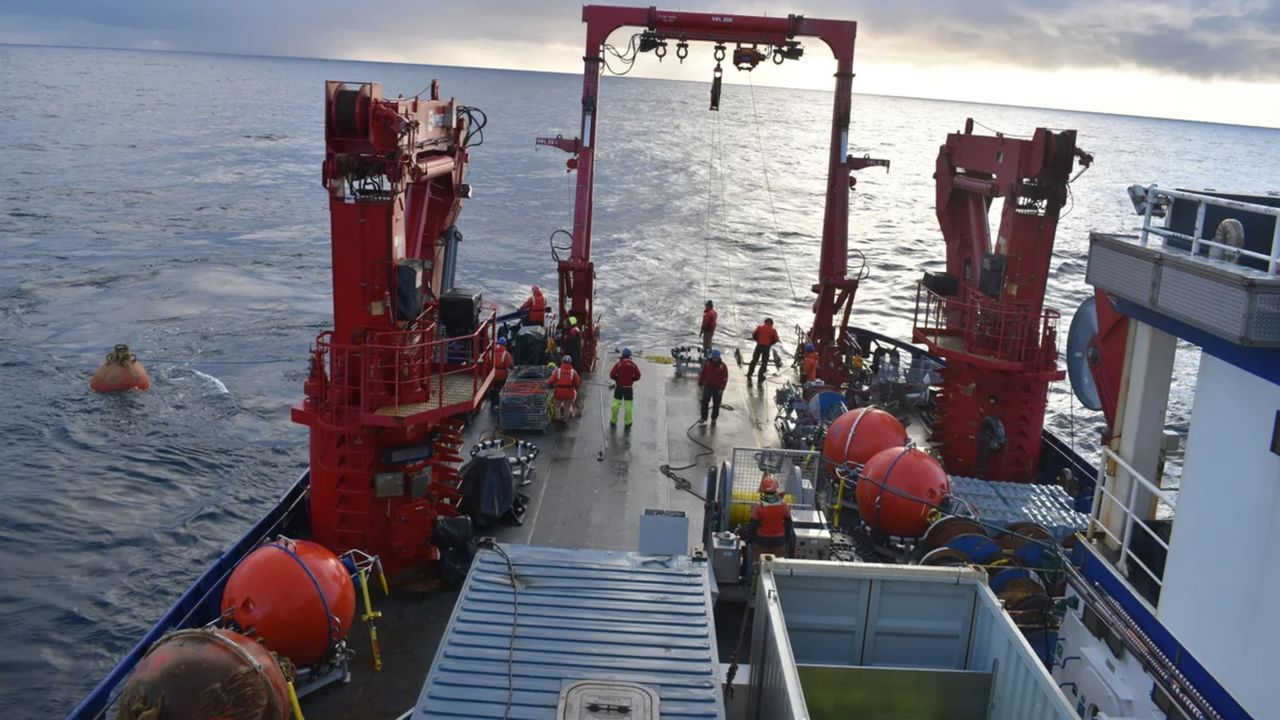
The Trump administration plans to remove approximately 900 deep-sea monitoring instruments operated by the Ocean Observatories Initiative, halting a decade-long data collection effort that tracked ocean conditions across the Atlantic and Pacific.
The Ocean Observatories Initiative, a National Science Foundation-funded program, maintains networks of sensors measuring physical, chemical, geological, and biological parameters in deep ocean environments. The array includes moorings, gliders, and seafloor equipment that continuously monitor water temperature, salinity, oxygen levels, nutrient cycling, and marine life activity.
The removal targets come as scientists increasingly focus on understanding the Atlantic Meridional Overturning Circulation, a system of ocean currents that includes the Gulf Stream. Recent research indicates this circulation has weakened to its slowest point in over a thousand years, potentially affecting global weather patterns and regional climate stability. The monitoring instruments provide critical baseline data for tracking whether this collapse accelerates.
Removing these instruments eliminates a valuable observational backbone that researchers depend on for validating climate models and understanding ocean-atmosphere interactions. The network costs approximately $380 million annually to operate and maintain, according to NSF budget documents. The administration cited budget constraints as justification for the cuts.
Ocean scientists warn that discontinuing the array creates a data gap at a pivotal moment. Real-time monitoring allows researchers to detect rapid changes in ocean circulation, nutrient upwelling, and oxygen depletion zones. Historical data from the initiative has already documented troubling trends in key regions like the Arctic and the oxygen minimum zones off the Pacific coast.
The removal decision affects multiple institutions managing different components of the network, including Woods Hole Oceanographic Institution, Scripps Institution of Oceanography, and Oregon State University. Researchers at these institutions expressed concern that losing continuous monitoring will impair their ability to forecast ocean-driven climate impacts on fisheries, coastal communities, and food security.