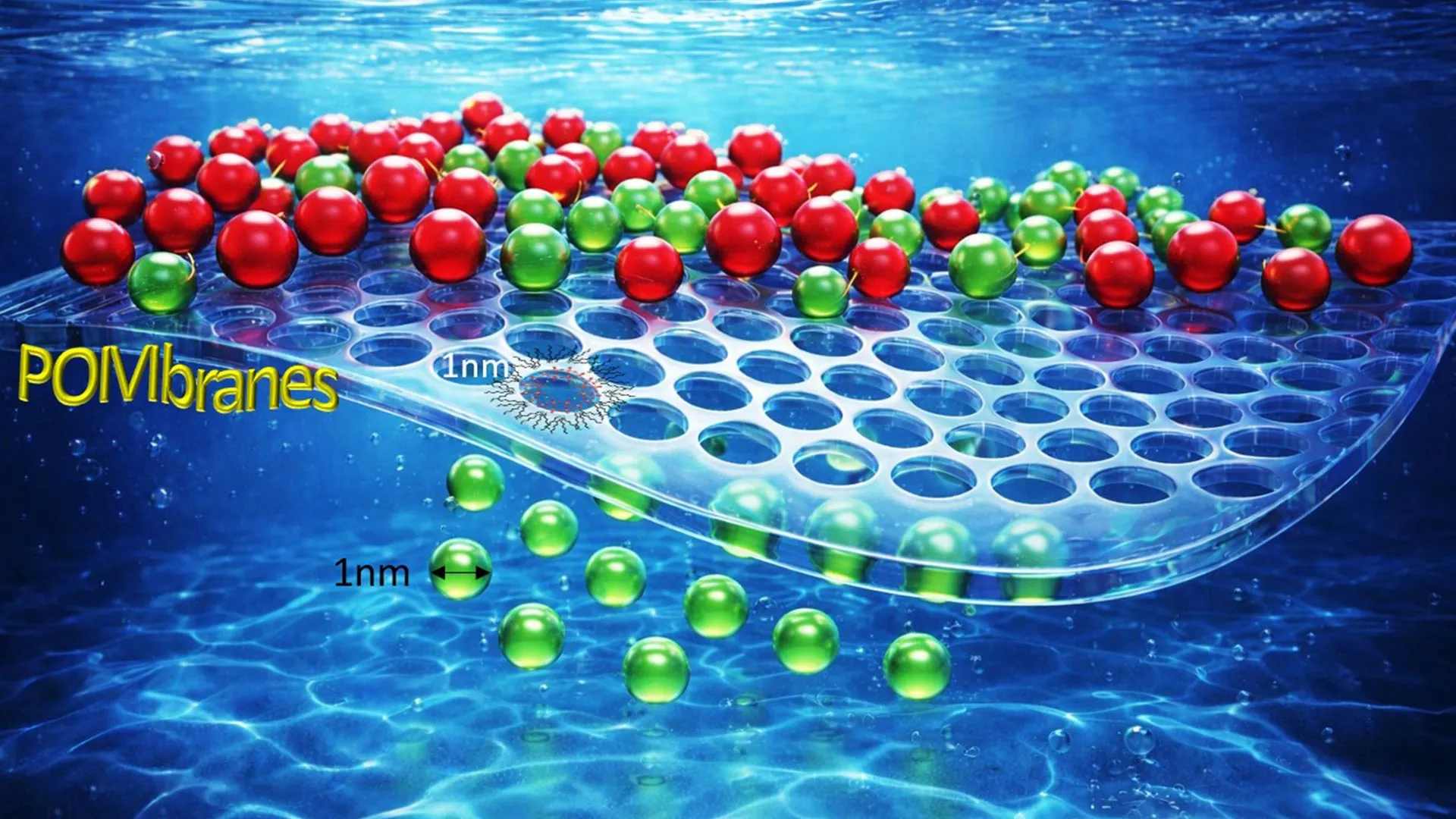
Researchers have developed a bio-inspired membrane with uniform one-nanometer pores that achieves unprecedented precision in molecular filtration. The technology mimics natural filtration systems and enables separation capabilities that exceed current industrial filters.
The membrane's perfectly uniform pores represent a departure from traditional filters, which typically contain randomly sized openings. This uniformity allows the membrane to selectively filter molecules based on precise size thresholds, similar to how biological membranes function in cells. The approach reduces energy requirements compared to conventional separation methods like reverse osmosis or ultrafiltration.
Applications span multiple industries. In pharmaceuticals, the membrane could purify compounds with greater efficiency and lower waste. Textile manufacturers could recover dyes and chemicals from wastewater, reducing both environmental impact and production costs. Water treatment facilities could reuse processed water more effectively, lowering freshwater consumption in water-scarce regions.
The one-nanometer pore size operates at a scale where molecular properties become critically important. At this dimension, the membrane can differentiate between molecules that conventional filters treat identically, enabling higher purity outputs with less material loss. This precision separation reduces the need for repeated filtration cycles, saving energy across industrial processes.
Energy consumption represents a substantial cost in water treatment and separation industries. Reverse osmosis, the current standard for many applications, requires high pressure to force water through dense membranes. The new approach achieves similar or better results with lower pressure requirements, directly translating to reduced operational expenses.
The membrane's nature-inspired design draws from aquaporins, water channel proteins that facilitate selective filtration in biological systems. Engineering artificial pores with similar uniformity and selectivity has proven technically challenging until now.
Current limitations include scalability for industrial-scale production and long-term durability testing under varied operating conditions. Manufacturing uniform one-nanometer pores consistently across large membrane sheets requires refinement. Cost analysis compared to