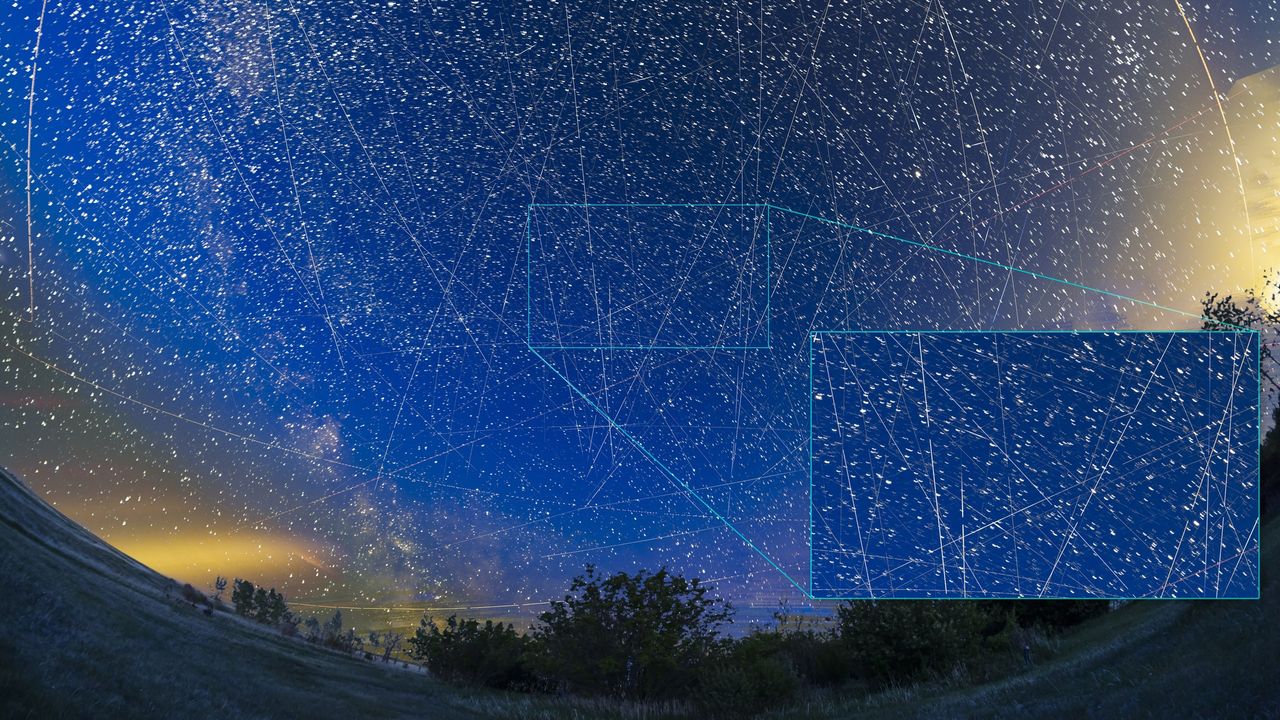
Satellites orbiting Earth increasingly degrade astronomical observations and darken night skies, frustrating researchers and stargazers alike. The proliferation of satellites, particularly mega-constellations like SpaceX's Starlink, creates bright streaks across telescope images and reduces the visibility of faint celestial objects that astronomers need to study.
The problem stems from reflective surfaces on satellites that catch sunlight even after Earth's sunset, when observatories operate. A single satellite pass can ruin long-exposure photographs meant to capture distant galaxies or supernovae. The International Astronomical Union has raised alarms about the impact on ground-based astronomy, warning that thousands of additional satellites planned for deployment could severely compromise scientific research.
Light pollution from satellites affects not just professional astronomers but also amateur observers and the general public's ability to experience a naturally dark night sky. Many regions now experience constant satellite trails visible to the naked eye, eroding the star-filled vistas that have inspired humans for millennia.
SpaceX and other satellite operators have attempted mitigations. The company tested darker satellite coatings and adjusted orbital positions, reducing brightness somewhat. However, these measures remain incomplete solutions to what experts describe as a growing crisis. The sheer number of satellites needed for global internet coverage outpaces the effectiveness of current anti-glare strategies.
Regulatory frameworks lag far behind deployment rates. The Federal Communications Commission and international space agencies lack coordinated policies to balance commercial satellite interests against scientific and cultural preservation. Some astronomers advocate for designated satellite-free zones or time windows when certain orbital regions go dormant during peak observation periods.
The conflict reflects a broader tension between technological expansion and environmental stewardship. While satellite internet serves remote populations lacking connectivity, the astronomical community emphasizes that the night sky represents both a scientific resource and a shared heritage. Researchers worry that future generations may never experience true darkness overhead, unable to witness the