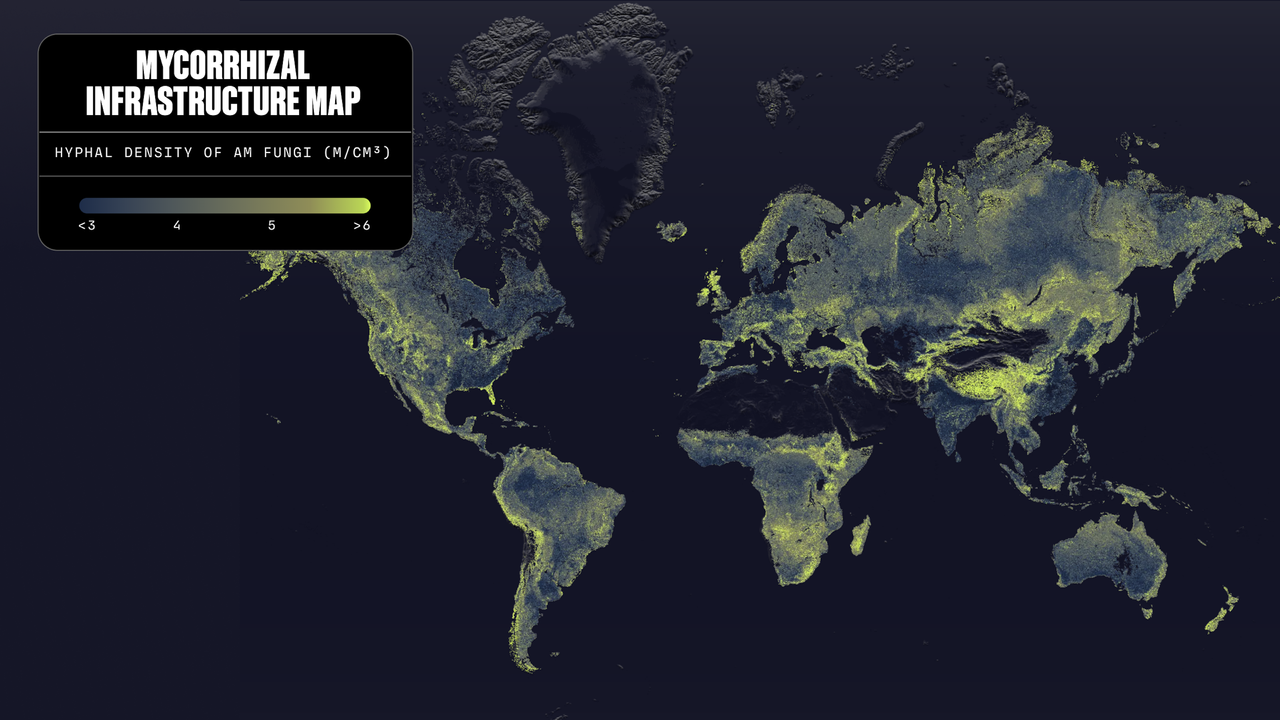
Researchers have created the first comprehensive global map of underground fungal networks, revealing a scale so vast it would stretch across 10 percent of the Milky Way if laid end to end. The work provides the most complete picture yet of mycorrhizal fungi, which form symbiotic relationships with plant roots across Earth's ecosystems.
The study compiled data from thousands of soil samples and existing research to visualize how extensively these fungal networks permeate the planet's subsurface. Mycorrhizal fungi connect plant roots to soil nutrients and water, creating what scientists call the "wood wide web." The fungus receives sugars from the plant while providing essential minerals in return.
The scale of this underground infrastructure underscores its ecological importance. These networks span continents and connect vast numbers of plant species simultaneously. They facilitate nutrient cycling, carbon storage, and plant communication across ecosystems ranging from tropical forests to temperate grasslands.
The global map represents a major advancement in understanding soil biodiversity, which remains poorly mapped compared to above-ground ecosystems. Traditional soil studies examined small plots, limiting understanding of how fungal networks function at continental and planetary scales. Researchers compiled data using molecular techniques that identify fungal species and their abundance in soil samples.
This visualization helps explain why mycorrhizal fungi decline when soil is disturbed through agriculture, logging, or urban development. Loss of these networks reduces plant resilience and ecosystem productivity. Understanding their distribution globally provides context for conservation efforts targeting soil health.
The research has limitations. Sampling remains uneven across regions, with more data from temperate zones than tropical areas or remote regions. Seasonal variations and different soil types affect fungal distribution in ways the current map only partially captures.
The findings demonstrate that protecting underground fungal networks must become a priority in land management and conservation strategies. As climate change and human activity intensify pressure on ecosystems, maintaining these subterran