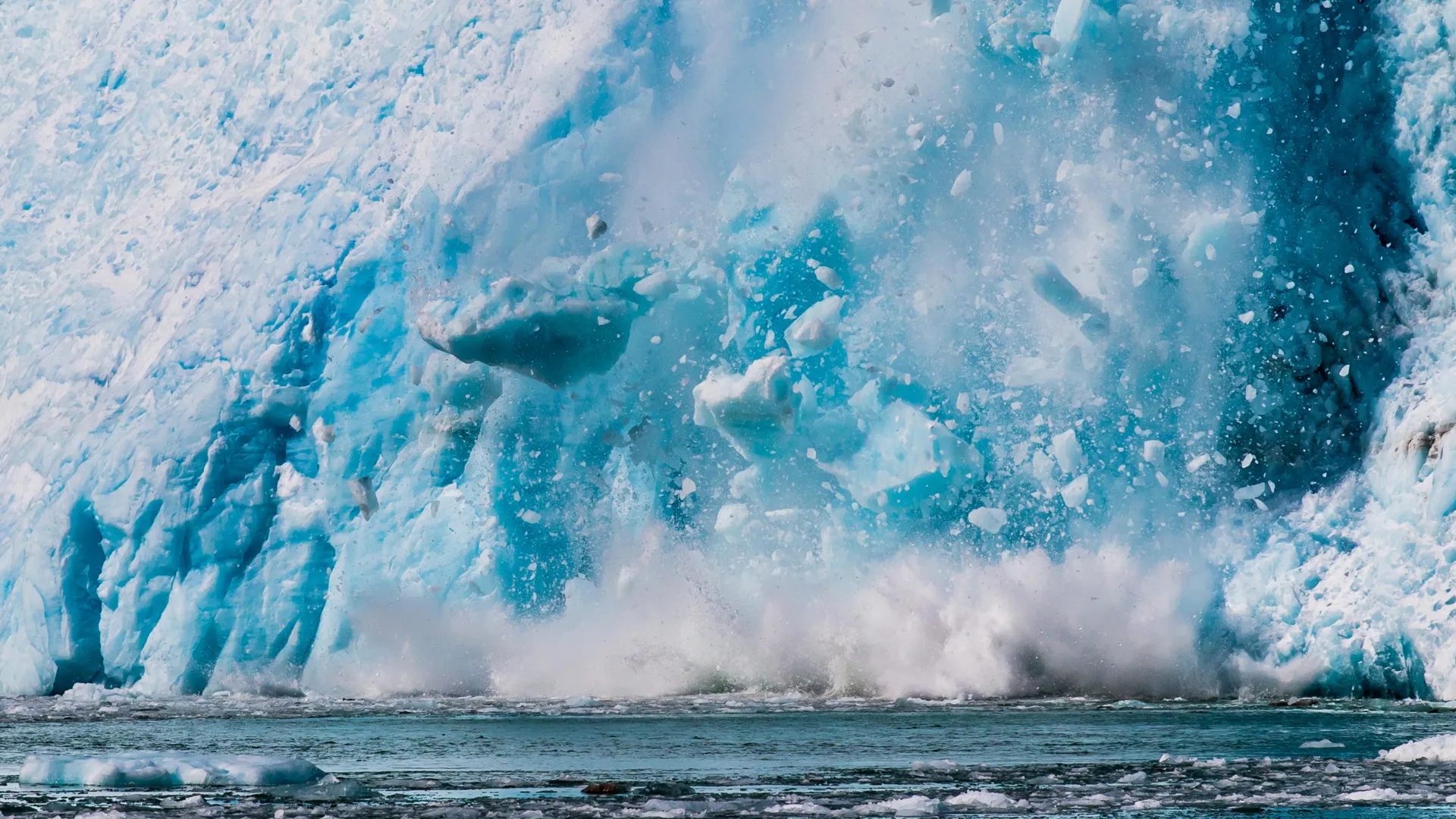
Researchers monitoring over 3,000 Alaskan glaciers have documented an acute sensitivity to warming temperatures that far exceeds previous expectations. Using radar satellite data, scientists tracked how glaciers respond to seasonal temperature shifts and discovered that each 1-degree Celsius increase in average summer temperature extends the melting season by approximately three weeks.
The findings reveal a cascading mechanism of vulnerability. Heat waves produce particularly dramatic effects, stripping away as much as 28% more protective snow cover than typical warming patterns. This premature snow loss exposes underlying ice significantly earlier than normal seasonal cycles would, accelerating total ice loss and triggering feedback loops that amplify melting.
The study's scope provides robust data on glacier behavior across Alaska's diverse glacial landscape. Rather than treating glaciers as uniform systems responding uniformly to heat, the research documents how temperature sensitivity varies across different glacier types and regions. The three-week extension of melting season per degree Celsius represents a measurable, reproducible metric for predicting future ice loss as global temperatures climb.
Alaska's glaciers hold particular importance for understanding climate change impacts in the Arctic. These ice masses contribute to sea level rise and influence regional weather patterns. The accelerated melting documented here aligns with observations from other high-latitude regions, suggesting a global pattern of glacier vulnerability to warming.
The radar satellite methodology provides advantages over traditional measurement techniques. Satellites can monitor thousands of glaciers simultaneously and detect surface changes with precision, capturing both gradual melting and sudden shifts triggered by extreme heat events. This continuous monitoring reveals that glacier response is not linear, complicating predictions about future ice loss.
The research underscores how rapidly warming Arctic systems amplify climate change effects. As protective snow cover diminishes, darker ice surfaces absorb more solar radiation, creating self-reinforcing warming cycles. The finding that heat waves can strip away 28% more snow than gradual warming indicates that