# What's the Deepest Cave in the World?
Two caves compete for the title of Earth's deepest. Both lie within the same mountain range, making the region a hotspot for vertical cave exploration.
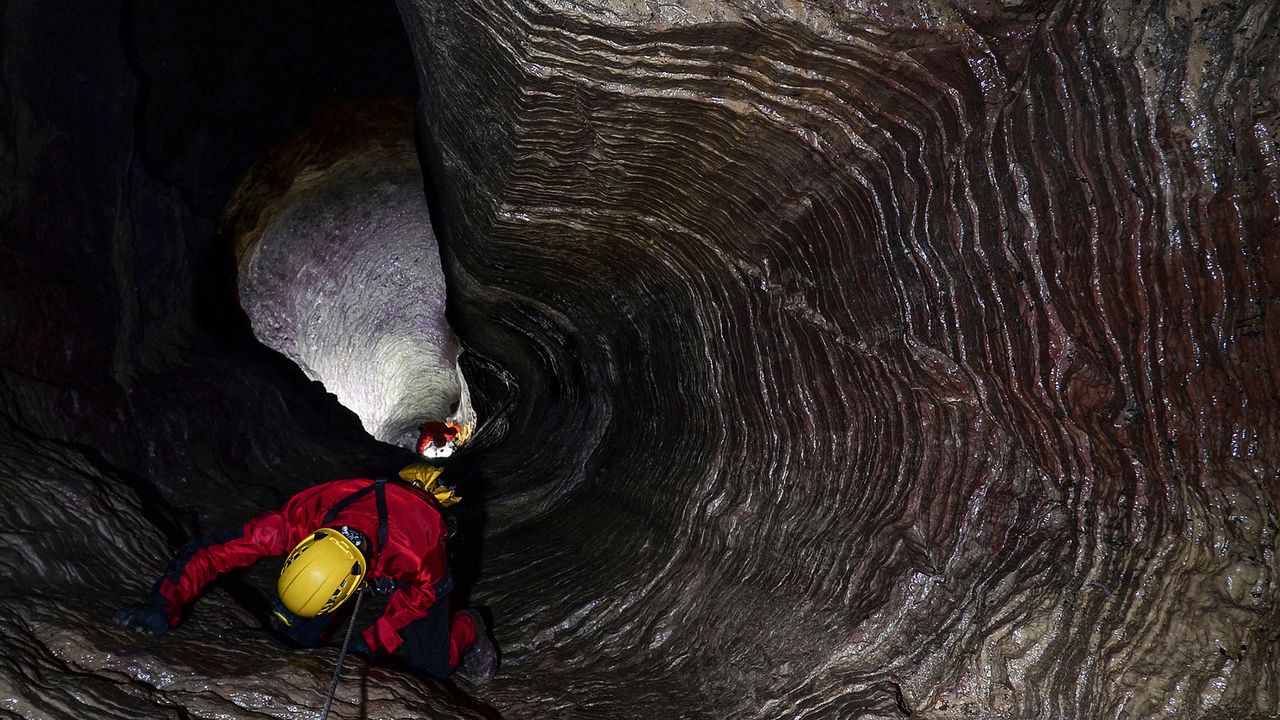
The Krubera Cave in Georgia's Western Caucasus Mountains reaches depths of approximately 2,197 meters (7,208 feet) below the surface. Explorers first began mapping this system in 1960, with subsequent expeditions progressively reaching greater depths. The deepest point, called the "Abyss," was reached in 2004 by a team of Russian and Ukrainian cavers. The cave contains underground lakes and requires specialized technical climbing through narrow passages and vertical shafts.
The other primary contender is Pozzo del Merro in Italy's Calabria region, though recent measurements place it at slightly shallower depths than Krubera. Other deep caves include Son Doong in Vietnam and Movile Cave in Romania, but neither reaches the extreme depths of the Caucasus systems.
Krubera's depth makes it extraordinarily difficult to explore. Expeditions typically involve teams of trained speleologists who descend over multiple days, establishing camps at various levels. The extreme conditions include near-freezing temperatures, complete darkness, and the constant challenge of navigating complex underground passages.
The Caucasus Mountains remain attractive to cave researchers because the limestone and dolomite geology supports massive underground systems. Tectonic activity and water erosion over millions of years carved these vertical caverns. Modern expedition teams use GPS, laser measurements, and detailed mapping to establish precise depth records.
Interest in deep-cave exploration extends beyond record-breaking. Scientists study cave ecosystems to understand underground biodiversity, groundwater systems, and geology. These expeditions also test human physiology and survival techniques relevant to extreme-environment research. The caves serve as natural