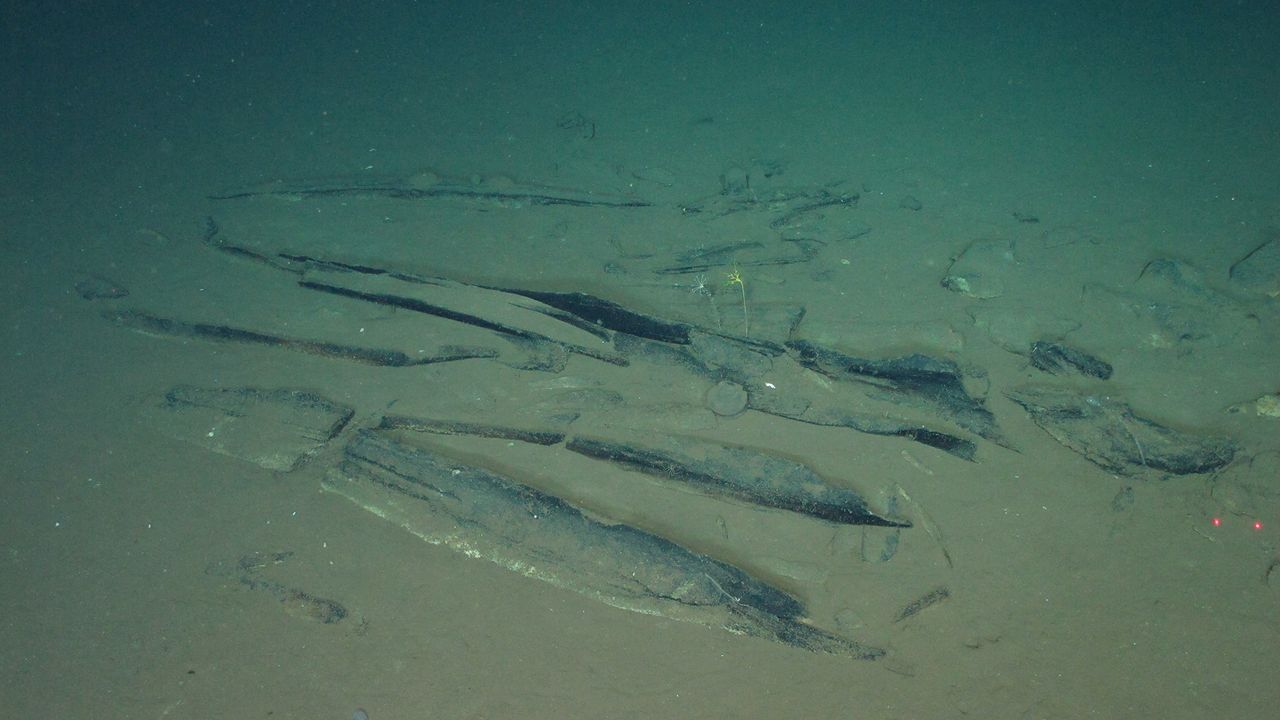
Researchers have uncovered a massive whale graveyard spanning hundreds of miles across the Indian Ocean floor, containing fossils dating back approximately 5 million years. The discovery reveals an unprecedented concentration of whale remains alongside previously unknown species of marine organisms that feed on decomposing carcasses.
The site functions as what scientists term a "megasite," representing one of the largest collections of whale fossils ever documented in a single location. Whales that died naturally sank to the ocean floor, creating resource-rich environments that sustained specialized scavenger communities adapted to exploit the nutrient-rich remains.
Researchers identified new species among the fauna colonizing these whale corpses, expanding understanding of how deep-sea ecosystems function around organic matter fallout events. These organisms, collectively part of what ecologists call "whale falls," demonstrate sophisticated ecological relationships that have persisted for millions of years.
The discovery provides paleontological evidence of historical whale population dynamics and migration patterns. The concentration of remains suggests either periodic mass mortality events or consistent migration routes where whales regularly perished, accumulating on the seafloor over extended periods.
The megasite offers researchers a window into Miocene-era marine ecosystems and the evolutionary adaptations that allow organisms to thrive in extreme deep-sea environments. Specialized bacteria and invertebrates that colonize whale carcasses today likely descended from ancient lineages that exploited similar resources millions of years ago.
The findings contribute to broader discussions about marine conservation and ecosystem resilience. Understanding how historical whale populations structured ocean food webs informs current efforts to protect and restore whale numbers following industrial whaling's decimation of global populations.
The research underscores the importance of comprehensive ocean floor surveys. Most deep-sea environments remain poorly explored, and discoveries like this whale graveyard suggest other major paleontological and ecological sites await documentation in unexplored regions.