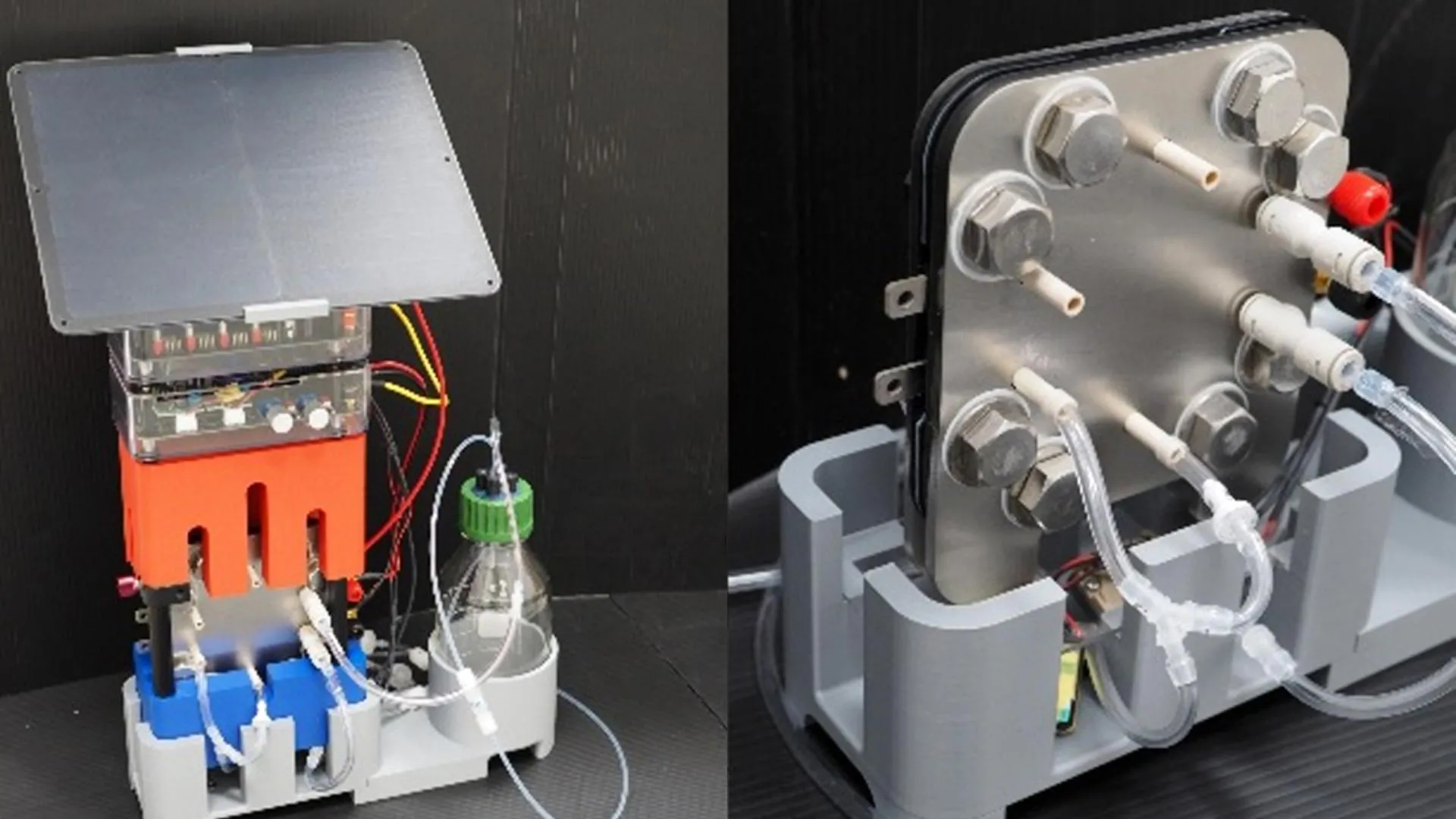
Researchers have created a battery-free artificial photosynthesis device that converts sunlight directly into fuel without external power management systems. The breakthrough centers on a self-regulating electrolyzer that automatically adjusts its electrical properties in response to temperature changes caused by varying sunlight intensity.
Most artificial photosynthesis systems require batteries or external circuits to maintain stable operation as solar input fluctuates throughout the day. This new design eliminates that requirement by engineering the electrolyzer to function as a self-tuning system. As sunlight heats the device, the electrolyzer's resistance changes in ways that stabilize fuel production output, keeping the system running efficiently regardless of cloud cover or time of day.
The self-regulation mechanism reduces operational complexity and manufacturing costs compared to battery-integrated designs. By removing the need for electronic control systems and energy storage components, the device becomes simpler to manufacture and maintain while maintaining consistent performance.
Artificial photosynthesis represents a direct approach to renewable energy. Rather than converting sunlight into electricity first, then using that electricity for chemical conversions, these systems mimic natural photosynthesis to split water or capture carbon dioxide and produce storable fuels like hydrogen or hydrocarbons. This direct path offers theoretical efficiency advantages and sidesteps some losses inherent in multi-step conversion processes.
The research addresses a persistent engineering challenge in solar fuel generation. Previous systems struggled with maintaining steady production as weather conditions changed, requiring either constant electronic monitoring or battery backup power. This self-regulating electrolyzer approach provides passive stability through materials engineering rather than active control.
The innovation could accelerate deployment of distributed fuel production systems, particularly in remote areas lacking reliable electrical grids. Simpler designs reduce installation barriers and operational costs. However, researchers would need to demonstrate long-term durability and compare overall energy output to competing approaches like conventional photovoltaic systems paired with electrolyzers.