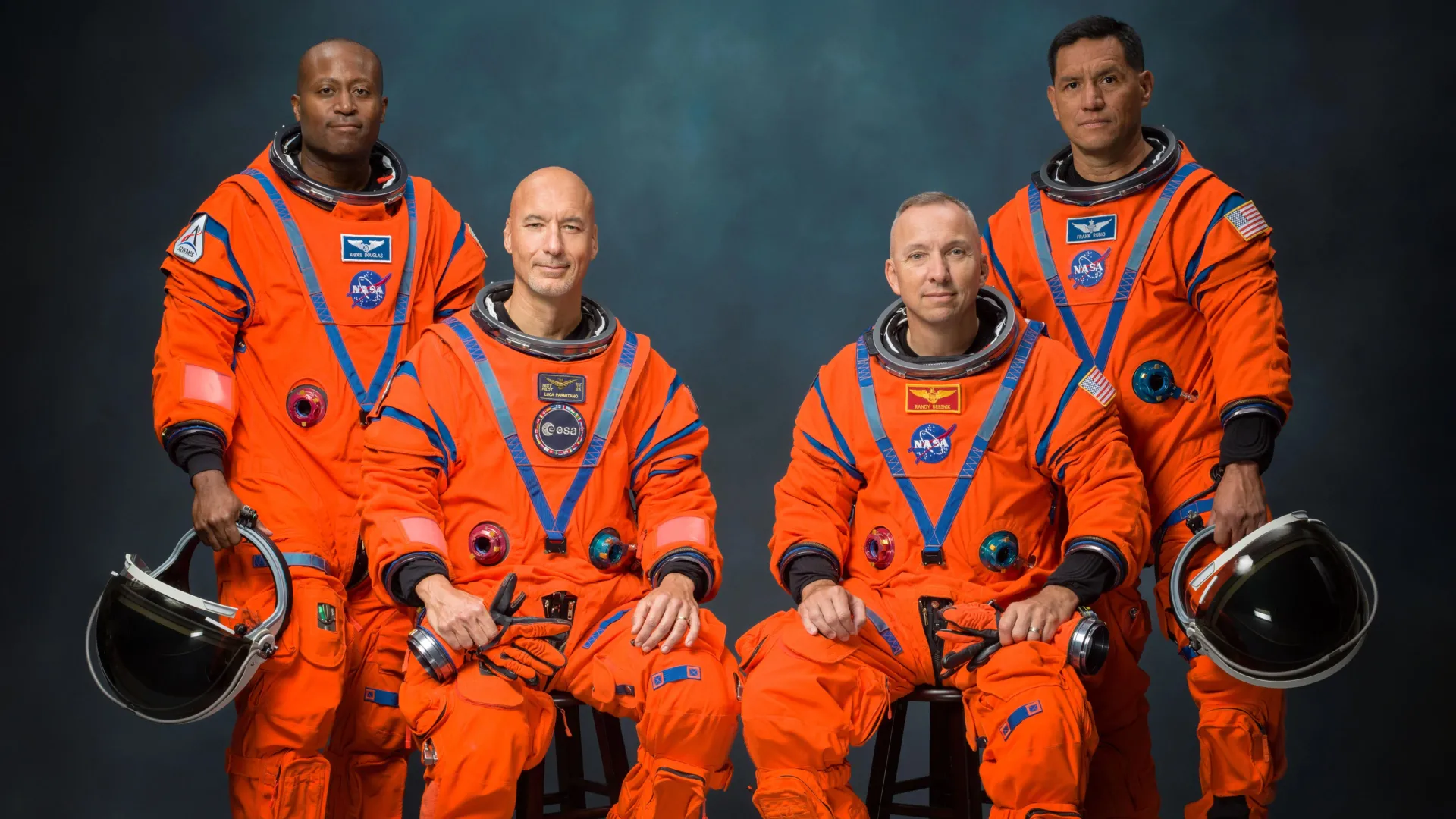
NASA selected the Artemis III crew for a 2027 lunar mission that represents one of the most technically demanding spaceflight operations ever attempted. The crew will launch aboard the Orion spacecraft and perform unprecedented docking maneuvers with lunar landers developed by both Blue Origin and SpaceX, a requirement that demands flawless execution in the harsh environment of space.
The mission architecture involves multiple heavy-lift rocket launches coordinated in sequence, with Orion meeting commercial lunar landers in orbit before descent to the Moon's surface. This approach tests NASA's ability to orchestrate complex operations involving multiple spacecraft and contractors simultaneously, a capability essential for future deep-space exploration.
Artemis III builds directly on Artemis II, which validated Orion's systems during a crewed test flight around the Moon. The 2027 timeline pushes the program forward to actual lunar surface operations while maintaining rigorous safety protocols. The involvement of both Blue Origin's Blue Moon lander and SpaceX's Starship represents NASA's strategy of leveraging commercial partnerships to reduce costs and accelerate development.
The docking operations present particular challenges. Orion and the lunar landers must rendezvous at specific altitudes and velocities in lunar orbit, where communication delays and environmental conditions create operational constraints. Astronauts must verify proper connections before committing to surface operations, with limited margin for error.
Successfully executing Artemis III establishes the operational foundation for sustainable lunar exploration. NASA intends to establish a long-term presence on the Moon, including research stations and resource utilization infrastructure. This sustained presence directly supports the agency's stated objective of crewed Mars missions in the 2030s and 2040s.
The mission also validates NASA's human spaceflight architecture for the post-Apollo era, demonstrating that complex multi-vehicle operations can function reliably. Each successful docking, each asc