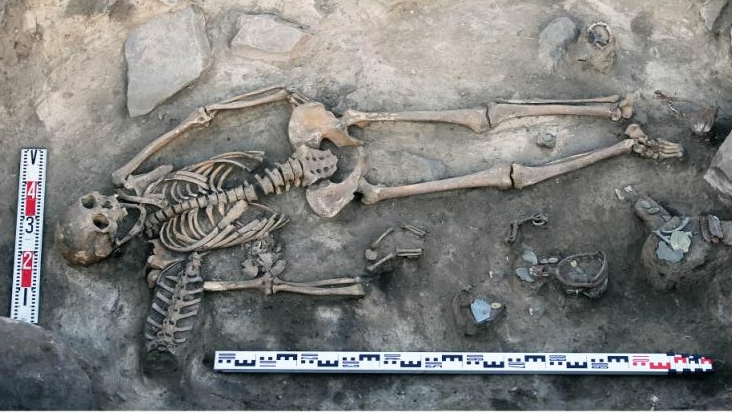
Archaeologists in southern Russia uncovered a rare medieval burial containing the remains of an adult woman, a newborn child, and a complete horse skin in a 10th-century grave. The discovery provides unusual insight into burial practices and social status in early medieval Siberia.
The excavation revealed the woman and infant interred together with the horse skin, a burial arrangement that archaeologists say reflects high social standing. Complete animal skins in graves remain uncommon finds, particularly when paired with human remains of apparent importance. The preservation of the horse skin offers researchers direct material evidence of animal-human relationships during the period.
The 10th century marked a transitional era in southern Siberia, when nomadic and sedentary populations coexisted across the region. Burial goods and arrangement provide clues about wealth, kinship, and ritual practices. The presence of the newborn alongside the woman, likely the mother, and the inclusion of the horse skin suggest family ties and possibly shamanic or spiritual beliefs connected to the afterlife.
The horse skin's complete preservation indicates careful preparation and placement, not accidental inclusion. This deliberate treatment suggests the animal held ceremonial or practical significance for the deceased. Siberian cultures historically valued horses both as essential transportation and as status symbols, making their inclusion in elite burials a meaningful act.
The site requires further analysis to determine exact burial dates, assess bone chemistry, and understand cultural context. Researchers will examine isotopic evidence to reconstruct diet and mobility patterns. The newborn's remains offer potential data on maternal health and child mortality rates in the period.
Such burials remain rare in the archaeological record, making this discovery valuable for understanding medieval Siberian society. The combination of human and animal remains in a single grave expands knowledge of how communities honored their dead and conceptualized the transition to the afterlife.