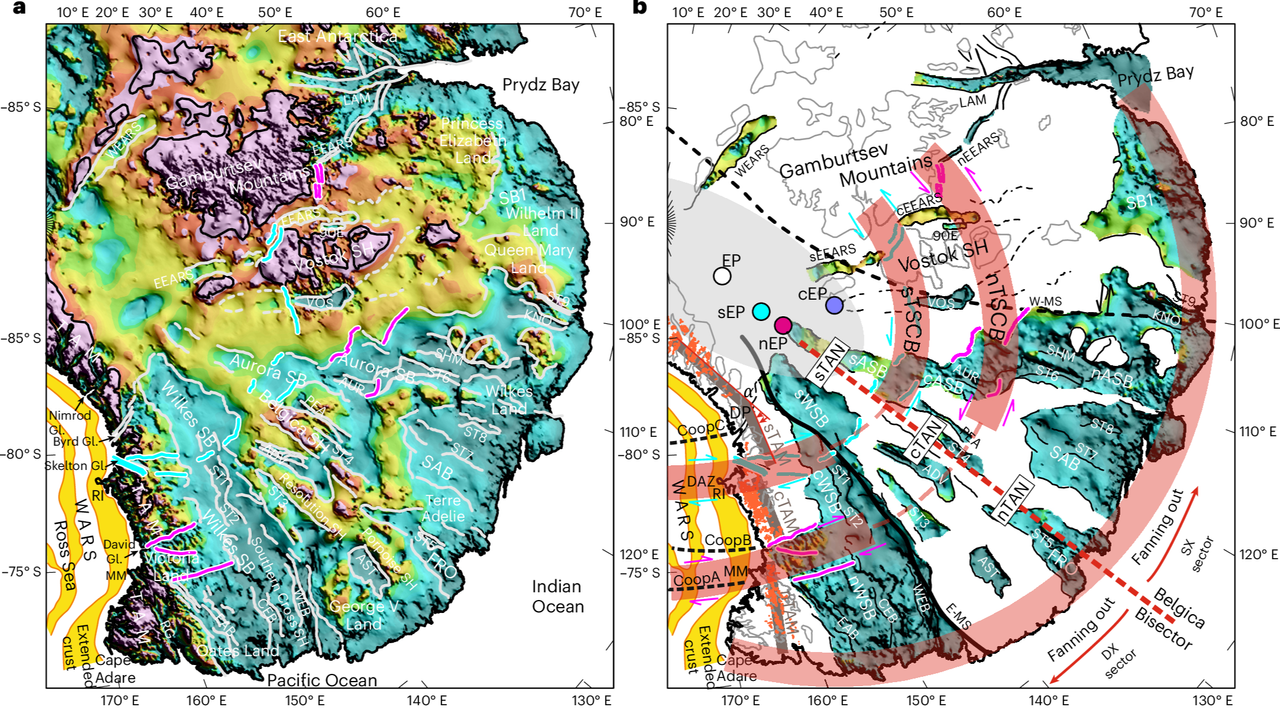
Researchers using airborne geophysical surveys have discovered a massive, fan-shaped geological structure hidden beneath the East Antarctic Ice Sheet. The formation, which resembles a human hand with splayed fingers, extends across a significant portion of the continental bedrock and represents a previously unknown feature of Antarctica's subsurface geology.
The structure emerged from analysis of data collected by aircraft equipped with radar and gravity sensors that penetrate through kilometers of ice to map the terrain below. Scientists describe the configuration as a series of radiating channels or ridges that fan outward from a central point, creating the distinctive hand-like appearance. The exact composition and age of the formation remain under investigation, though researchers believe it represents either erosional features carved by ancient water flow or structural patterns formed through geological processes operating beneath the ice sheet.
The discovery carries implications for understanding Antarctica's geological history and current ice sheet dynamics. Subsurface features can influence how ice moves and where meltwater collects, factors relevant to predicting ice sheet stability and sea-level rise. The presence of unexpected geological structures also suggests that large portions of Antarctica's bedrock remain poorly mapped despite decades of research.
This finding adds to growing evidence that Antarctica continues to reveal previously unknown features. Recent surveys have identified other anomalies beneath the ice, from subglacial lakes to previously unmapped mountain ranges. The continent's extreme conditions and vast ice coverage mean many geological details remain hidden from direct observation.
The research highlights the value of combining multiple geophysical techniques to build comprehensive maps of Earth's surface. As climate change accelerates ice sheet research and technology improves, scientists expect to uncover additional subsurface features that reshape understanding of the frozen continent's structure and history. The hand-shaped structure now joins Antarctica's catalog of remarkable geological discoveries, reminding researchers that major features can remain undetected until advanced remote sensing tools become available.