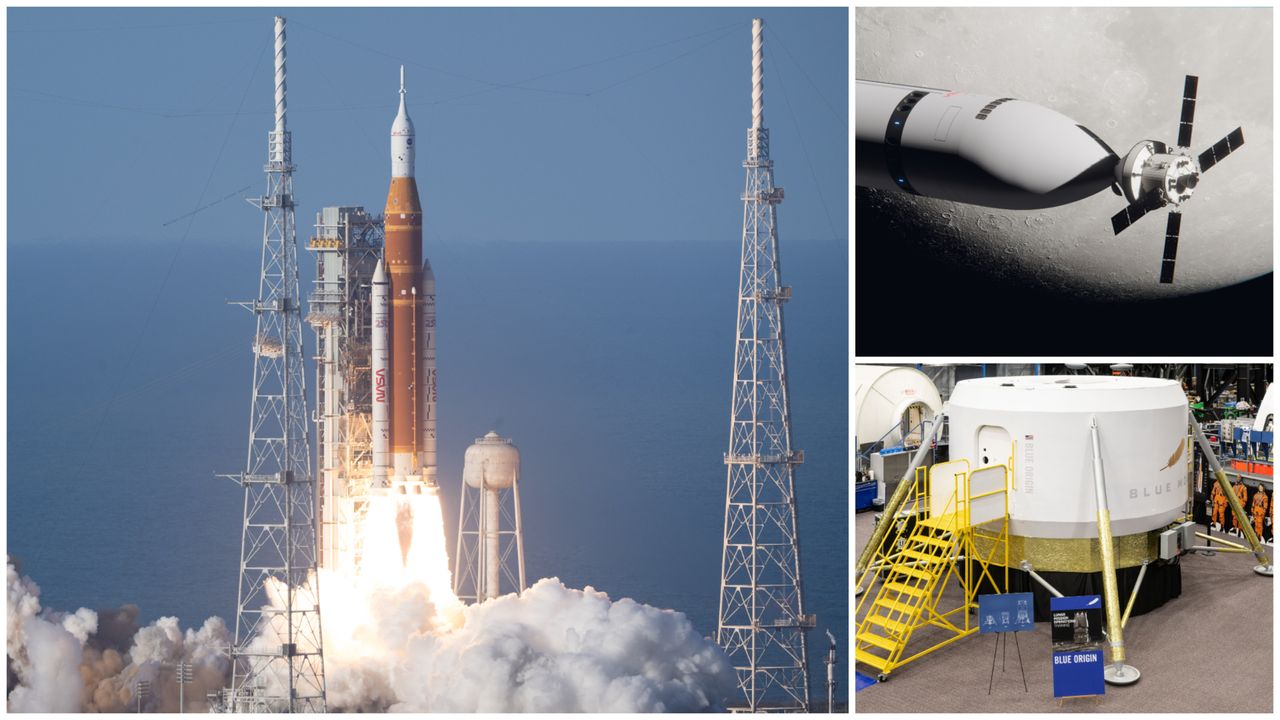
NASA plans to execute its Artemis 3 lunar mission in 2027 using a complex architecture that involves three separate Space Launch System rocket launches coordinated with two commercial moon landers still under development, according to reporting from Space.com.
The mission requires an unprecedented level of coordination. NASA will launch its massive SLS rocket three times to assemble the necessary components in orbit before sending astronauts to the lunar surface. This approach differs from traditional single-launch missions and adds operational complexity at every stage.
The two private moon landers represent another layer of uncertainty. Neither vehicle has completed construction, and both must prove their capabilities before the 2027 target date. NASA selected these commercial partners through its Human Landing System program to reduce costs and leverage private sector innovation. However, relying on two unproven vehicles in parallel introduces schedule risk. If either lander encounters development delays, the entire mission timeline faces pressure.
The three-launch strategy itself presents engineering challenges. Each SLS flight costs approximately $2 billion, and coordinating three launches with precision orbital mechanics requires flawless execution from NASA's ground teams and contractors. Any launch delay cascades through the schedule, potentially pushing back the lunar landing.
Artemis 3 represents NASA's return to human lunar exploration after a 50-year gap since Apollo 17. Success requires not only developing new hardware but also validating complex operational procedures involving multiple government and commercial partners. The mission will test whether modern space agencies can execute sophisticated multi-launch architectures with the precision that deep space exploration demands.
The 2027 timeline remains aggressive given the current development status of the landers. Industry observers note that similar programs have faced delays, though NASA and its contractors maintain confidence in the schedule. The mission's success will influence how NASA approaches future deep space exploration, including eventual Mars missions that will require comparable coordination between multiple launch vehicles and spacecraft.