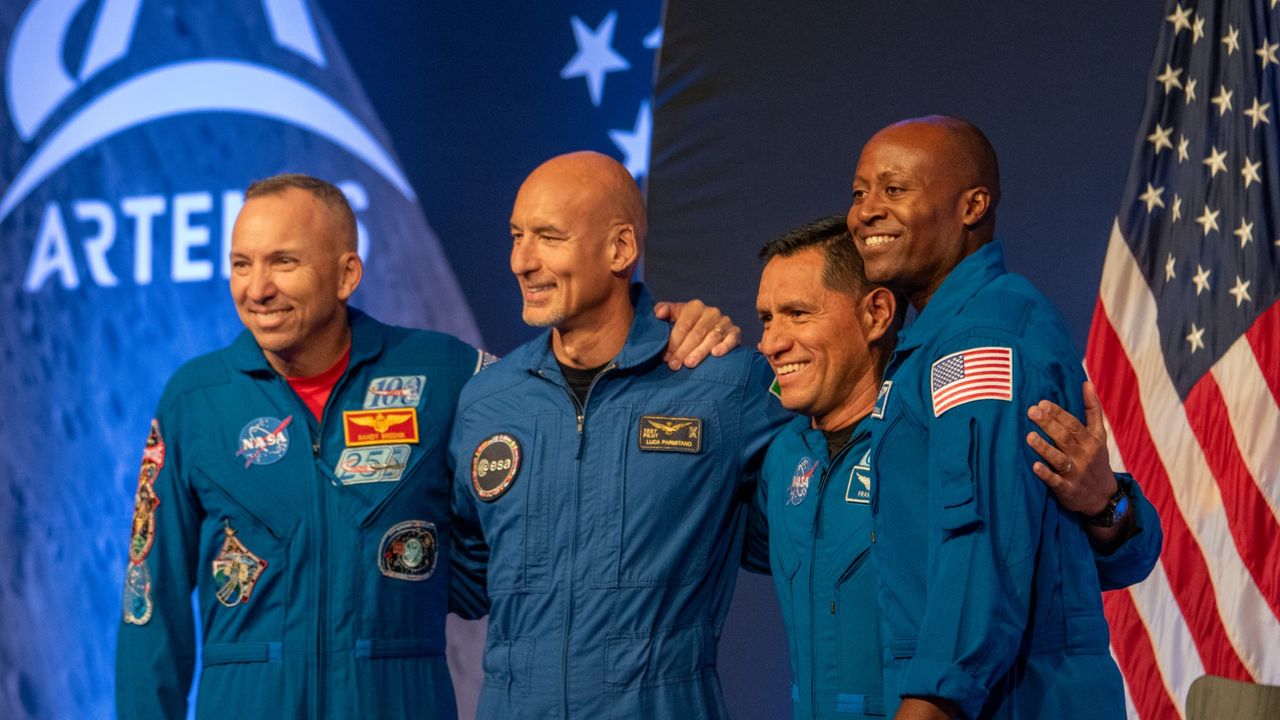
NASA announced the four astronauts selected for the Artemis 3 mission, scheduled to launch in 2025 as a critical step toward returning humans to the lunar surface. The crew will conduct docking procedures in Earth orbit, validating techniques essential for the agency's broader goal of establishing sustainable lunar presence by 2028.
The Artemis 3 mission represents a pivotal phase in NASA's lunar exploration program. Rather than traveling directly to the moon, the crew will perform rendezvous and docking operations with other spacecraft in Earth orbit, demonstrating the complex maneuvers required for future missions. These procedures test both vehicle systems and crew proficiency in operations that will later support lunar landing missions.
The 2028 moon landing target depends on the successful execution of Artemis 3. NASA plans to use the Space Launch System (SLS) heavy-lift rocket and the Orion spacecraft for this mission, building on technology being validated through earlier Artemis flights. Artemis 1, an uncrewed test flight, launched in 2022. Artemis 2, carrying a crew of four to the moon and back without landing, is scheduled for 2025.
By selecting the Artemis 3 crew now, NASA provides these astronauts time to train extensively for their specialized roles. Each crew member brings distinct expertise to orbital operations, with selection criteria emphasizing experience in spacecraft systems, rendezvous procedures, and extravehicular activity.
The orbital testing phase serves a practical function beyond the dramatic eventual moon landing. Docking procedures must function flawlessly, as failures in orbit present risks that could be catastrophic on lunar missions. The crew's performance in Earth orbit will inform engineering decisions and operational protocols for subsequent phases.
NASA's timeline remains ambitious. The agency faces technical challenges, budget considerations, and schedule pressures. However, the Artemis