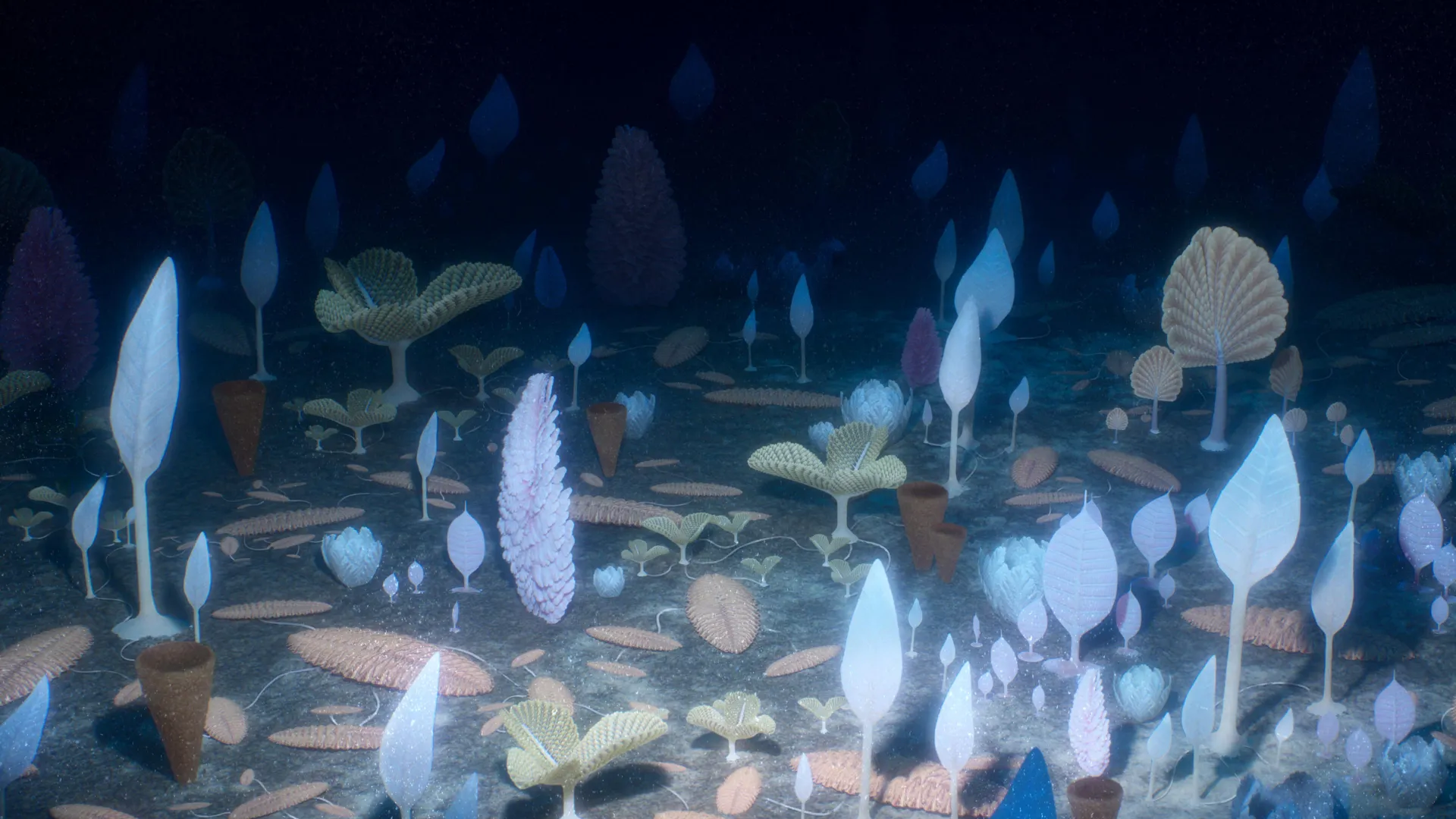
Researchers have identified a surprising evolutionary bottleneck in Earth's earliest animal history. Asexual reproduction in primitive organisms created stagnant communities with minimal selective pressure, slowing evolutionary change for millions of years. The shift toward sexual reproduction fundamentally altered this trajectory by introducing genetic diversity and heightening competition for resources.
Sexual reproduction generates offspring with unique genetic combinations, forcing populations into competitive hierarchies. This competition drives natural selection far more aggressively than asexual reproduction, which produces clones with identical traits. The earliest animals, reproducing asexually, occupied ecological niches with little pressure to innovate or diversify.
The transition to sex coincided with a dramatic acceleration in biodiversity. Environmental stressors likely triggered this reproductive shift, pushing populations toward strategies that produced genetic variation. Once sexual reproduction took hold, speciation rates spiked. Evolution moved from a crawl to a sprint, generating the animal diversity visible in the fossil record shortly after this transition.
This discovery reframes understanding of early animal evolution. For billions of years after life emerged, evolution proceeded slowly. Then, within a compressed timeframe, animals exploded into countless forms. The mechanism was not a sudden appearance of new environmental niches or resources, but rather a change in how organisms reproduced.
The research underscores how reproductive strategy shapes evolutionary potential. Asexual organisms can thrive in stable conditions but struggle when environments shift. Sexual organisms pay the cost of finding mates and producing fewer offspring per generation, but gain adaptability. This trade-off became decisive when Earth's early oceans began changing.
This finding challenges assumptions about evolution's consistency. The rate of evolutionary change is not uniform across time. Instead, shifts in fundamental biological processes, like reproduction, can trigger wholesale changes in how life diversifies and adapts. Understanding this mechanism helps explain why early Earth saw such dramatic transitions in animal form and function, and why the Cambrian explosion