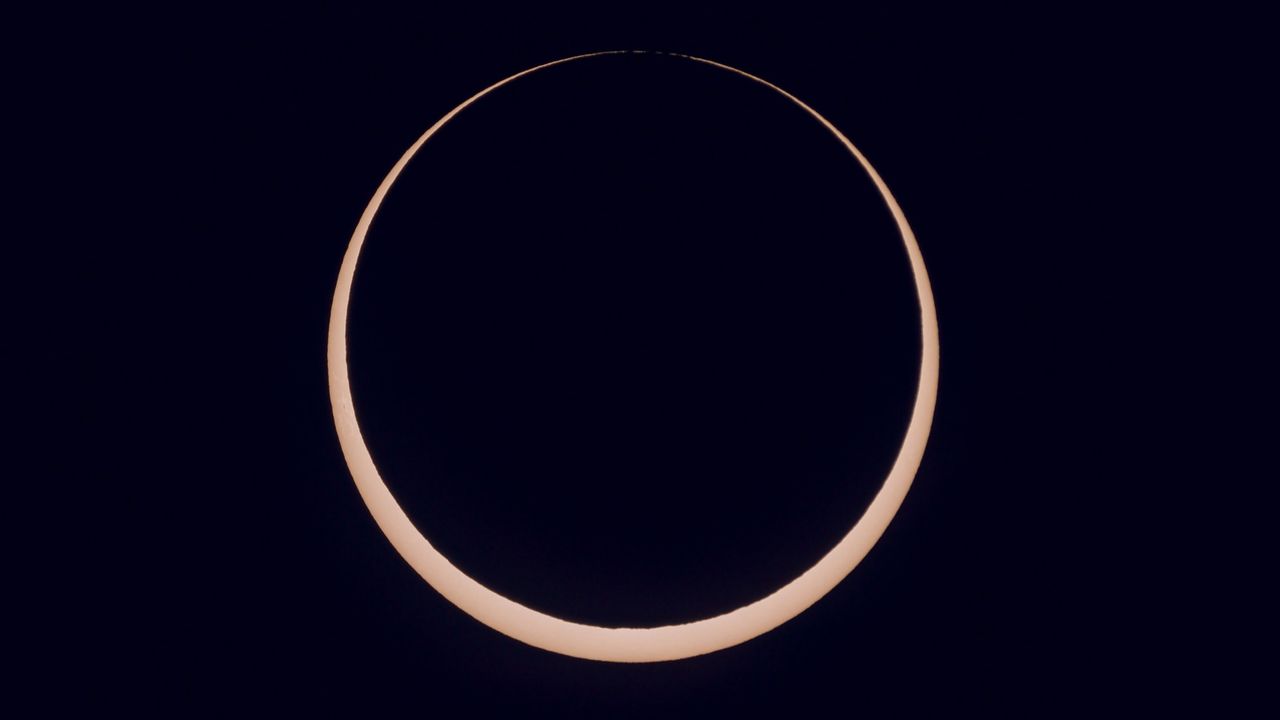
On February 6, 2027, observers in select regions will witness an annular solar eclipse, a celestial event where the Moon passes directly in front of the Sun but does not completely block it, leaving a brilliant "ring of fire" visible across the sky.
The annular eclipse occurs because the Moon will be near apogee, its farthest point from Earth in its elliptical orbit. At this distance, the Moon appears slightly smaller than the Sun in the sky, creating the distinctive ring effect. This contrasts with total solar eclipses, where the Moon completely covers the Sun's disk.
The eclipse path will cross specific geographic regions on February 6, 2027. The path of annularity, where observers see the full ring effect, will traverse portions of southern Spain, southern Portugal, Morocco, and Western Sahara before continuing across the Atlantic. Observers in these areas will experience the eclipse for several minutes during mid-morning hours, local time.
Those outside the path of annularity will experience a partial eclipse. The farther observers are from the central path, the smaller the portion of the Sun obscured by the Moon. Residents across much of Africa, Europe, and parts of western Asia will see at least a partial eclipse.
To safely observe this eclipse, viewers must use proper eye protection. Standard sunglasses do not provide sufficient protection. ISO 12312-2 certified eclipse glasses, welding glass number 14 or darker, or specialized solar filters on telescopes and cameras are necessary to prevent permanent eye damage.
Planning for optimal viewing requires checking weather forecasts and local cloud conditions several days before the event. Clear skies prove essential for seeing the ring of fire effect. Observatory and astronomy clubs often organize viewing events in cities along the eclipse path, offering both safety equipment and telescope access for enhanced observation.
The 2027 annular eclipse follows the total solar eclipse visible