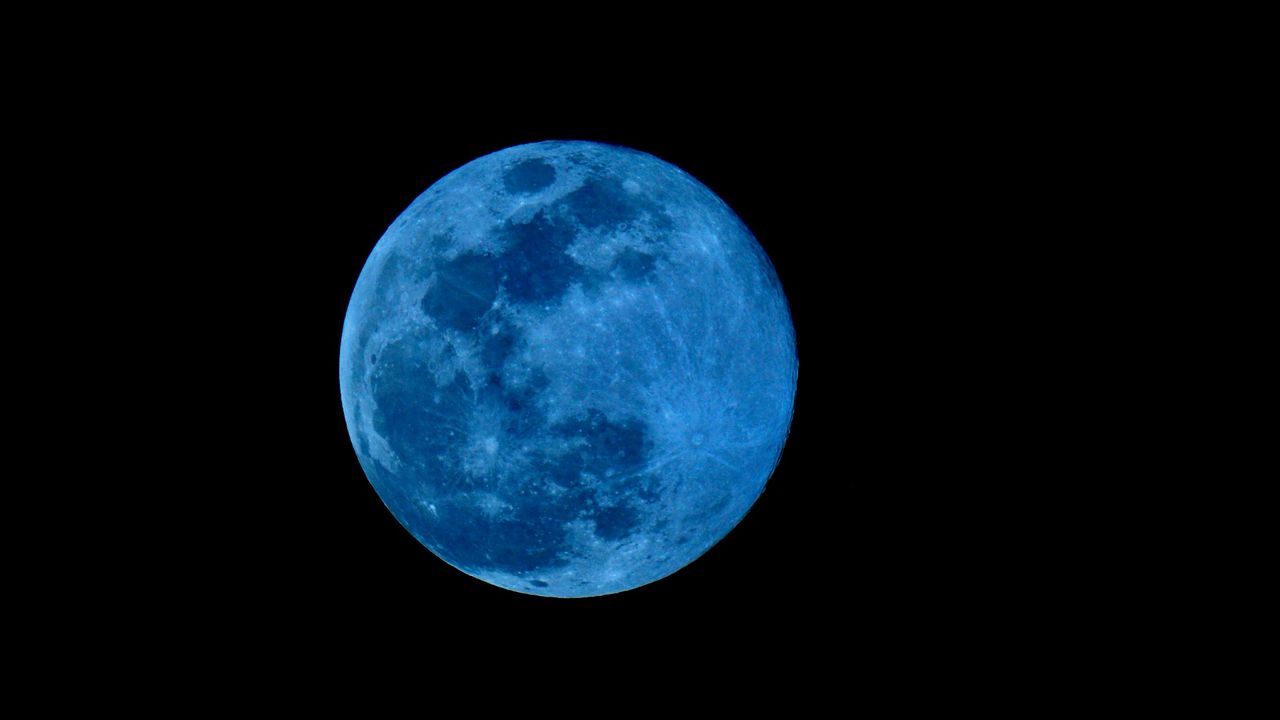
The term "Blue Moon" captures public imagination far beyond its astronomical definition. While the phrase typically refers to either the second full moon in a calendar month or the third full moon in a season containing four full moons, its cultural resonance extends into music, folklore, and commercial branding.
The enchantment stems partly from rarity. A second full moon within a single month occurs roughly every 2.7 years in the Northern Hemisphere, making it genuinely uncommon. This scarcity alone fuels its mystique. The term entered popular culture through the 1932 song "Blue Moon," written by Richard Rodgers and Lorenz Hart, which romanticized the concept as something wished for but seldom achieved.
The actual moon never appears blue under normal atmospheric conditions, despite the name. Genuine blue moons require specific volcanic dust or smoke particles suspended in Earth's atmosphere that scatter red wavelengths, leaving blue light visible. Such conditions proved rare historically, adding another layer of mystery to the phenomenon.
The poetic ambiguity surrounding Blue Moons enhances their appeal. The astronomical definition itself shifted between competing interpretations until the 1980s, when folklore enthusiast Donald Knottus clarified the second-full-moon-per-month definition in Sky and Telescope magazine. This lack of universal agreement paradoxically increases the phrase's charm, allowing artists and brewers to invoke it with flexible meaning.
Cultural references proliferate across popular music, literature, and branding. Breweries have capitalized on the Blue Moon's cachet, with Blue Moon Belgian White becoming a commercial success. The phrase connotes something elusive, precious, and slightly magical. It suggests longing for an occurrence just beyond normal experience.
The imagery also appeals to our connection with celestial phenomena. Humans have gazed at moons for millennia across cultures. A moon labeled "blue"