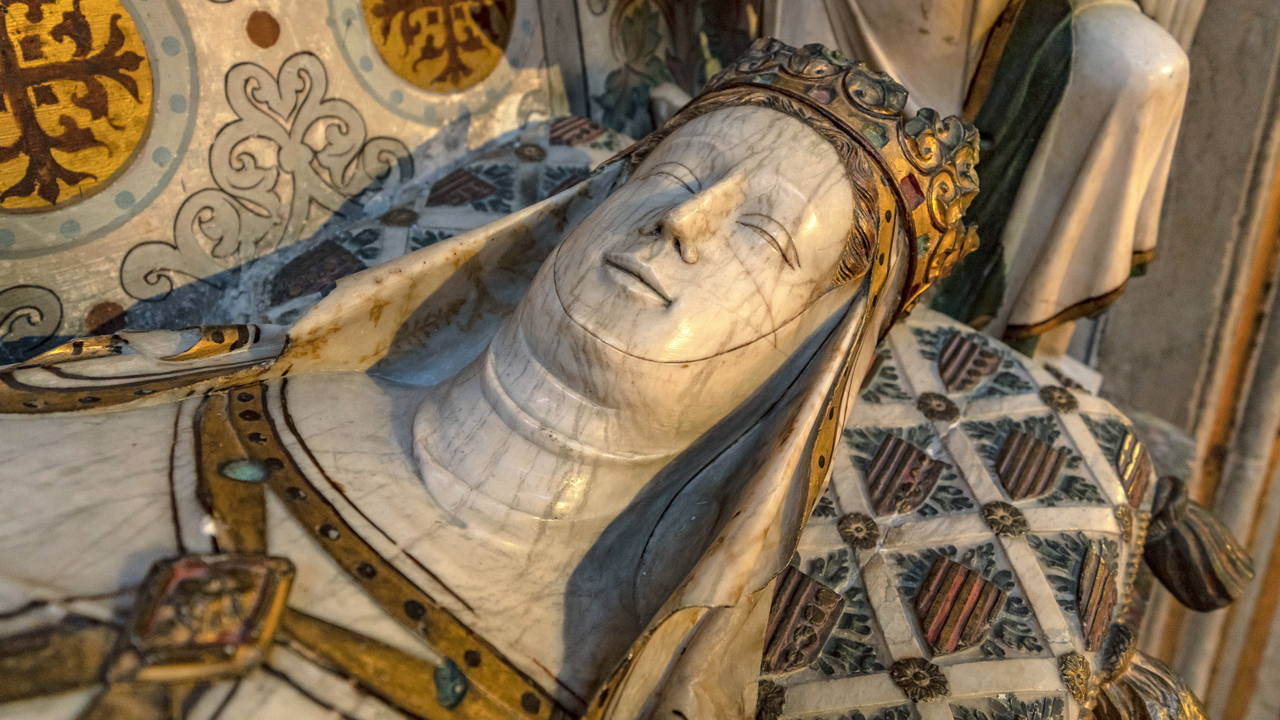
Archaeologists excavated eight 14th-century graves at Barcelona's Royal Monastery of Santa Maria Pedralbes, uncovering the remains of 25 people, including Queen Elisenda of Montcada. The work commemorated the monastery's 700th anniversary and revealed previously unknown details about one of medieval Europe's most powerful women.
Elisenda ruled as queen consort of Aragon from 1329 until her death in 1364. She wielded considerable political influence and controlled vast territories and wealth during her lifetime. The monastery itself was founded by royal decree, cementing her legacy in Barcelona's religious and political landscape.
The excavation yielded more than biographical interest. Researchers discovered that several individuals buried in these graves bore unexplained stab wounds, suggesting violent deaths. The nature of these injuries remains unclear. Whether they resulted from battlefield combat, execution, or interpersonal violence requires further investigation.
The interdisciplinary team analyzed skeletal remains using modern archaeological and forensic techniques. Examination of bone structure, wear patterns, and pathological changes provided insights into diet, health conditions, and living standards of the 14th-century Aragonese nobility and religious community members.
Queen Elisenda's prominence makes this discovery particularly notable. As a powerful female ruler in medieval Europe, her life and death hold substantial historical value. The recovery of her skeletal remains allows researchers to study her personally rather than relying solely on historical documents and artwork.
The monastery holds additional archaeological significance. As a burial site for nobility and high-ranking clergy, it provides a window into medieval religious practice, burial customs, and social hierarchies. The presence of multiple individuals with trauma injuries suggests the graves contain victims of specific historical events, possibly related to regional conflicts during the 14th century.
Future analysis will likely focus on isotope studies to determine diet and geographic origins, DNA examination to confirm kinship relationships