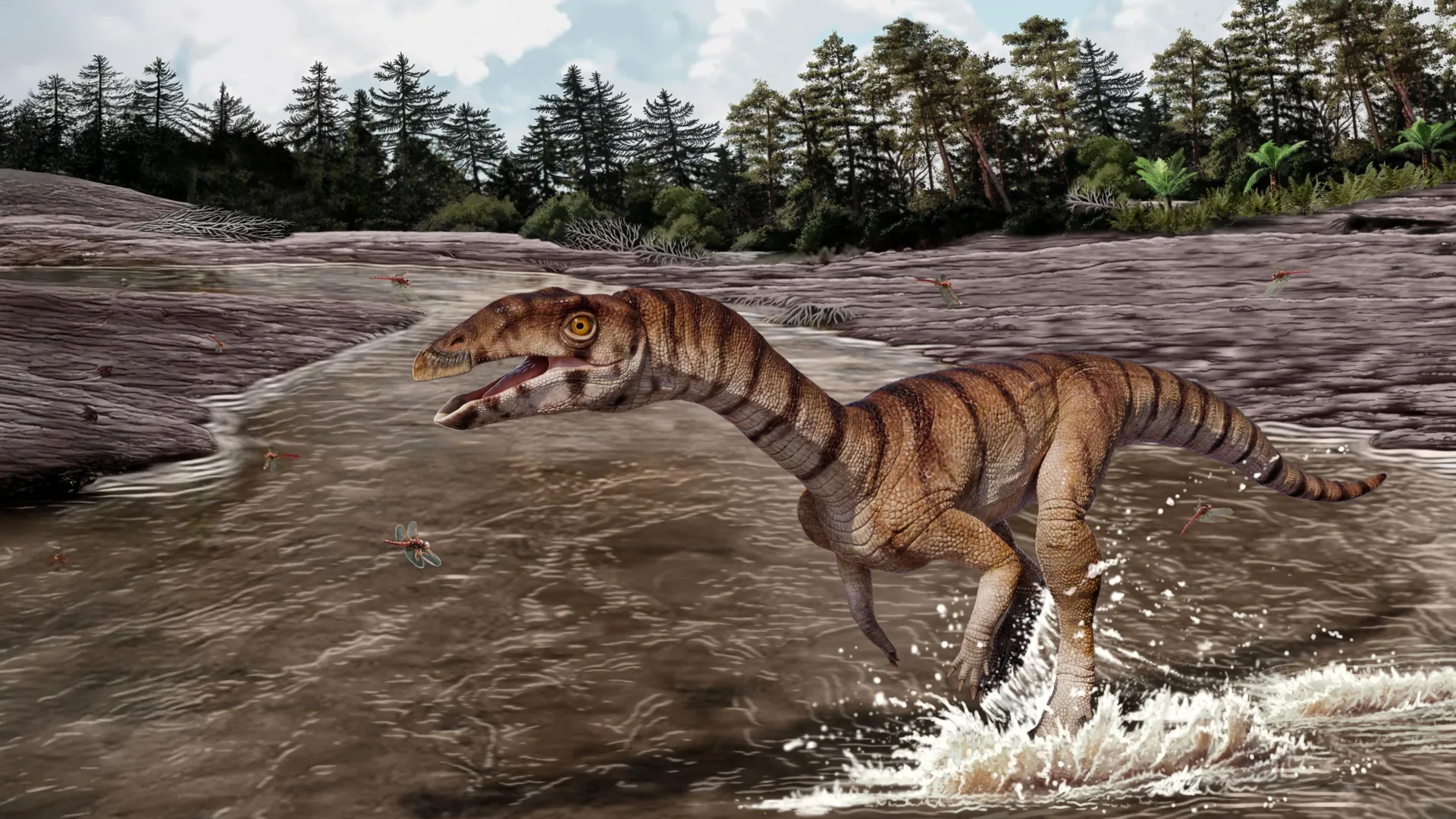
Scientists have identified a Triassic-era crocodile relative that defied expectations about how early members of the crocodilian lineage should look. Named Labrujasuchus expectatus, the fossil reveals an animal that walked upright on two hind legs, possessed disproportionately tiny arms, and featured a toothless beak. These traits mirror the body plan of later theropod dinosaurs far more closely than modern crocodiles.
The discovery challenges assumptions about crocodilian evolution during the Triassic period, roughly 250 to 200 million years ago, when dinosaurs were rising to dominance. While crocodilians today are sprawling, four-legged ambush predators built for aquatic hunting, Labrujasuchus expectatus occupied a radically different ecological niche. Its bipedal locomotion and beaked head suggest it may have hunted on land, pursuing small prey across Triassic ecosystems.
The specimen provides direct paleontological evidence that early crocodilians experimented with diverse body forms before settling into the aquatic predatory lifestyle that persists in modern species. Rather than representing a failed evolutionary dead-end, Labrujasuchus expectatus demonstrates the remarkable adaptability of the crocodilian stem lineage during a period of evolutionary experimentation.
The find also underscores how convergent evolution operated across different reptilian lineages in the Mesozoic. Both crocodilians and theropods independently evolved bipedalism, beaked skulls, and reduced forelimbs as solutions to terrestrial hunting. This pattern suggests these traits offered genuine adaptive advantages for specific ecological roles.
The specific discovery location, dating, and research team details remain unclear from available information, but the fossil's preservation quality apparently allowed scientists to reconstruct skeletal anatomy with confidence. The name Labrujasuchus expect