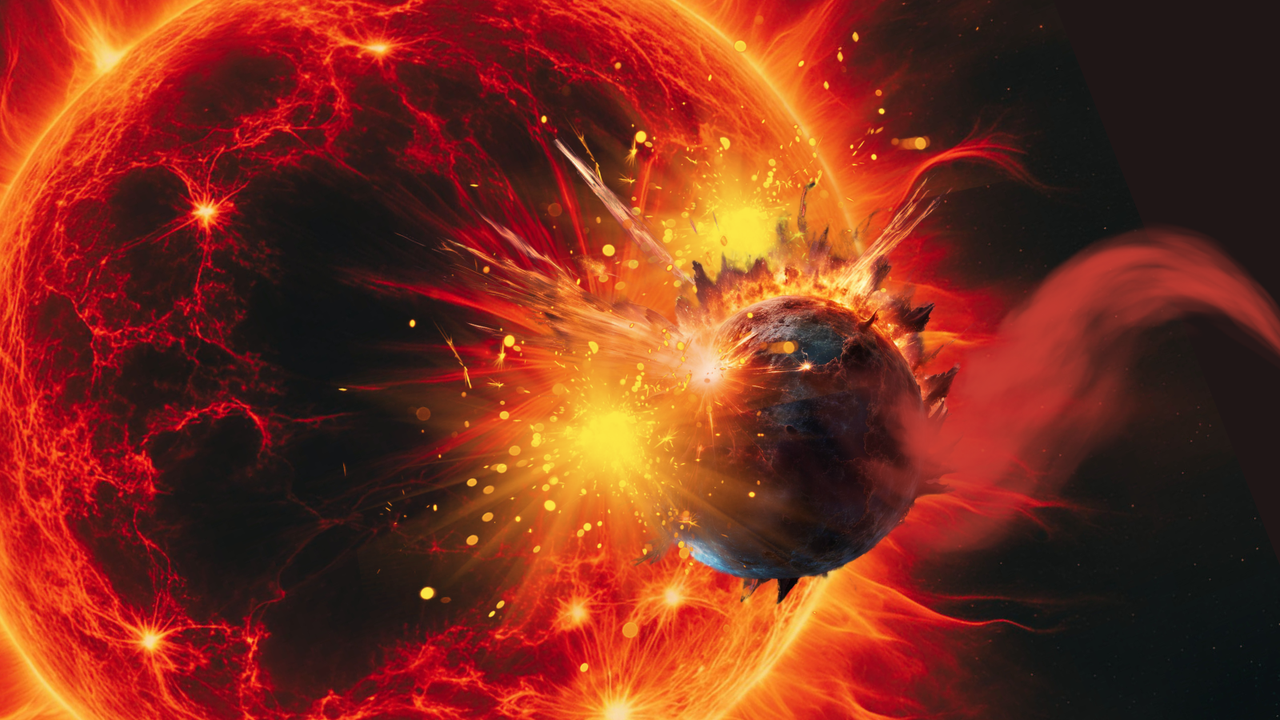
Astronomers have found the first direct evidence that red dwarf stars consume their own planets, a discovery that reshapes understanding of planetary survival in the galaxy's most common star systems.
Red dwarfs represent roughly 75 percent of all stars in the Milky Way. These small, dim objects were long assumed to be relatively stable hosts for planets. The new observations overturn that assumption. Researchers detected chemical signatures in red dwarf atmospheres that reveal planetary material being pulled into the stars and destroyed.
The detection process involved analyzing spectroscopic data from red dwarfs showing unusual elemental abundances, particularly enriched levels of metals and other heavy elements that point to planetary ingestion. These chemical fingerprints indicate the stars actively consume orbiting bodies, dragging planets inward through gravitational interactions or tidal effects until they spiral into the stellar atmosphere.
This process has profound implications for exoplanet habitability. Red dwarfs host the largest population of potentially habitable worlds discovered so far. If these stars routinely destroy their planets, the actual survival rate for planetary systems around red dwarfs drops considerably. Planets in closer orbits face higher risk, though even those at comfortable distances from their host stars may not be safe long-term.
The mechanism behind planetary consumption remains partially unclear. Stellar activity, magnetic fields, or gradual orbital decay could all contribute. Researchers continue investigating whether this process is common enough to significantly reduce the number of stable, long-lived planetary systems around red dwarfs.
The findings come from multiple observational campaigns analyzing red dwarf compositions. Scientists compared chemical abundances in red dwarf atmospheres to theoretical models of undisturbed stellar composition, identifying the telltale excess of planetary material.
These results suggest that planetary migration and consumption may be far more prevalent throughout the universe than previously recognized. The discovery narrows the pool of red dwarf systems likely to harbor planets