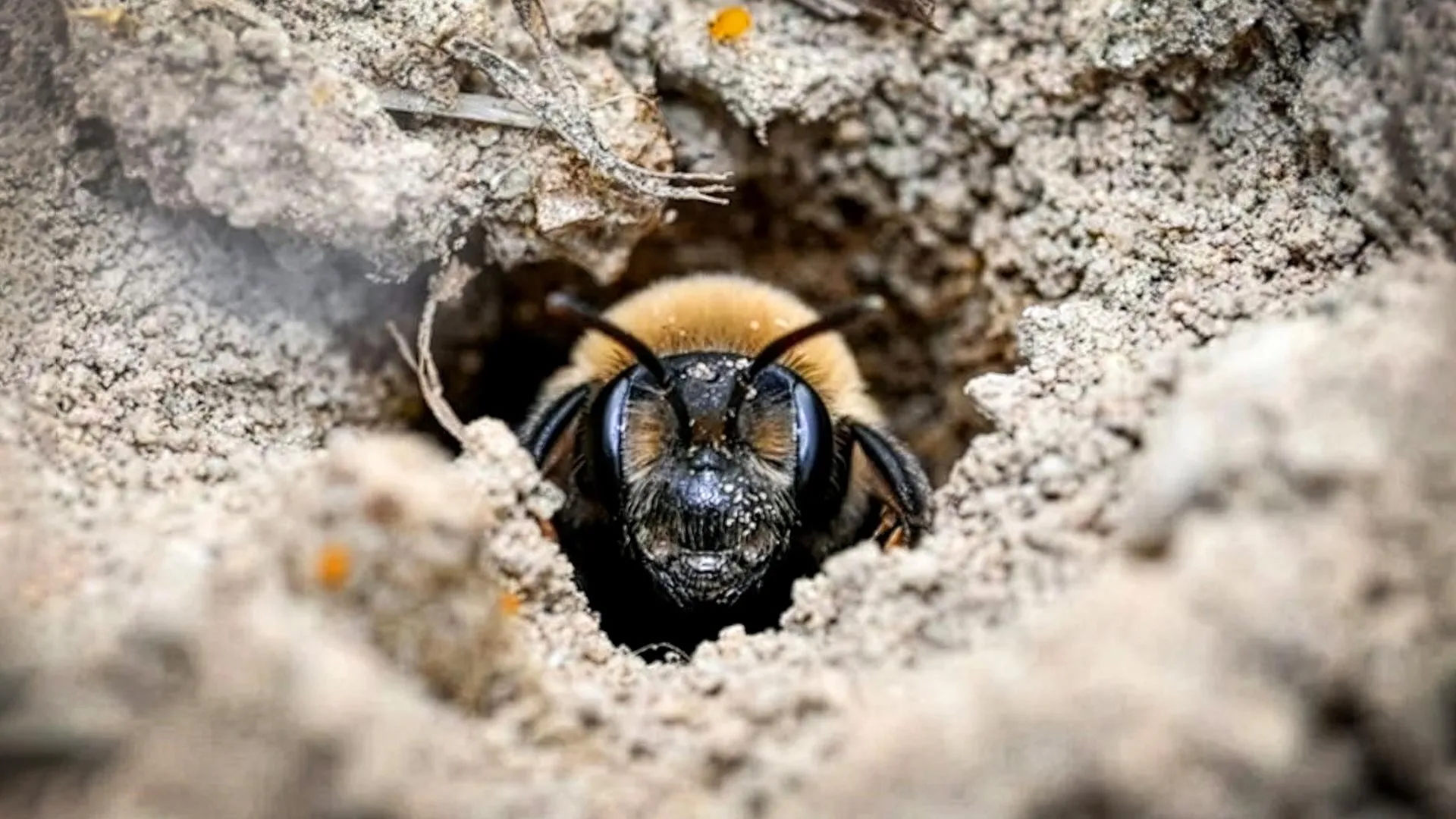
Researchers discovered approximately 5.5 million ground-nesting bees living beneath the soil of an Ithaca, New York cemetery, marking what scientists believe is one of the largest bee aggregations ever documented. The find emerged during a routine walk through the burial grounds, where the undisturbed sandy soil created ideal conditions for the insects to establish a thriving colony spanning over a century.
The bees, which nest in tunnels dug into the ground rather than in hives, have persisted in this protected environment for more than 100 years. The cemetery's lack of disturbance from agricultural activities, pesticides, and development allowed the population to flourish undeterred. The species composition and exact identification of the bees remain part of the ongoing investigation.
The discovery holds implications for agricultural pollination. These ground-nesting bees serve as pollinators for apple orchards and other regional crops, playing a role in food production across New York's farming communities. The finding suggests that protected, undisturbed habitats can support massive bee populations, even in unexpected locations like cemeteries.
Scientists view this aggregation as a natural experiment in bee ecology and conservation. The long-term stability of the population demonstrates that ground-nesting bees can sustain themselves when their habitat remains intact. The cemetery essentially functioned as an unintentional bee sanctuary, where the absence of human interference allowed insects to establish one of the largest known colonies.
The research adds to growing concerns about bee population declines linked to habitat loss, pesticide use, and land development. While honeybees have received considerable public attention, ground-nesting bee species often go overlooked in conservation efforts despite their ecological and agricultural value. This discovery highlights how existing protected spaces, even those not designated for wildlife, can harbor substantial insect populations essential to ecosystem function.
The findings underscore the importance of preserving undis