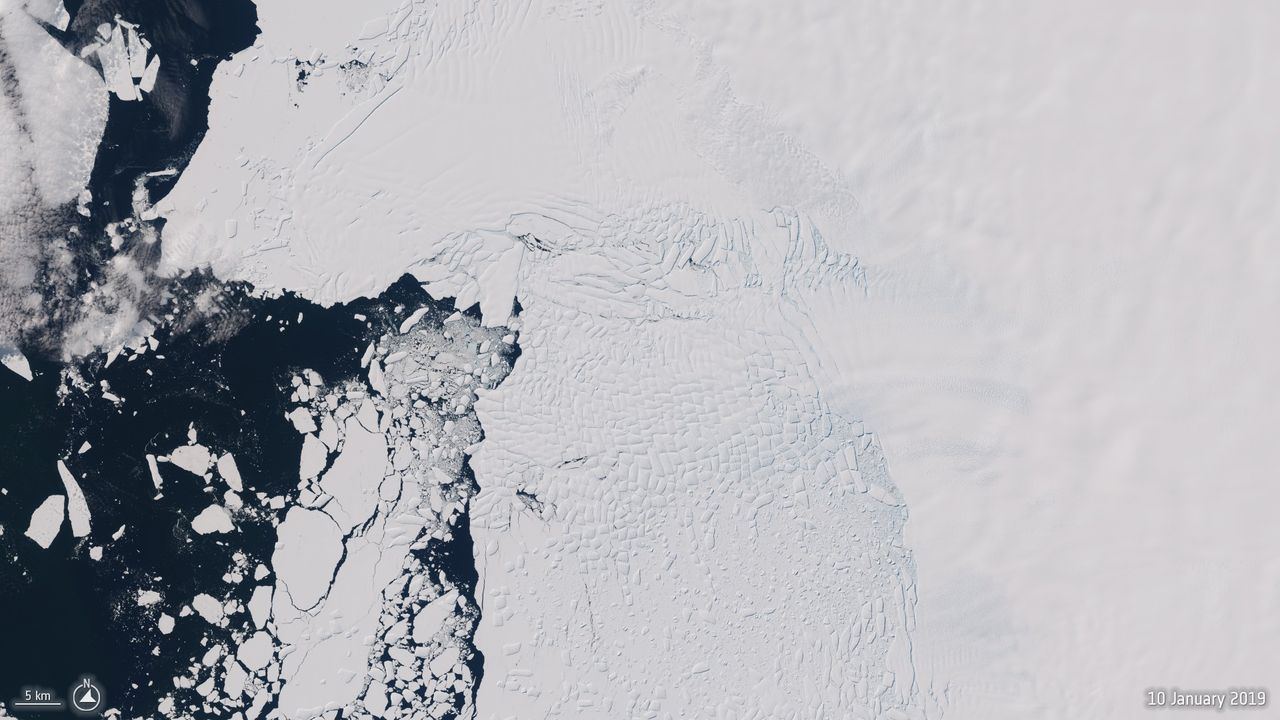
The Thwaites Glacier in Antarctica faces imminent collapse of its eastern ice shelf, potentially accelerating global sea level rise, according to researchers tracking the massive ice formation.
Robert Larter, a marine geophysicist, studies the glacier's rapid deterioration. The eastern ice shelf could disintegrate within months, representing a critical threshold for one of Earth's most unstable glaciers. Thwaites spans roughly 80 miles wide and contains enough ice to raise global sea levels by approximately two feet if it melts completely.
The glacier's instability stems from warm ocean water eroding its base. Unlike ice shelves anchored to bedrock, Thwaites rests on bedrock that slopes downward inland, creating a feedback loop. As the glacier retreats, it thins further, allowing more water underneath, accelerating melting. Scientists call this the "marine ice sheet instability."
Loss of the eastern ice shelf removes a critical buttress holding back the main glacier. Think of the ice shelf as a cork in a bottle, Larter explains. Without it, the glacier behind flows faster toward the ocean. Recent satellite observations show the shelf fractured into multiple sections, with rifts widening rapidly.
Current projections suggest Thwaites could contribute to five feet of sea level rise over centuries if it collapses entirely. The glacier already contributes roughly four percent of current global sea level rise despite covering only one percent of Antarctic ice. Its potential failure threatens coastal cities worldwide and island nations facing existential threats.
The research carries inherent uncertainties. Computer models of ice sheet dynamics remain imperfect, and predicting exact timing proves difficult. Ocean temperatures and atmospheric conditions introduce variables that complicate forecasting. However, observations from ground-penetrating radar, satellite imagery, and oceanographic surveys converge on the same conclusion: Thwaites is destined for major change.
The