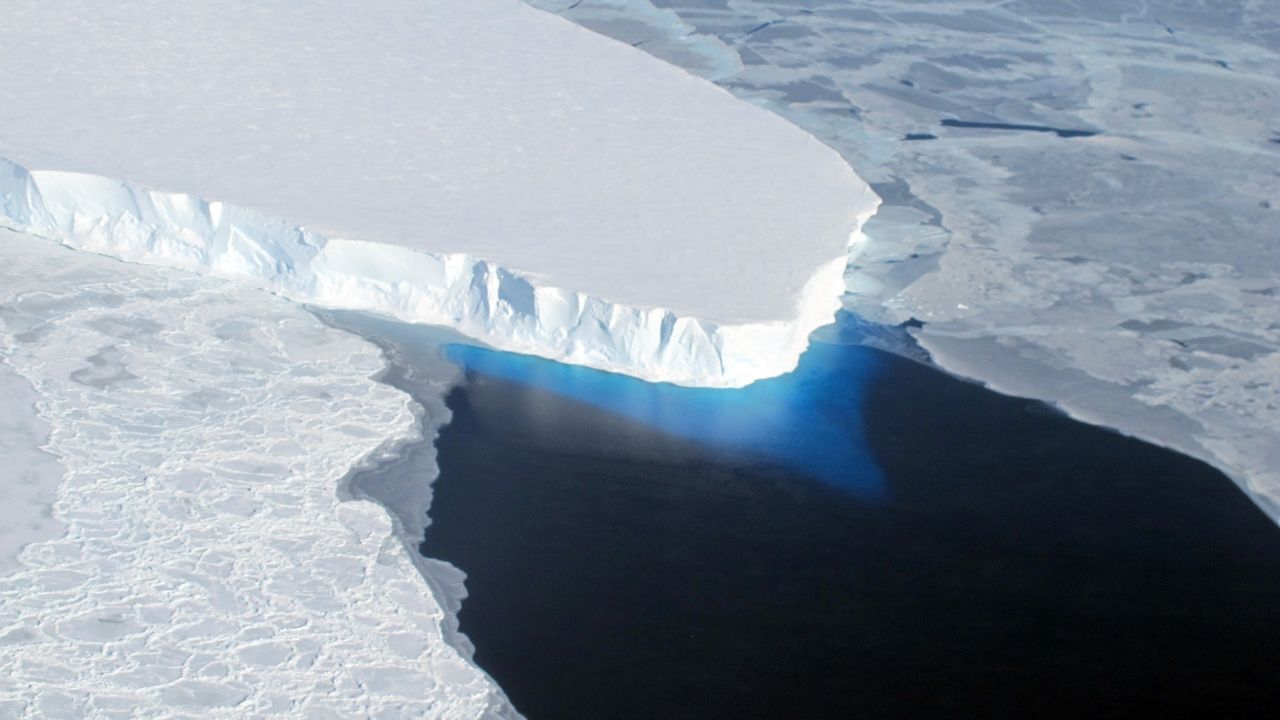
Antarctica's Thwaites Glacier, colloquially known as the "Doomsday Glacier," faces imminent structural collapse of its floating ice shelf within 2024, according to recent satellite monitoring. Scientists tracking the glacier have documented accelerating rifts and deteriorating stability in the ice shelf that buttresses the much larger grounded ice mass inland.
The glacier drains roughly 4 percent of West Antarctica's ice sheet. Its ice shelf acts as a cork in a bottle, slowing the outflow of upstream ice into the ocean. Once that shelf disintegrates, the grounded glacier behind it will accelerate seaward, potentially raising global sea levels by over 3 feet in coming decades.
Recent research published in studies using satellite imagery shows multiple large cracks propagating through the shelf. One rift already spans over 30 kilometers. The shelf has thinned dramatically in recent years, losing structural integrity. Researchers at institutions including the University of Washington and NASA's Jet Propulsion Laboratory have intensively monitored these changes using satellite data and airborne surveys.
The timing matters enormously. Climate models suggest that once Thwaites' ice shelf collapses entirely, a cascade of ice loss accelerates. The glacier's grounded portion could destabilize within decades rather than centuries. This would unlock enough ice to raise sea levels substantially, threatening coastal cities worldwide.
Thwaites already contributes roughly 4 percent of annual global sea-level rise, making it one of the most dangerous climate tipping points on Earth. Oceanographers have documented warm water intruding beneath the glacier, attacking it from below. This subsurface warming weakens both the ice shelf and the grounded glacier where it meets the ocean floor.
The collapse represents a point of no return in the climate system. Once the ice shelf breaks apart entirely, the backstress holding the glacier diminishes