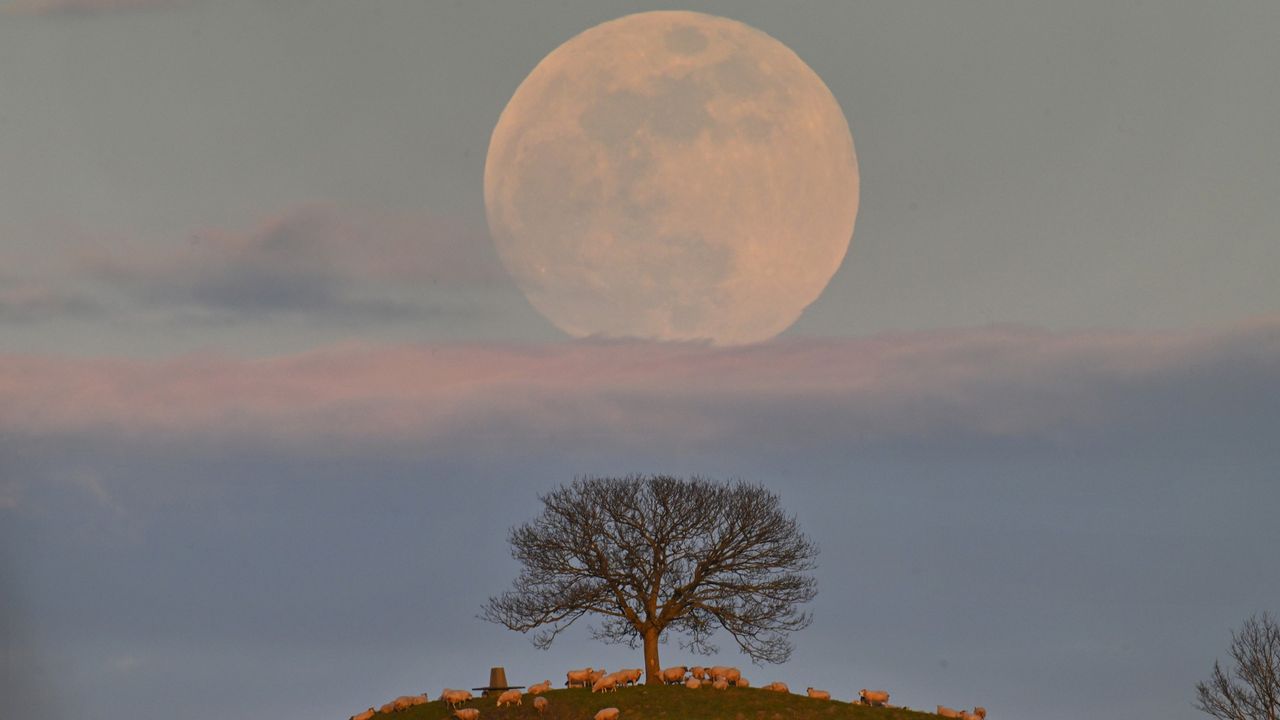
A rare Blue Moon arrives on May 30, and observers who mistimes the viewing window risk missing the celestial event entirely. Catching the moonrise at its optimal moment requires planning the astronomy correctly.
A Blue Moon occurs when a calendar month contains two full moons, a phenomenon that happens roughly every two to three years. The second full moon of May will reach peak illumination on May 30, making it technically a Blue Moon despite the term's misleading name. The moon won't actually appear blue without specific atmospheric conditions, such as smoke or dust particles in the atmosphere.
The moonrise phase presents the most spectacular viewing opportunity. As the moon emerges from the horizon, it appears larger and takes on warmer colors due to Rayleigh scattering, the same optical effect that makes sunsets red and orange. This illusory size difference, called the moon illusion, peaks within the first hour after moonrise.
Timing depends entirely on your geographic location. The moonrise occurs at different times across different time zones and latitudes. Observers should check local moonrise times using online tools or astronomy apps before the event. Watching from an unobstructed western or eastern horizon provides the clearest view.
Weather conditions present another variable. Cloud cover can obscure the event completely, so checking forecasts several days beforehand helps identify the clearest viewing locations. Early morning or evening hours typically offer the steadiest atmospheric conditions.
The Blue Moon itself carries no scientific significance beyond its calendar-defined rarity. Both full moons in May orbit at the same distance and possess identical physical properties. Observing the event offers mainly recreational and cultural value, as lunar cycles have marked human timekeeping for millennia.
Photography enthusiasts should arrive early to capture the moonrise. Bringing a tripod, telephoto lens, and camera with manual settings allows for dramatic images of the moon against the landscape.
CATEGORY