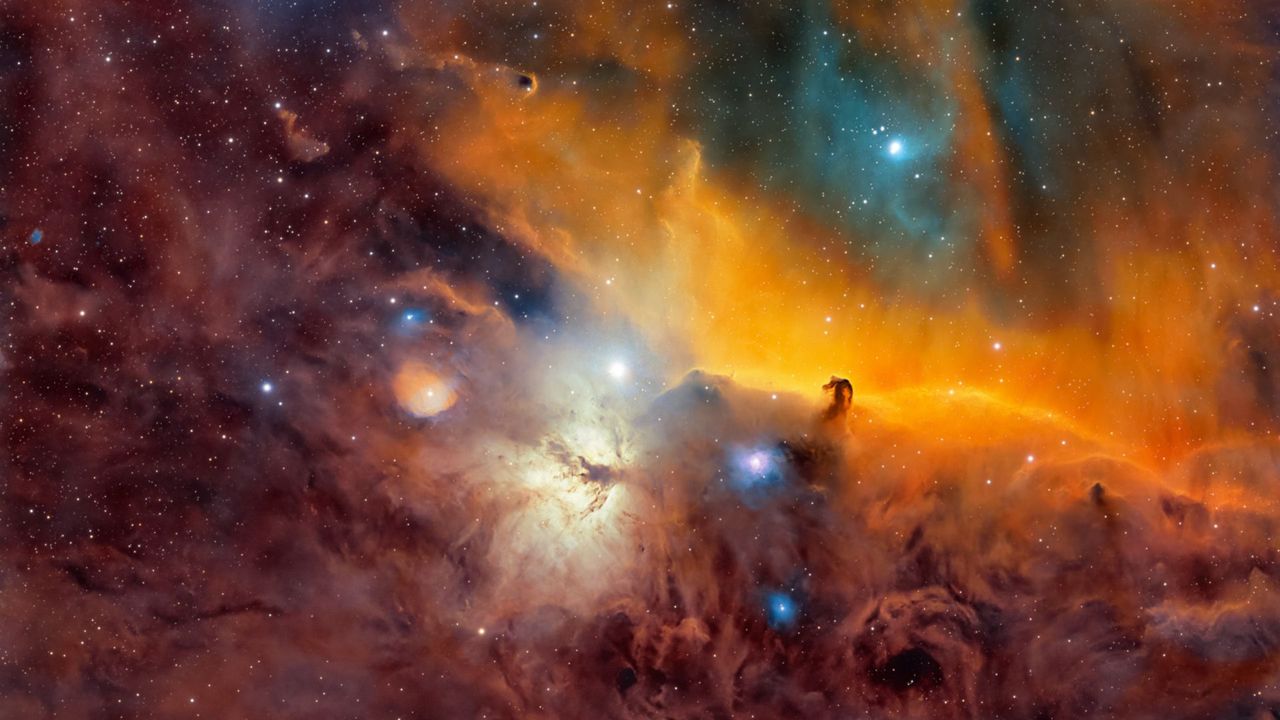
An amateur astrophotographer has captured the Horsehead Nebula with extraordinary detail using only a backyard telescope, investing 115 hours of exposure time to produce the striking image. The nebula appears as a dark silhouette against luminous hydrogen gas in the constellation Orion, located roughly 1,500 light-years from Earth.
The Horsehead Nebula, also called Barnard 33, represents one of the most recognizable dark nebulae in the night sky. Its distinctive equine shape forms where dense dust clouds block light from brighter emission nebulae behind them. The structure consists primarily of cold gas and dust that absorb visible light, creating the characteristic shadow effect against the reddish glow of the surrounding H-alpha emission region.
Capturing such fine detail requires patience, technical skill, and substantial observational time. The 115-hour exposure accumulation demonstrates the dedication amateur astronomers bring to astrophotography. Long exposure times allow telescopes to gather sufficient photons from distant objects, building up signal strength that reveals structural details invisible in brief observations. The technique, called image stacking, combines multiple exposures to reduce noise and enhance contrast.
Amateur astrophotography has advanced considerably with affordable equipment improvements. Modern cameras, filters, and tracking mounts enable backyard observers to rival observations that once required professional observatories. The Horsehead's proximity and brightness relative to other deep-sky objects make it an achievable target for dedicated amateurs, though its relatively low surface brightness still demands excellent conditions and extended observation periods.
Professional telescopes like the Hubble Space Telescope have imaged the Horsehead at higher resolutions, but amateur achievements hold value for public engagement with astronomy and for documenting how accessible the universe becomes with commitment and proper technique. The image showcases both the aesthetic appeal of nebulae and the technical competence of dedicated skygaz