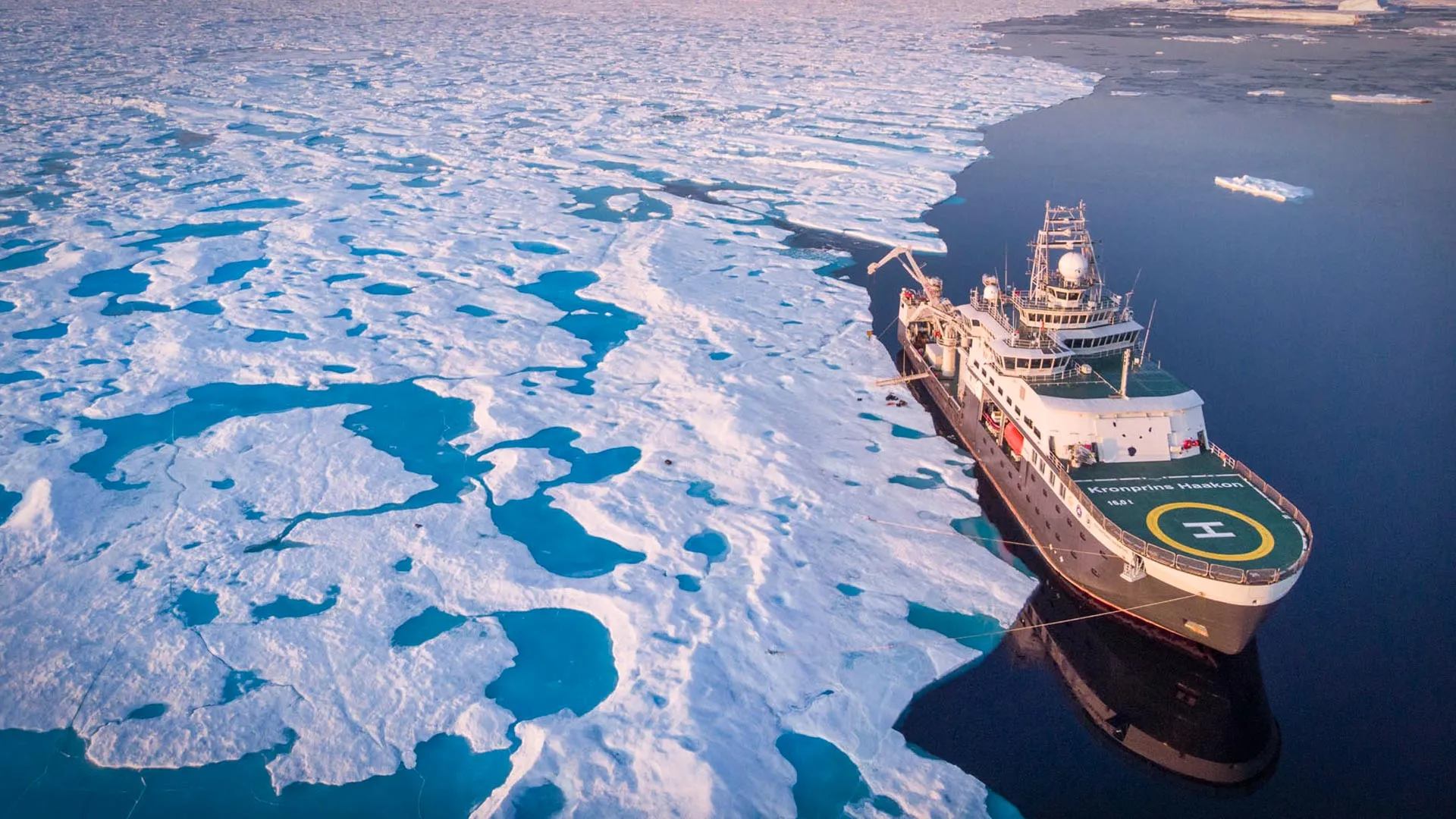
Researchers have identified a critical tipping point in the Arctic Ocean linked to accelerating sea ice loss. The disappearance of sea ice is triggering a chemical cascade that depletes nitrate, a nutrient fundamental to Arctic plankton communities.
The mechanism involves a shift in how the Arctic Ocean's chemistry operates. As sea ice diminishes, light penetration into deeper waters increases. This allows cyanobacteria and other photosynthetic organisms to thrive in surface waters, consuming nitrate at accelerated rates. Simultaneously, the loss of ice cover disrupts the physical mixing patterns that normally replenish nitrate from deeper ocean layers. Together, these changes create a self-reinforcing cycle of nutrient depletion.
Nitrate depletion poses existential risks to Arctic food webs. Plankton species dependent on nitrate form the base of Arctic marine ecosystems. Fish, seabirds, whales, and other marine mammals depend on plankton populations for survival. A collapse in plankton communities could cascade through the entire food web, destabilizing ecosystems that Indigenous communities and wildlife depend upon.
The research highlights a particularly troubling aspect of Arctic climate change. Unlike some environmental shifts that remain reversible if conditions improve, this tipping point may be irreversible on human timescales. Even if sea ice recovery occurred, the chemical and ecological changes triggered by decades of ice loss might persist.
Scientists emphasize that this finding underscores the urgency of climate action. The Arctic is warming roughly twice as fast as the global average, a phenomenon called Arctic amplification. Sea ice extent continues to decline each decade, accelerating the very processes now identified as problematic.
However, uncertainties remain. The research identifies a plausible mechanism, but predicting the full scope and timeline of ecosystem collapse requires further study. Natural variability in Arctic conditions could modify the worst-