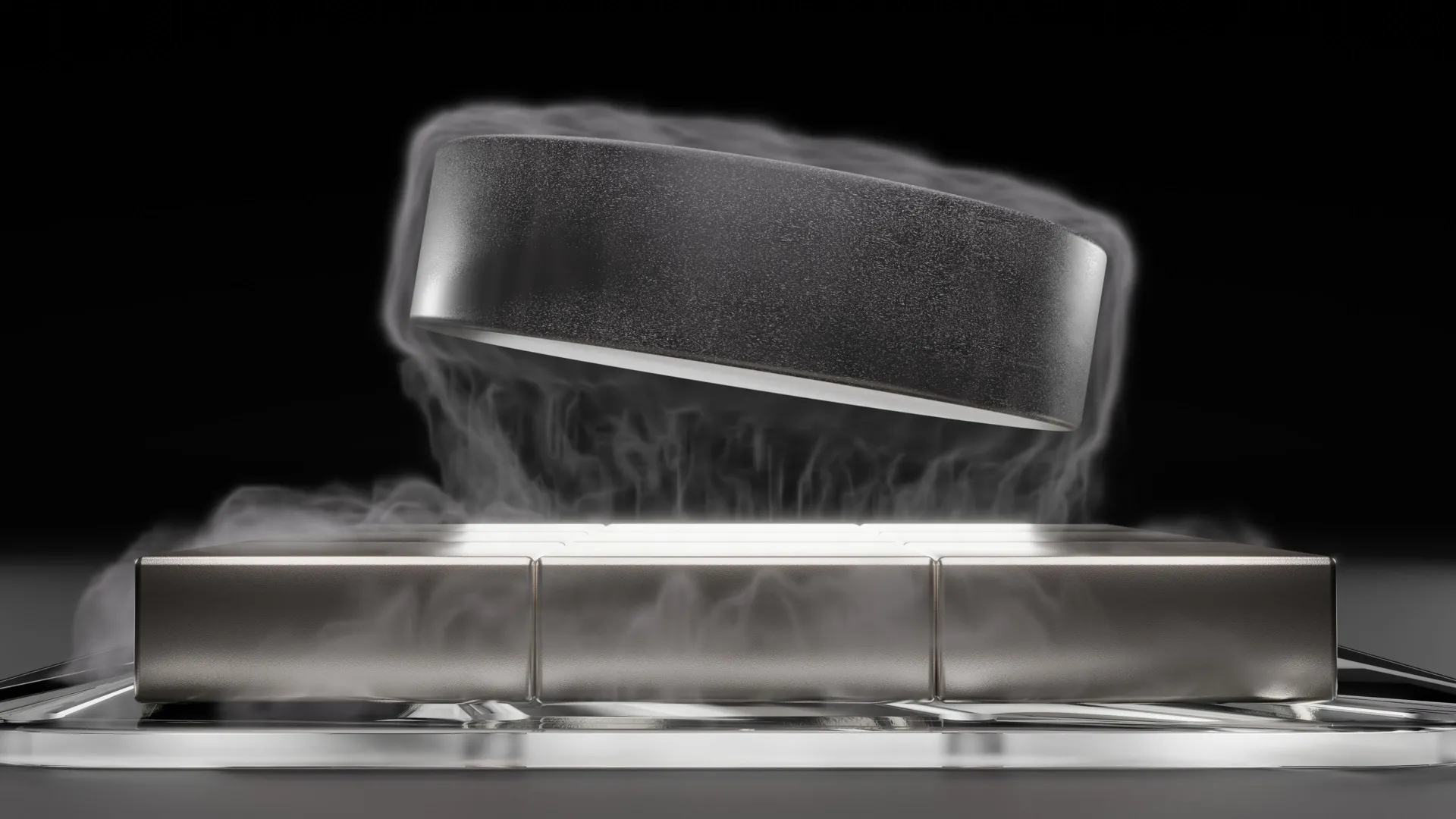
Scientists at the University of Houston have broken a three-decade superconductivity record by developing a material that conducts electricity with zero resistance at 151 Kelvin, or minus 122 degrees Celsius. This achievement surpasses the previous record of 138 Kelvin, which had remained unchallenged since 1993.
Superconductors lose all electrical resistance below a critical temperature, allowing current to flow indefinitely without energy loss. Until now, achieving this effect at relatively high temperatures required extreme pressure that made practical applications difficult. The Houston team's material works at normal atmospheric pressure, removing a major barrier to real-world use.
The significance lies in accessibility. Previous record-holders demanded pressures exceeding hundreds of thousands of atmospheres to function as superconductors. Normal-pressure superconductors open pathways toward practical technologies including lossless power transmission, maglev trains, and advanced medical imaging devices.
The specific composition of the material remains undisclosed in the available information, which is typical during the peer-review process. Publication details and the full experimental methodology will appear in forthcoming journal articles. The University of Houston team's work represents incremental but meaningful progress in superconductivity research, an area that has seen slow advancement since the 1980s when high-temperature superconductors were first discovered.
Limitations exist. Operating at minus 122 degrees Celsius still requires cooling systems, though far less extreme than previous record materials. Scientists must now replicate the results independently and understand the mechanism enabling such high transition temperatures. The path from laboratory discovery to commercial viability typically spans years or decades, depending on material stability and manufacturing scalability.
This breakthrough demonstrates that higher-temperature superconductivity at normal pressure remains achievable through continued research. The Houston team's result provides both a new benchmark and renewed momentum for a field seeking transformative technologies that could reshape