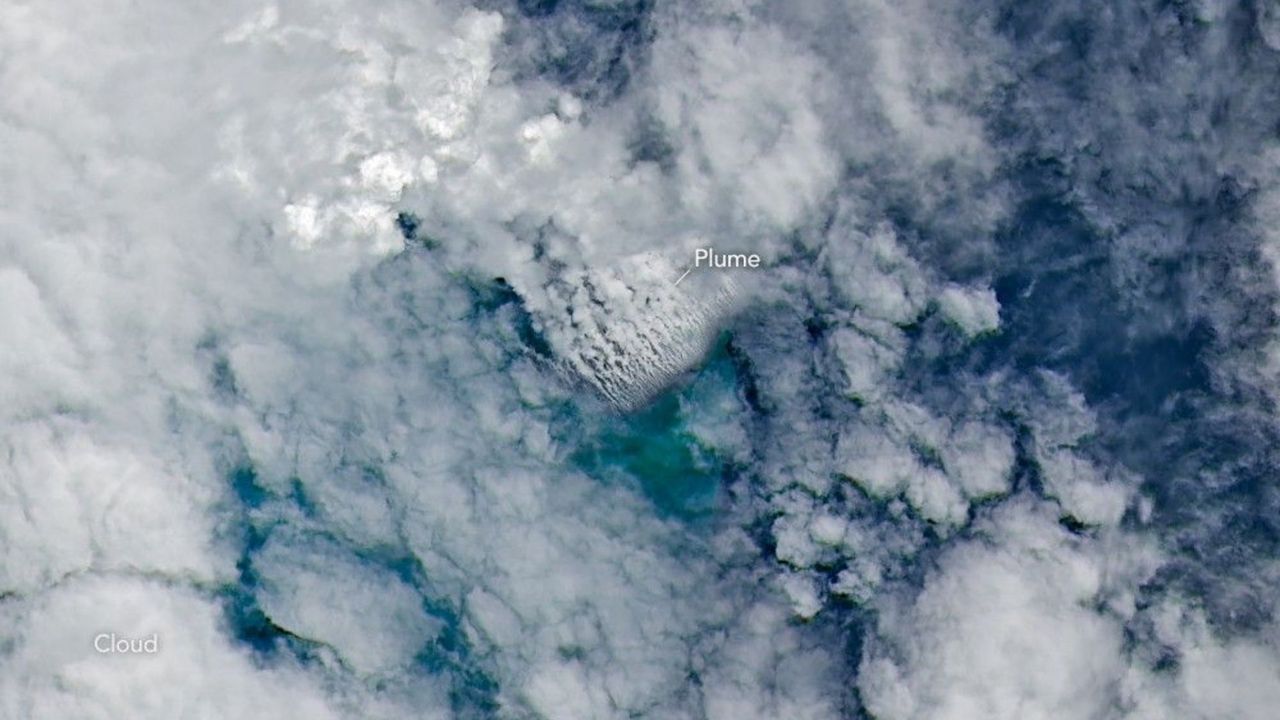
Satellites detected an underwater volcano eruption in a remote ocean region, but the lack of direct seafloor observations has left scientists unable to explain what is actually occurring beneath the surface. The imagery captured thermal signatures and surface disturbances consistent with volcanic activity, yet researchers cannot access the underwater site to confirm the eruption's mechanics, composition, or broader implications.
The challenge reflects a fundamental gap in ocean science. Underwater volcanoes remain among Earth's least-studied geological features despite covering vast areas of the seafloor. Satellites excel at detecting heat anomalies and water discoloration from space, but they cannot penetrate the ocean to measure gas emissions, rock composition, or magma flow rates. These details require submersibles or specialized underwater instruments, which are expensive and difficult to deploy.
The eruption occurred in a region with sparse historical monitoring data, making it impossible for scientists to assess whether this event represents normal volcanic cycling or something unprecedented. Without baseline observations, researchers cannot determine if the volcano poses risks to nearby shipping routes, affects local marine ecosystems, or influences ocean chemistry on a larger scale.
This discovery highlights the paradox of modern volcano science. Satellite technology has revolutionized the detection of volcanic events worldwide, creating an unprecedented catalog of submarine eruptions that remained invisible just decades ago. Yet detection without access to ground truth leaves critical questions unanswered. Researchers must eventually devise better strategies for real-time seafloor monitoring, possibly through autonomous underwater vehicles or permanent sensor networks on the ocean bottom.
The incident underscores how much of Earth's dynamic geology remains opaque. As climate change and industrial activities increase pressure on ocean systems, understanding submarine volcanism becomes more urgent. Underwater eruptions can affect water chemistry, influence marine life, and potentially impact global climate through aerosol release. For now, satellites can only watch and wait, documenting events while the science struggles to keep pace with observation capability.