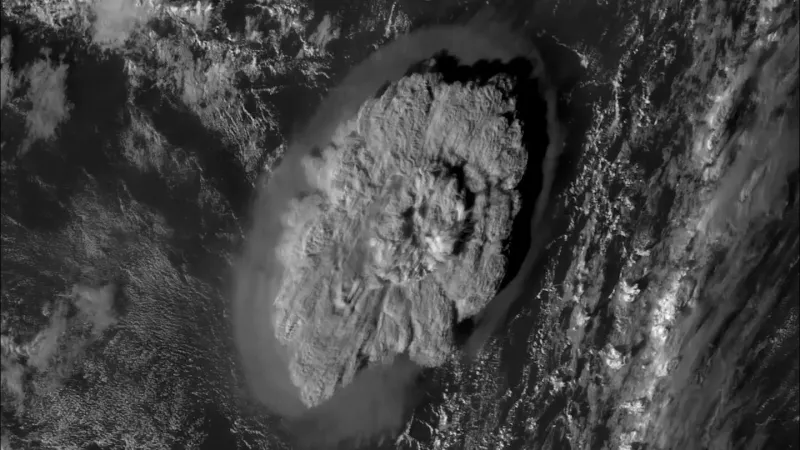
A massive volcanic eruption in the South Pacific appears to have consumed methane in Earth's atmosphere, offering researchers a glimpse into a potential climate intervention strategy. The eruption, which occurred in January 2022 at Hunga Tonga-Hunga Ha'apai, injected enormous quantities of water vapor and aerosols into the stratosphere, creating unusual chemical conditions.
Scientists detected a temporary drop in atmospheric methane concentrations following the blast. The leading hypothesis suggests that the volcanic eruption generated reactive chlorine compounds in the stratosphere, which then destroyed methane molecules. Methane ranks as the second-most powerful greenhouse gas after carbon dioxide, making any process that breaks it down potentially valuable for climate efforts.
The finding intrigues climate researchers because it points toward a geoengineering strategy called stratospheric aerosol injection, where deliberately introduced particles might chemically reduce methane. However, the approach remains deeply contentious within the scientific community.
Critics raise multiple concerns. Deliberately injecting aerosols into the stratosphere could alter precipitation patterns, disrupt monsoons, and damage the ozone layer. The methane reduction observed after the volcanic eruption was temporary and modest compared to global methane concentrations. Engineering a similar effect intentionally would require sustained interventions, carrying unknown ecological consequences.
Proponents argue that methane reduction complements other climate solutions and note that volcanic eruptions already demonstrate such effects occur naturally. They suggest further research could identify safer application methods.
The Hunga Tonga eruption provided an accidental planetary experiment, allowing researchers to study atmospheric chemistry changes without human interference. This data helps scientists model what would happen under deliberate stratospheric intervention. However, experts caution that mimicking volcanic chemistry artificially presents distinct technical and ethical challenges.
Most climate scientists emphasize that emissions reductions remain the primary strategy. Geoengineering approaches like