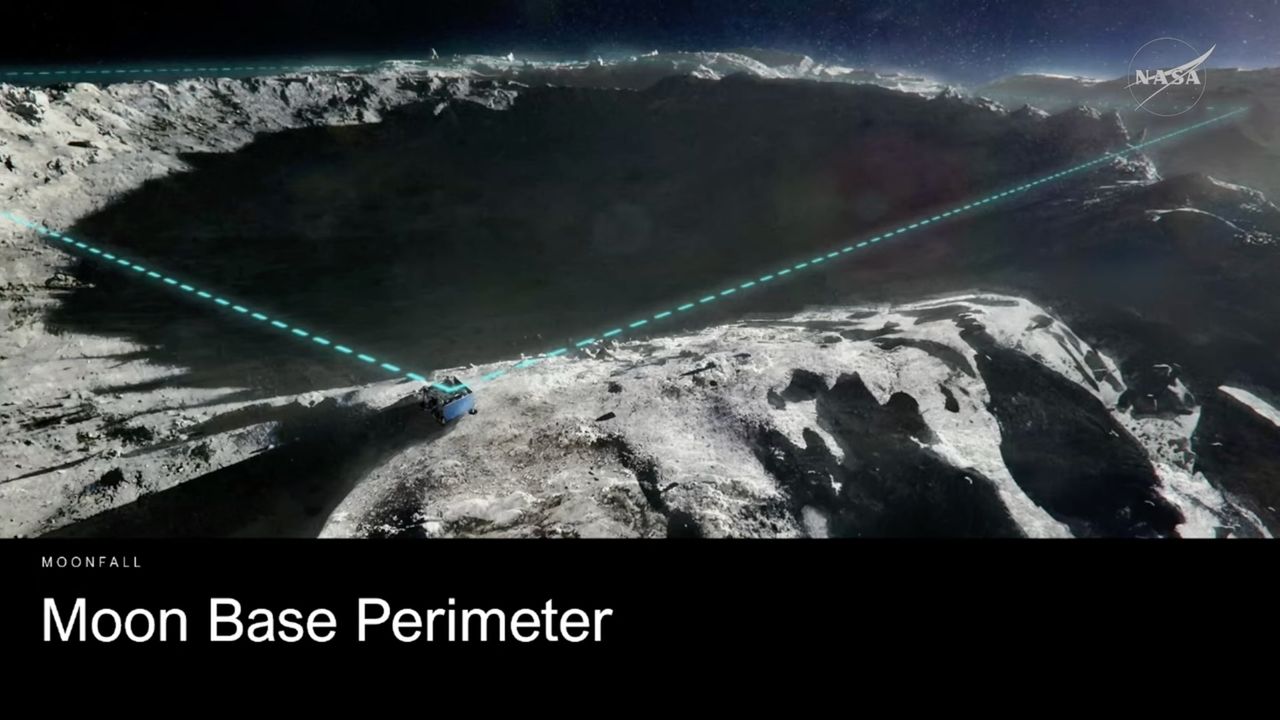
NASA awarded $1 billion in contracts to develop technologies for an expansive lunar base that will eventually stretch across hundreds of square miles. The agency plans to use hopping scout drones to map and mark the facility's boundaries across the lunar surface.
The contracts represent early funding for infrastructure that will support sustained human presence on the Moon under the Artemis program. NASA envisions a base far larger than previous Apollo missions, requiring new mobility systems and exploration tools to operate across vast distances in the harsh lunar environment.
Hopping drones offer advantages over wheeled rovers for reconnaissance work. Their ability to traverse rough terrain, navigate around obstacles, and cover ground quickly makes them ideal for scouting operations and establishing perimeter markers. These autonomous vehicles would work alongside traditional lunar rovers to expand NASA's operational range across the Moon's surface.
The scale of the proposed base reflects ambitions beyond brief visits. A multi-hundred-square-mile facility would support long-term scientific research, resource extraction experiments, and infrastructure development that could enable future missions to Mars and other destinations.
Previous lunar bases existed on a much smaller scale. Apollo astronauts explored roughly a few miles around their landing sites. The new Artemis base will require logistics networks, habitat modules, power systems, and transportation infrastructure spread across a far greater area.
NASA has not announced specific timelines for full base deployment, but the new contracts signal progress toward establishing the Moon as a long-term human outpost. The agency continues developing technologies for lunar habitats, life support systems, and power generation. International partnerships and private sector involvement will likely play roles in construction and operations.
The hopping drones represent one component of a larger exploration architecture. Their development will test autonomous navigation systems in lunar gravity and demonstrate efficient surveying methods. Success in these early missions will inform how future scout vehicles operate across the Moon's diverse terrain.