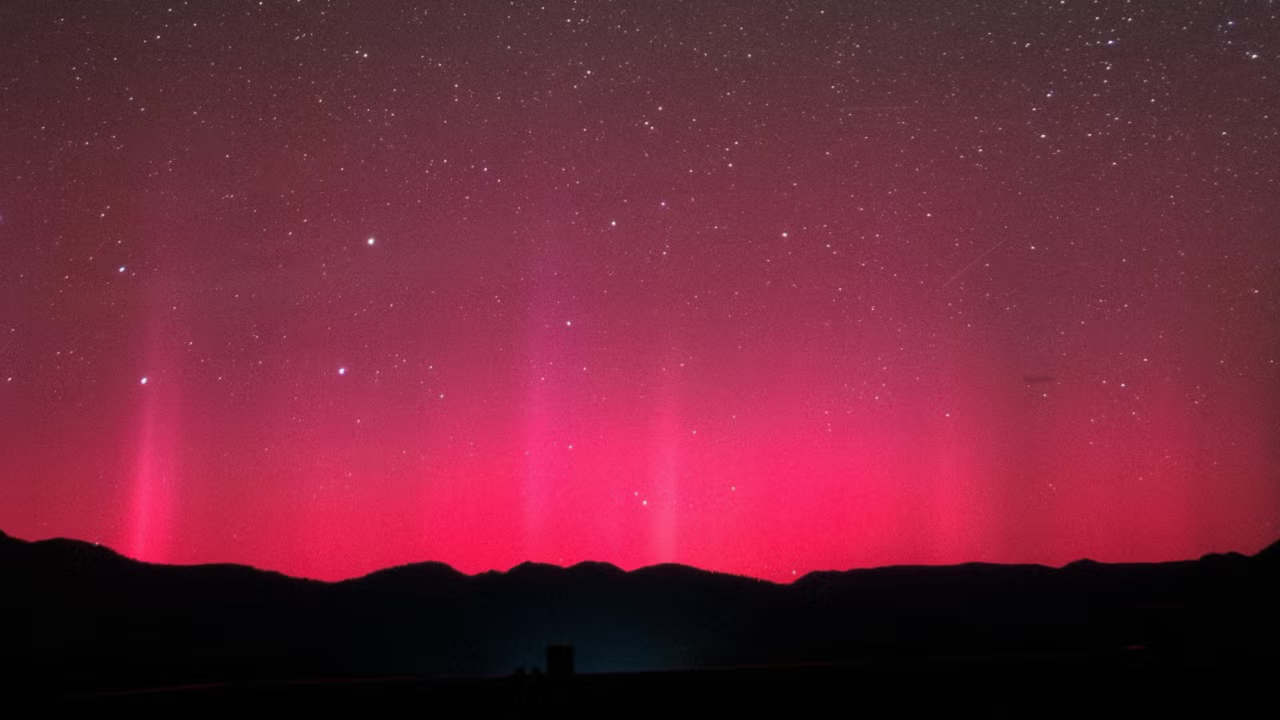
A massive solar storm that struck Earth in 1770 left behind dual records separated by continents and disciplines. Japanese poet Toriyama Sekien documented the phenomenon in his diary, noting "red lights in the northern sky" visible over Kyoto. Scientists have now corroborated this historical account using dendrochronology—the analysis of tree rings—which captured radioactive signatures of the geomagnetic event.
The research team detected elevated levels of carbon-14 in tree rings from that period, a telltale marker of intense solar radiation reaching Earth's atmosphere. This isotopic evidence aligns precisely with Sekien's diary entry, confirming the occurrence of what scientists classify as a severe geomagnetic storm. The red auroras the poet observed represent the same energetic particles colliding with the upper atmosphere that produced the radioactive spike in trees.
This discovery bridges humanities and natural sciences. While Sekien's literary account provided geographical specificity and witnessing details, the tree-ring analysis offered physical confirmation and quantified the event's intensity. The 1770 storm never entered modern scientific records because global instrumental networks did not exist then, making the combination of documentary evidence and tree-ring data invaluable for understanding historical solar activity.
The findings carry contemporary relevance. Modern power grids and satellites remain vulnerable to extreme geomagnetic storms, as demonstrated by the 1859 Carrington Event. By reconstructing the frequency and severity of past solar storms through combined historical and dendrochronological evidence, researchers build better models for predicting future space weather hazards. The 1770 event's recovery from two independent sources—artistic observation and biological proxy—demonstrates how ancient records merit serious scientific attention. This synthesis of 18th-century poetry and ring analysis strengthens the historical solar storm database crucial for assessing civilization's exposure to catastrophic space weather.