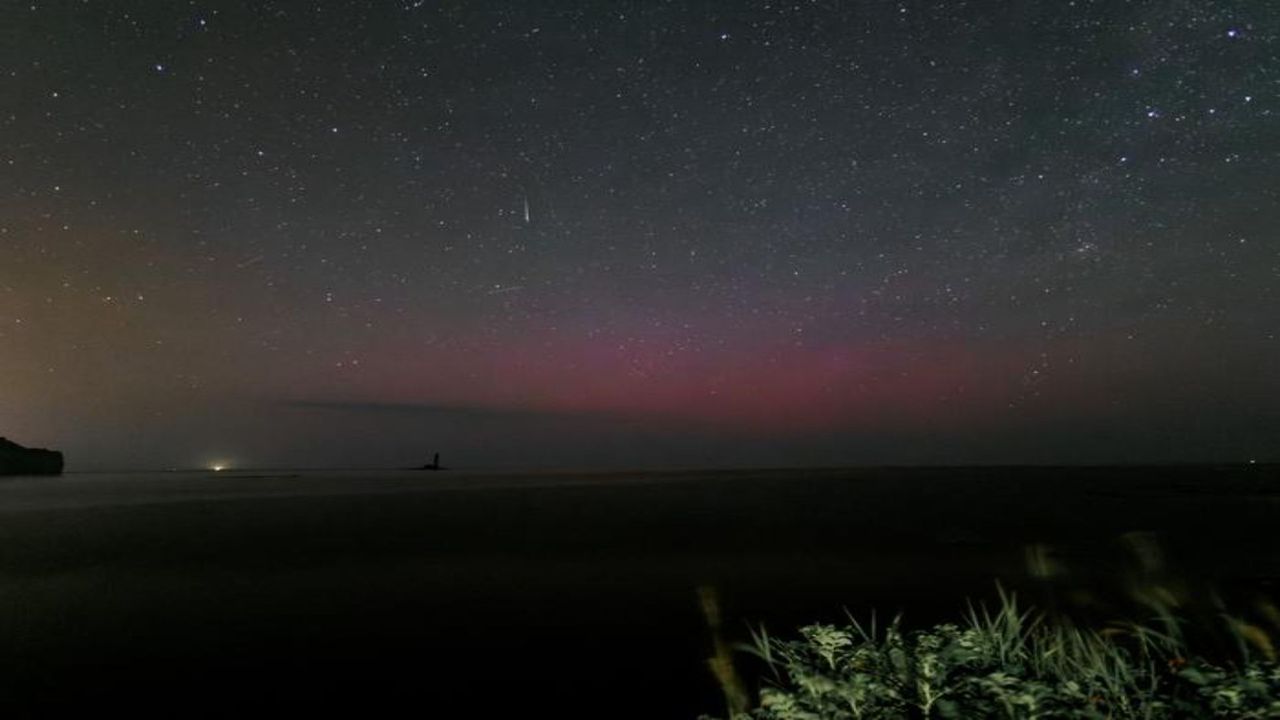
Researchers have discovered that rare red auroras observed over Japan reached far higher into Earth's atmosphere than scientists previously believed possible, revealing that some geomagnetic storms pack considerably more power than existing models suggest.
The crimson light displays, which stretched hundreds of miles above the planet, contradicted decades-old assumptions about how intense solar storms can become. Traditional understanding held that these red auroras, caused by oxygen emissions high in the atmosphere, could only reach certain altitudes during extreme geomagnetic events. The Japanese observations demonstrate that geomagnetic storms can actually exceed those theoretical limits.
These red northern lights form when charged particles from the sun collide with oxygen atoms at extremely high altitudes, typically 300 miles or more above Earth's surface. Most auroras visible from lower latitudes appear green or blue, making the red variety particularly rare and valuable for scientific study. The Japan sightings captured auroral emissions extending significantly higher than models predicted, indicating the underlying solar and geomagnetic phenomena are more energetic than previously understood.
The findings carry implications for space weather forecasting and infrastructure protection. Severe geomagnetic storms threaten satellites, power grids, and communications networks. Underestimating storm intensity could leave critical systems more vulnerable than current safeguards account for. More accurate models of extreme space weather events help engineers design better protection systems and scientists better predict when such events might occur.
The researchers' work challenges assumptions built from historical auroral observations and suggests that rare, extreme geomagnetic storms represent a more dangerous threat than conventional wisdom indicated. This discovery underscores how studying natural phenomena can reveal gaps in scientific understanding, even for well-documented events like auroras that have fascinated observers for centuries.
Further analysis of historical auroral records and continued monitoring of future geomagnetic events will help refine new models. The research emphasizes the need for continued investment in space weather observation networks,