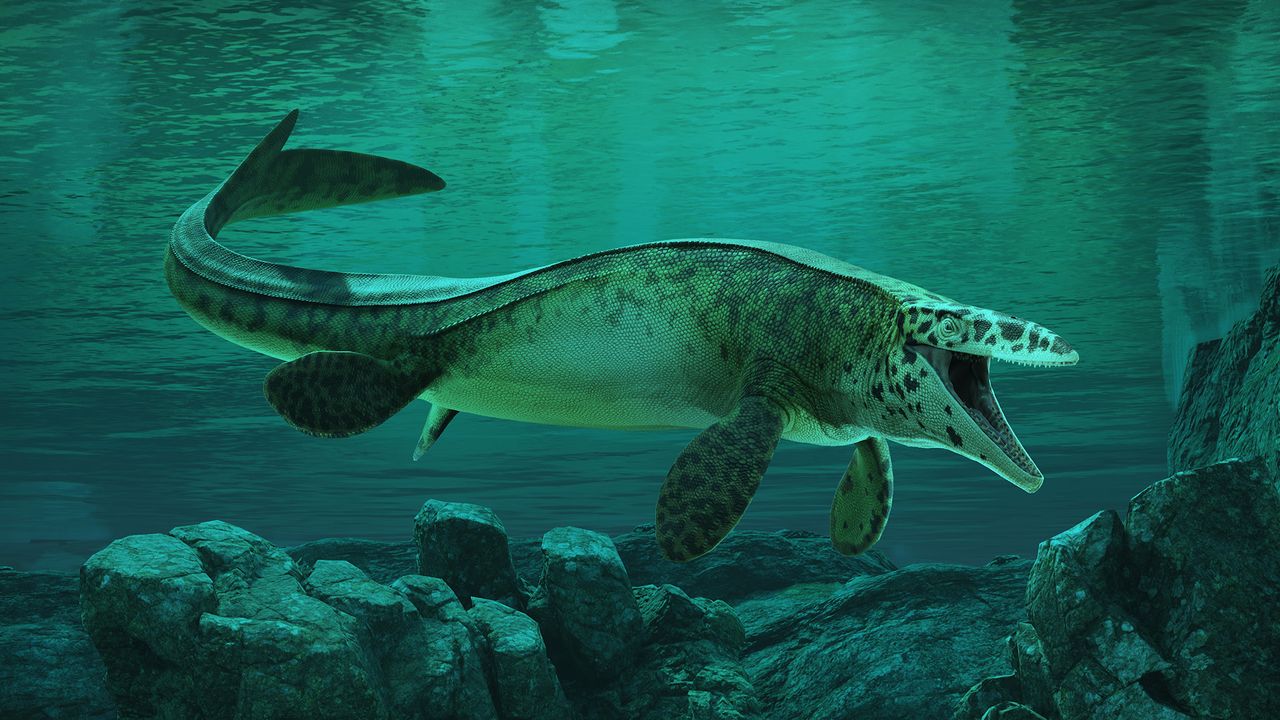
Paleontologists have identified a newly described mosasaur species, Tylosaurus rex, that dominated the oceans during the age of dinosaurs. The creature reached lengths of up to 43 feet (13 meters), making it one of the most formidable marine predators of its time.
Mosasaurs were large marine reptiles that thrived in the seas while dinosaurs ruled terrestrial environments. Tylosaurus rex possessed a skull-crushing bite, allowing it to consume large prey with ease. The species name references the T. rex of land-dwelling dinosaurs, reflecting the animal's apex predator status in its aquatic ecosystem.
The discovery adds to scientific understanding of mosasaur diversity during the Late Cretaceous period. These marine reptiles occupied ecological niches similar to modern apex predators like great white sharks and saltwater crocodiles. Their powerful jaws and streamlined bodies made them efficient hunters capable of taking down large fish, other reptiles, and possibly juvenile mosasaurs.
Researchers examined fossil remains to characterize the species and distinguish it from related mosasaurs. The analysis revealed anatomical features specific to Tylosaurus rex, including skull morphology and vertebral structure. These characteristics support its classification as a distinct species within the diverse Tylosaurus genus.
The mosasaur fossil record extends from the Cretaceous period, approximately 82 to 66 million years ago. Tylosaurus rex lived during the final stages of the Cretaceous, inhabiting shallow seas that covered much of North America. Understanding these marine predators provides insights into ocean ecosystems before the mass extinction event that ended the dinosaur era.
The significance of this discovery extends beyond naming conventions. It highlights the complexity and biodiversity of prehistoric oceans. Tylosaurus rex and other mosasaurs demonstrate that marine environments supported pred