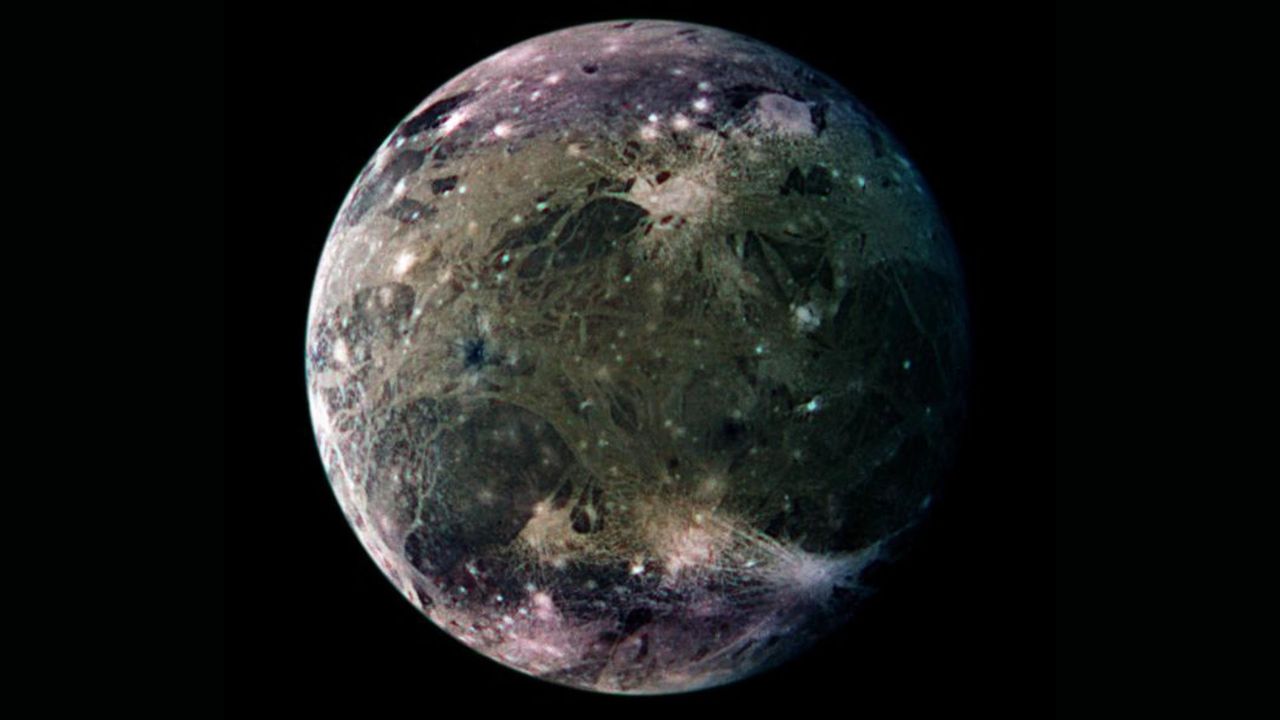
Jupiter's Ganymede, the solar system's largest moon, possesses a magnetic field that has long puzzled scientists. New research suggests the moon is undergoing internal heating, potentially explaining the origin of this anomalous magnetic phenomenon.
Ganymede's magnetic field differs fundamentally from Earth's. Rather than originating from a global dynamo powered by a liquid iron core, Ganymede generates localized magnetic anomalies concentrated in specific regions. This peculiar pattern has resisted explanation for decades.
The heating hypothesis centers on tidal forces. As Ganymede orbits Jupiter within the intense gravitational environment of the Jovian system, tidal friction generates internal heat. This friction occurs because Jupiter's gravity pulls unevenly on different parts of the moon, flexing its interior. The resulting heat could sustain convection currents in Ganymede's subsurface ocean or partial melting of its icy mantle.
Such internal heating mechanisms matter because they influence the moon's geology and potentially its habitability. A geothermally active Ganymede could support chemical energy sources that might sustain microbial life in its subsurface water layer, which scientists estimate contains more water than all Earth's oceans combined.
The research builds on decades of orbital data from NASA's Galileo spacecraft and observations from the Hubble Space Telescope. These instruments revealed that Ganymede's magnetism concentrates near specific surface regions, suggesting localized sources rather than planetary-scale magnetic generation.
Understanding Ganymede's thermal history also illuminates broader questions about moon formation and evolution. The heating patterns could reveal whether Ganymede underwent differentiation processes that concentrated magnetic minerals in particular zones, or whether ongoing internal dynamics continue reshaping the moon's interior structure.
NASA's upcoming Europa Clipper mission will gather additional data about the Jovian system, potentially providing new constraints