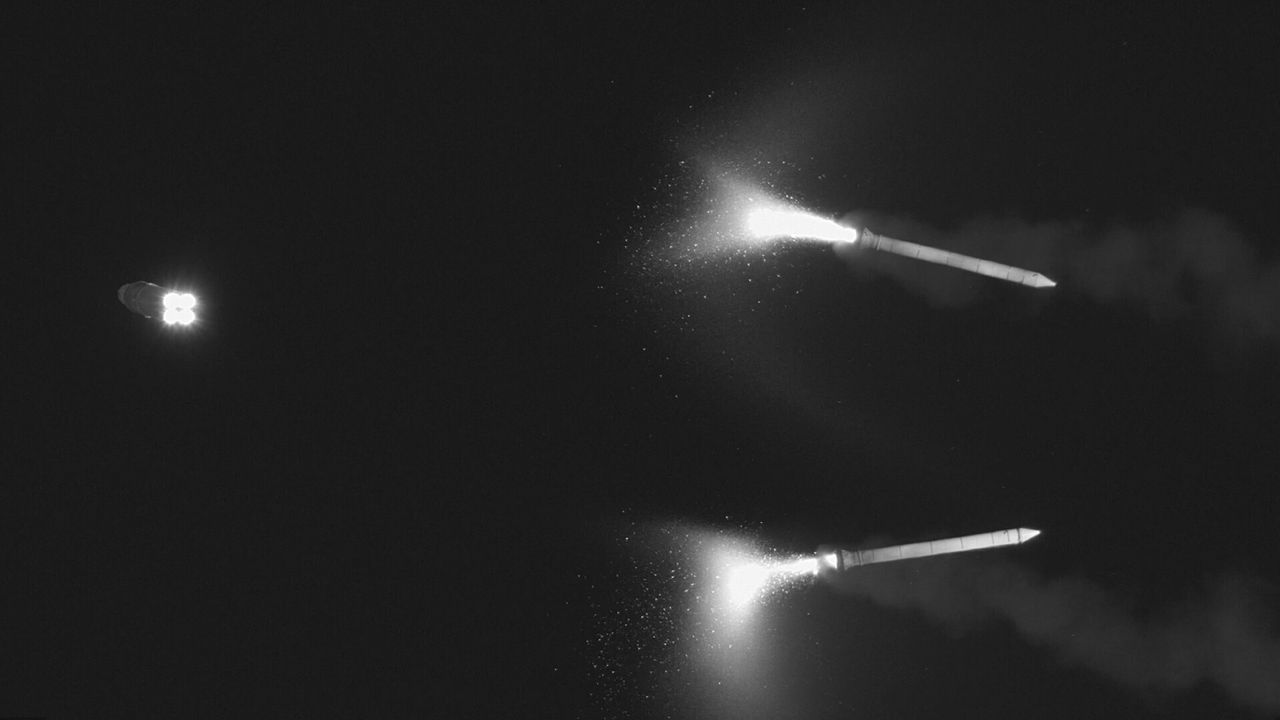
NASA's Artemis 2 mission captured a striking photograph of its twin solid rocket boosters moments after separation from the Space Launch System rocket during ascent. The image shows both boosters suspended in mid-air, their parachutes deployed as they begin their descent back toward Earth.
The boosters separate roughly two minutes after liftoff, carrying the vehicle to an altitude of approximately 150,000 feet. Once detached, they deploy a series of parachutes to slow their fall before splashing down in the Atlantic Ocean for recovery and eventual refurbishment. This design mirrors the Space Shuttle program's reusable booster system, though the SLS boosters are newly manufactured rather than refurbished units.
Artemis 2 represents NASA's second integrated flight test of the SLS and the Orion spacecraft, following the uncrewed Artemis 1 mission in November 2022. The mission carried four astronauts on a lunar flyby trajectory, traveling farther than any crewed spacecraft since the Apollo program. The flight tested critical systems for the subsequent Artemis 3 mission, which aims to land humans on the lunar surface.
The photograph highlights one of the most visually dramatic moments of any launch. Capturing both boosters mid-separation offers perspective on the scale and choreography of the launch system. Each booster stands 149 feet tall and contains solid propellant that burns for approximately two minutes during ascent.
The SLS program has faced technical delays and cost overruns since its inception, with total development costs exceeding $20 billion. Despite these challenges, the system remains central to NASA's lunar exploration architecture. The booster recovery and reuse program aims to reduce operational costs for future Artemis missions, though analysis of booster condition and refurbishment timelines continues.
This image documents a routine yet remarkable engineering achievement, demonstrating