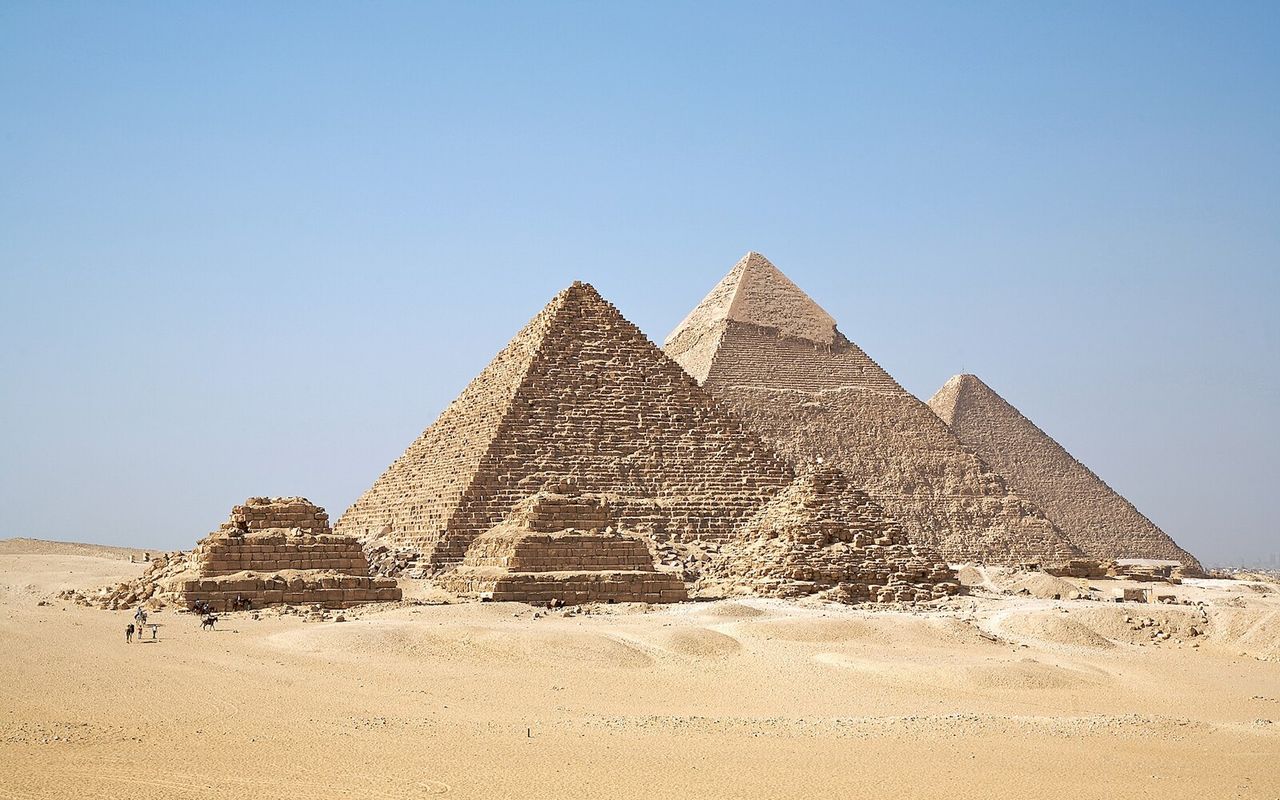
Researchers have discovered that the Great Pyramid of Giza owes its remarkable survival to sophisticated earthquake-resistant engineering techniques employed by ancient Egyptian builders more than 4,600 years ago.
The pyramid's longevity through repeated seismic events stems from its construction design, which incorporates specific structural features that absorb and dissipate earthquake energy rather than concentrating it. The stone blocks used in the monument's construction, combined with the internal chamber arrangements and the pyramid's geometric shape, work together to distribute seismic forces across the entire structure.
Ancient Egyptian engineers demonstrated advanced understanding of building resilience without modern engineering science. The roughly 2.3 million limestone blocks, each weighing up to 15 tons, were fitted together with precision that allows slight movement during ground shaking. This flexibility prevents the catastrophic failure that rigid structures experience during earthquakes. The internal ramp systems and air shafts also contribute to structural integrity by reducing concentrated stress points.
The pyramid's location on the Giza Plateau, positioned away from major fault lines, provided some natural advantages. However, the deliberate architectural choices amplified this benefit. The structure's limestone and granite composition offers excellent shock-absorption properties, and the stepped internal design distributes loads evenly throughout the edifice.
Recent seismic studies examining how the pyramid responds to ground motion have confirmed that its design minimizes acceleration of upper sections during earthquakes. Historical records document numerous seismic events in the Cairo region, yet the monument has sustained only minor damage, with no catastrophic collapses.
This research carries implications beyond archaeology. Modern engineers studying ancient structures can extract principles applicable to contemporary earthquake-resistant building design. The pyramid demonstrates that longevity through environmental stressors depends on understanding fundamental physics rather than raw material quantity alone.
The Great Pyramid represents one of history's most enduring engineering achievements, not merely through construction scale but through