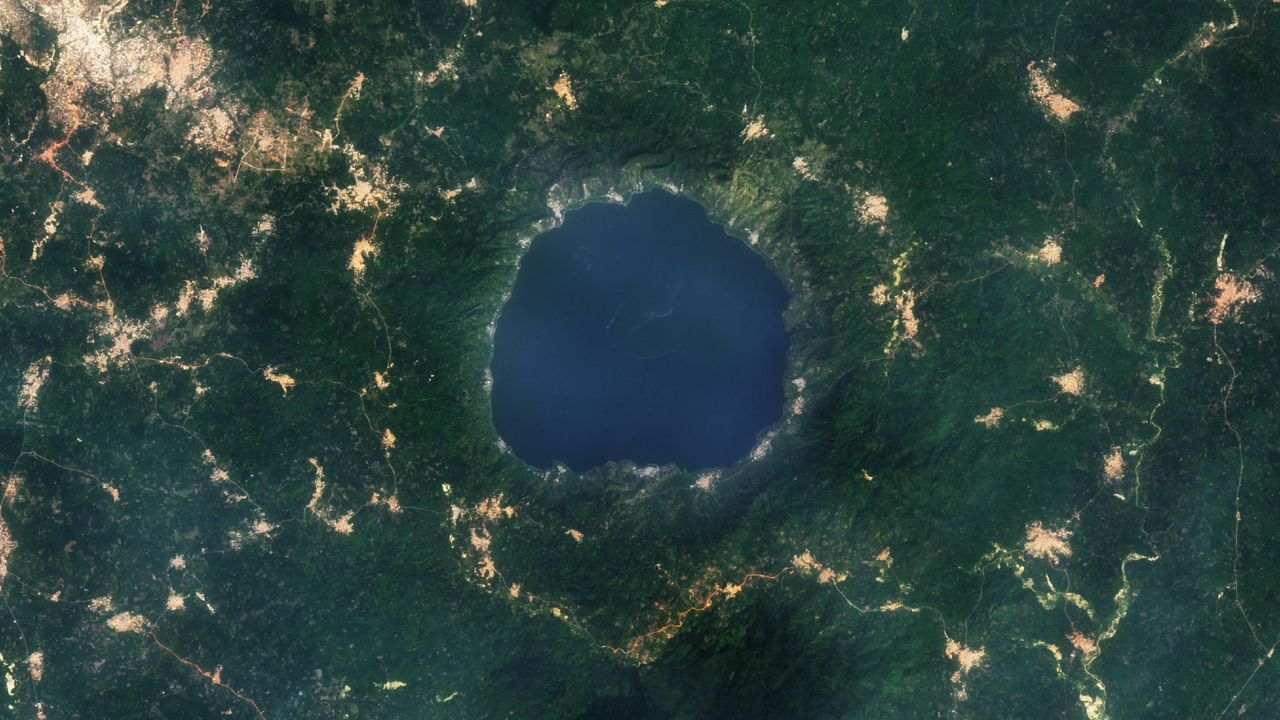
Lake Bosumtwi in Ghana displays striking golden patterns visible from space, a visual consequence of a cosmic collision that reshaped the landscape roughly 1 million years ago. A 2015 satellite image reveals these shimmering tendrils encircling the lake, which holds deep cultural significance for the Asante people who consider it sacred.
The golden coloration comes from exposed mineral deposits, particularly iron oxides and other elements exposed by the meteor impact. The impact created a circular depression that filled with water, forming the lake itself. The surrounding geology tells a dramatic story of the collision's violence. The meteor strike was powerful enough to fundamentally alter local topography and mineralogy, leaving visible traces that persist millennia later.
Bosumtwi is one of Ghana's most important freshwater lakes and sits within a defined impact crater. Scientists have long studied the site as a terrestrial impact structure, with the crater measuring approximately 10.5 kilometers in diameter. The impact occurred during the Pleistocene epoch, well before human settlement in the region, yet the Asante people developed spiritual connections to the lake that endure today. Local tradition holds that the lake is home to the souls of the dead, reflecting cultural reverence for this geologically unique location.
The satellite imagery provides researchers with a non-invasive way to study crater geology and mineral distribution patterns. These visual signatures help scientists understand impact crater formation and post-impact weathering processes. The golden tendrils visible in satellite data mark zones where ancient bedrock exposed by impact has undergone oxidation and chemical alteration over hundreds of thousands of years.
Lake Bosumtwi represents one of few well-preserved impact craters on Earth, making it valuable for planetary science. Understanding how meteoric impacts reshape landscapes informs broader knowledge about Earth's geological history and impact events that have periodically altered the planet's surface. The lake serves as both