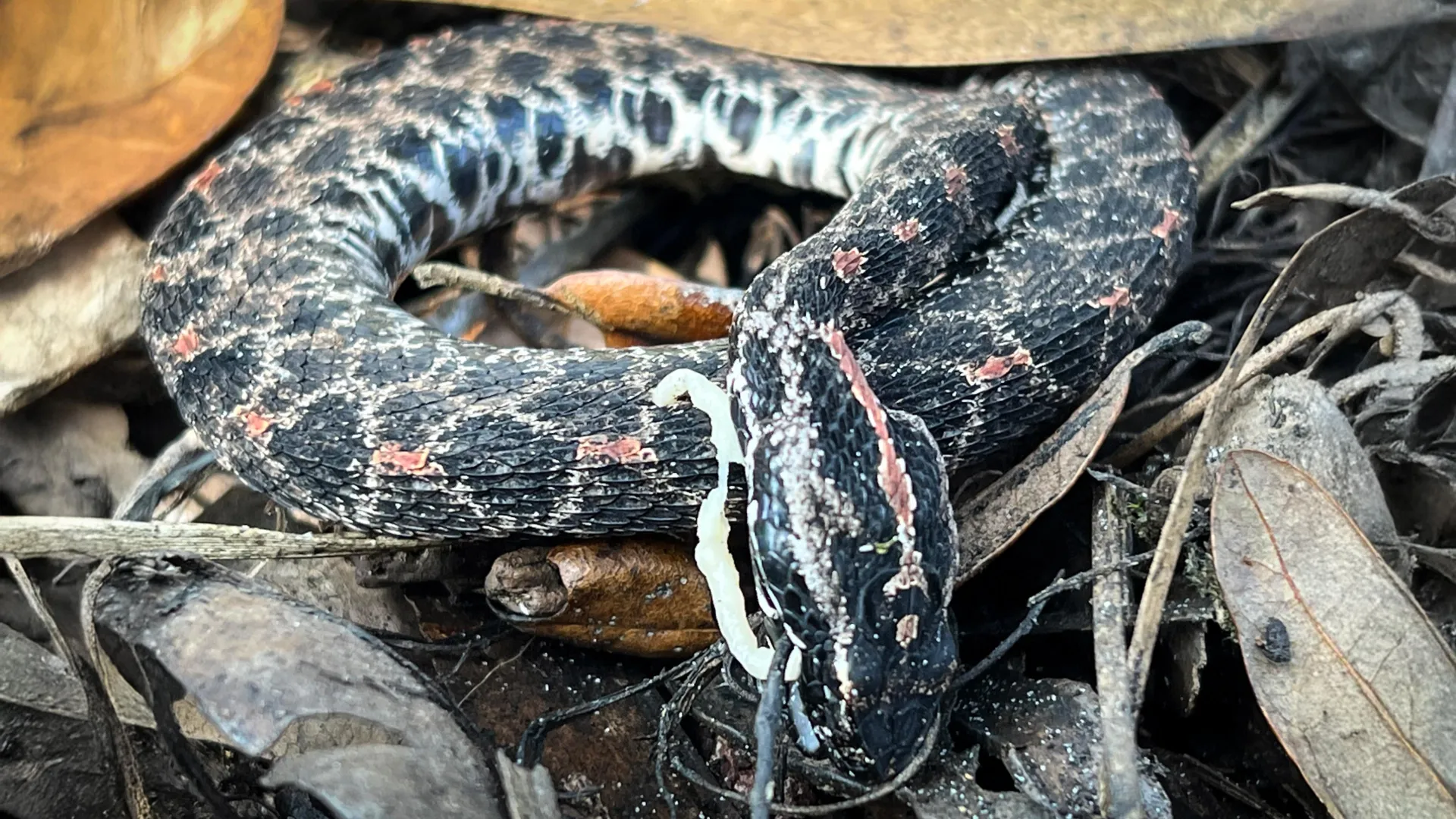
Researchers studying wild snakes across the southeastern United States have documented a hidden disease epidemic that strikes multiple infections simultaneously. The team discovered that many snakes carry dangerous pathogens at once, with ophidiomycosis, a fungal infection known as snake fungal disease, posing one of the most serious threats to wild populations.
Pygmy rattlesnakes face the worst burden. These small venomous snakes frequently contract infections from both the fungus and parasitic lungworms that colonize their respiratory systems. The co-infection pattern suggests these snakes face compounding health pressures that weaken their survival prospects.
Ophidiomycosis spreads slowly but causes permanent damage to snake skin and tissue. The fungus Ophidiomyces ophiodiicola was first identified in wild populations in 2006 and has since devastated snake communities across North America. Infected snakes develop lesions, abnormal shedding patterns, and behavioral changes that make them vulnerable to predation and starvation. The disease offers no cure in wild animals.
Lungworm parasites add another layer of stress. These parasites migrate through the snakes' lungs and airways, impairing respiratory function. When combined with fungal infections, the dual burden taxes immune systems already struggling against one pathogen. Research indicates coinfected animals show worse survival rates than those with single infections.
The southeastern United States represents a hotspot for these diseases. Researchers attribute rising infection rates to warming temperatures that favor both fungal growth and parasite transmission. Climate change extends breeding seasons for parasites and creates conditions where fungal spores survive longer in soil and leaf litter.
The findings matter because rattlesnakes control rodent populations and serve as ecological indicators of environmental health. Declining rattlesnake numbers signal broader ecosystem problems. Pygmy rattlesnakes are already vulnerable due to habitat