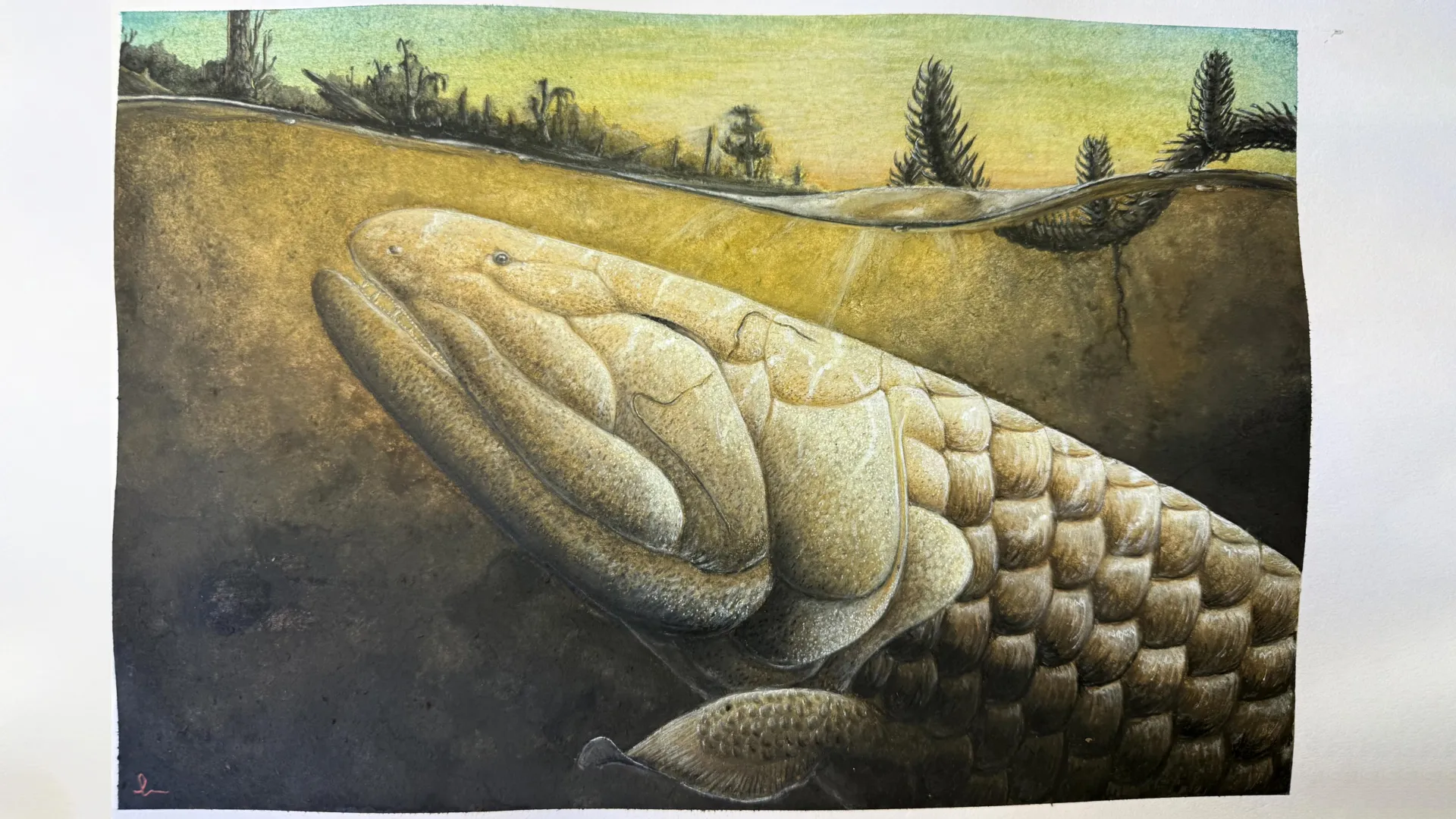
Scientists used neutron imaging to scan the skull of Koharalepis jarviki, a 380-million-year-old fish from Antarctica, and uncovered anatomical features that illuminate how early vertebrates transitioned from water to land.
The research team discovered skull openings in the ancient fish that may have functioned as air-gulping mechanisms. These structures suggest K. jarviki inhabited shallow waters and possessed the physiological equipment to breathe air when oxygen levels dropped, a critical adaptation for survival in stagnant environments.
Equally striking, the researchers identified a light-sensitive organ within the skull linked to day-night rhythms. This feature indicates the fish's eyes contained structures for sensing circadian cycles, helping it navigate daily activity patterns in aquatic habitats.
K. jarviki belonged to a group of lobe-finned fish positioned directly on the evolutionary pathway toward tetrapods, the first vertebrates to walk on land. By studying its anatomy, scientists gain insight into which adaptations emerged before the actual transition onto dry ground occurred.
The neutron imaging technique proved crucial here. Unlike conventional scanning methods, neutron imaging penetrates dense bone without damaging 380-million-year-old specimens, revealing internal cavities and tissue arrangements invisible to other technologies.
The discovery highlights a gradual evolutionary process rather than a sudden leap. Early fish likely developed air-breathing capacity and enhanced sensory perception while still aquatic, pre-adapting their descendants for terrestrial life. These traits became advantageous when fish eventually ventured onto land to escape predators, find food, or colonize new habitats.
The findings advance understanding of how body plans capable of supporting land-based life evolved incrementally over millions of years. Each anatomical innovation emerged under specific pressures in aquatic environments before proving useful on land.
However, a single specimen offers limited perspective. Broader sampling across multiple