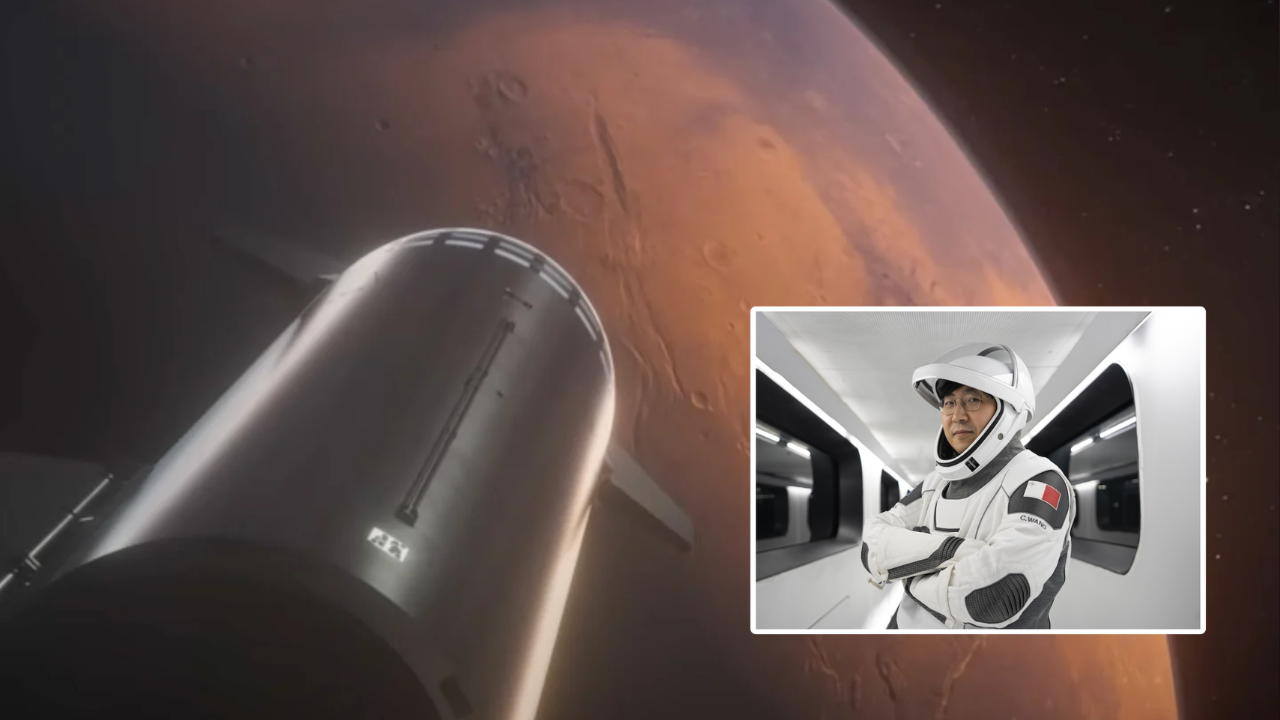
SpaceX has announced plans to launch a private flyby mission to Mars led by cryptocurrency billionaire Chun Wang, marking the first crewed Starship journey to the Red Planet. The company has not disclosed a launch timeline.
Wang's mission represents a watershed moment for commercial spaceflight. SpaceX's Starship, the fully reusable super-heavy launch system currently in development, will carry Wang and an unspecified crew on a trajectory that passes Mars without landing. The company has tested Starship extensively in recent years, achieving significant milestones in orbital flight and propellant transfer demonstrations, yet faces considerable technical hurdles before executing a Mars flyby.
Details about the mission remain sparse. SpaceX has not released information about crew size, mission duration, or the specific launch window. The absence of a timeline reflects ongoing development challenges with Starship's life support systems, radiation shielding, and long-duration propulsion capabilities required for Mars transit.
A crewed Mars flyby differs substantially from a landing mission. The spacecraft would travel to Mars, orbit or pass near the planet, and return to Earth without surface operations. This approach reduces complexity compared to landing and surface operations while still demonstrating interplanetary capability.
Wang's involvement signals growing willingness among wealthy entrepreneurs to finance ambitious space projects. His cryptocurrency background connects him to other space industry investors who have leveraged digital asset wealth into aerospace ventures.
SpaceX CEO Elon Musk has repeatedly stated ambitious goals for Mars missions, including eventual human settlements. However, the company's publicly stated timelines have historically shifted. Earlier plans suggested crewed Starship missions in the mid-2020s, though current projections appear more conservative.
The announcement underscores SpaceX's confidence in Starship's eventual capability for deep space missions. Successful completion of Wang's flyby mission would validate Starship's design