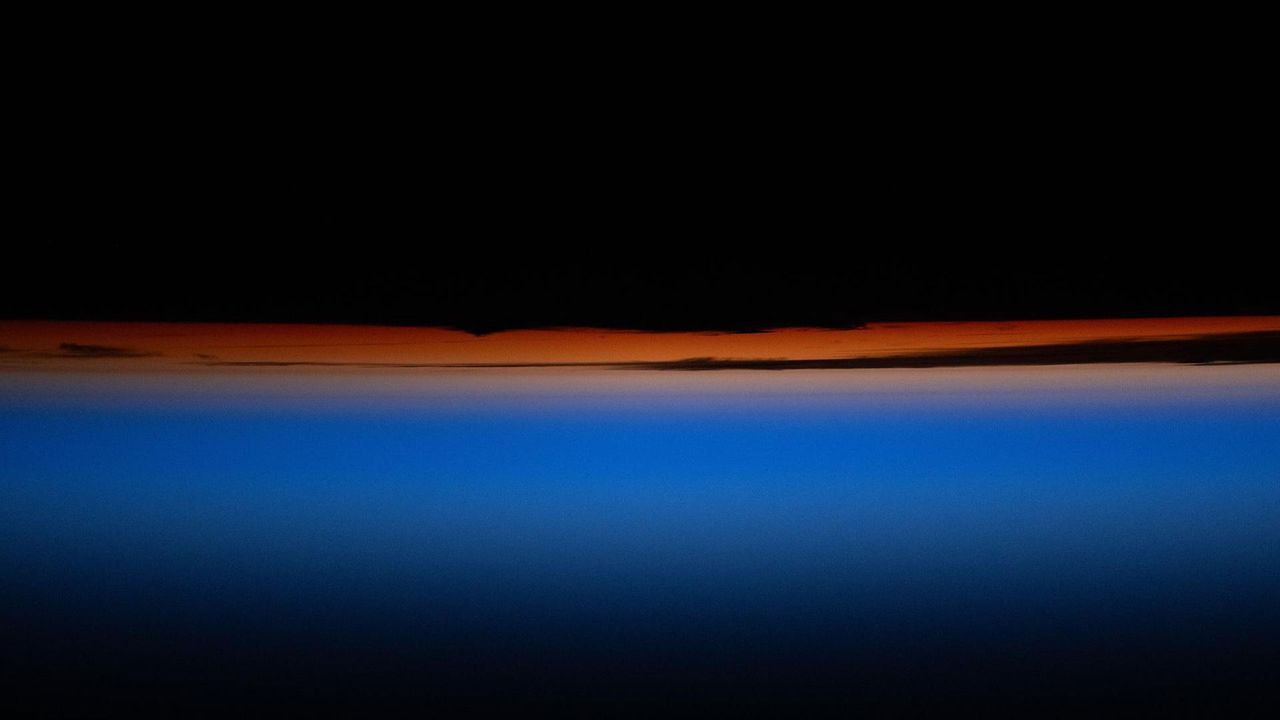
# Stunning Sunset Photograph Captured from Orbit
Astronauts aboard the International Space Station captured a breathtaking sunset image on May 26, 2026, showcasing Earth's atmosphere in vivid detail from 250 miles above the surface.
The photograph reveals the thin, delicate layers of our planet's atmosphere illuminated by the sun's rays at a low angle. The curvature of Earth appears prominently, with the atmosphere creating a gradient of colors ranging from deep blue to orange and red hues near the horizon. This perspective demonstrates what few humans experience directly.
Sunset views from space differ fundamentally from ground-level observations. From the ISS, astronauts witness multiple sunsets daily due to their orbital velocity, completing one orbit around Earth every 90 minutes. Each transition into shadow reveals atmospheric details invisible from the surface. The angle of sunlight interacting with air molecules and particles creates layers of color that photographers find particularly striking.
These images serve practical purposes beyond aesthetics. Space agencies study such photographs to monitor atmospheric conditions, track aerosol distributions, and observe how light interacts with different atmospheric layers. The data helps researchers understand climate patterns and air quality variations.
The ISS orbits at an inclination of 51.6 degrees, passing over diverse geographical regions. This positioning allows crew members to capture sunsets above oceans, mountains, and cities, each producing unique visual effects depending on local conditions and particulate matter in the atmosphere.
Space.com regularly features photographs from the ISS and other space missions through its "Space Photo of the Day" series, highlighting images from NASA, the European Space Agency, and other organizations. These daily selections showcase both scientific value and visual beauty, connecting audiences to space exploration activities.
Sunset photography from orbit represents one of the most accessible ways for the public to grasp humanity's presence in space and gain perspective on Earth's frag