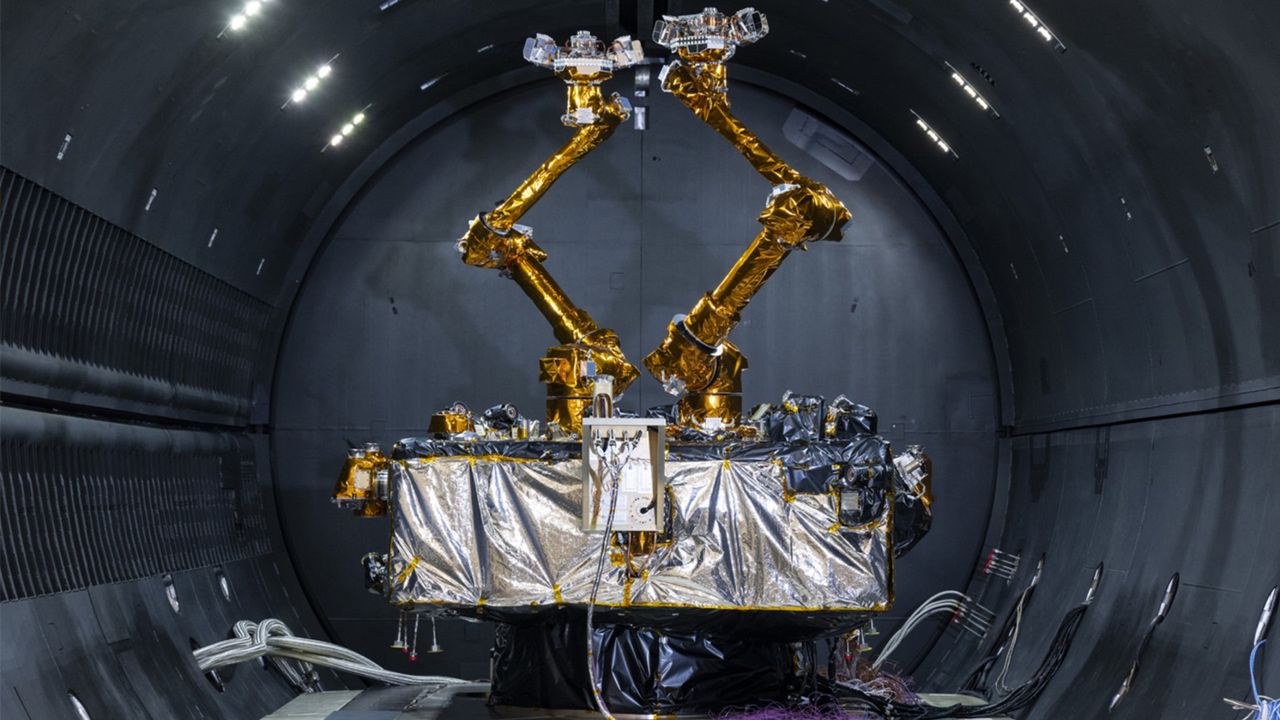
The Defense Advanced Research Projects Agency is developing a robotic satellite servicing spacecraft designed to extend the operational life of geosynchronous satellites in orbit. The Robotic Servicing of Geosynchronous Satellites, or RSGS, mission is scheduled to launch by 2026, with initial testing potentially beginning as soon as summer 2024.
DARPA's servicing satellite will rendezvous with aging geosynchronous satellites and perform repairs and refueling operations that would otherwise require those satellites to be decommissioned and replaced. Geosynchronous satellites, which orbit at fixed points above the equator at roughly 36,000 kilometers altitude, support critical communications, weather monitoring, and defense infrastructure. When these satellites run low on fuel or experience hardware failures, operators currently have no option but to abandon them.
The RSGS program addresses a growing orbital traffic problem. Thousands of aging geosynchronous satellites currently occupy premium orbital slots, preventing deployment of newer, more efficient systems. By extending the lives of existing satellites through robotic servicing, DARPA seeks to reduce the need for new launches while freeing up valuable orbital real estate for next-generation systems.
The mission represents a significant test of on-orbit servicing technology. Previous satellite servicing operations, including those performed by the Space Shuttle in low Earth orbit, required human astronauts. The RSGS mission will demonstrate autonomous or remotely operated robotic systems capable of performing complex tasks like fueling and component replacement at geosynchronous altitude, where human intervention remains impractical.
Successful deployment would transform satellite economics and orbital sustainability. Commercial satellite operators could maintain aging but functional assets rather than deorbiting them, reducing costs and waste. The technology also carries defense implications, offering the U.S. military the ability to maintain critical space infrastructure even if replacement launches face delays or constraints.
Technical challenges remain substantial