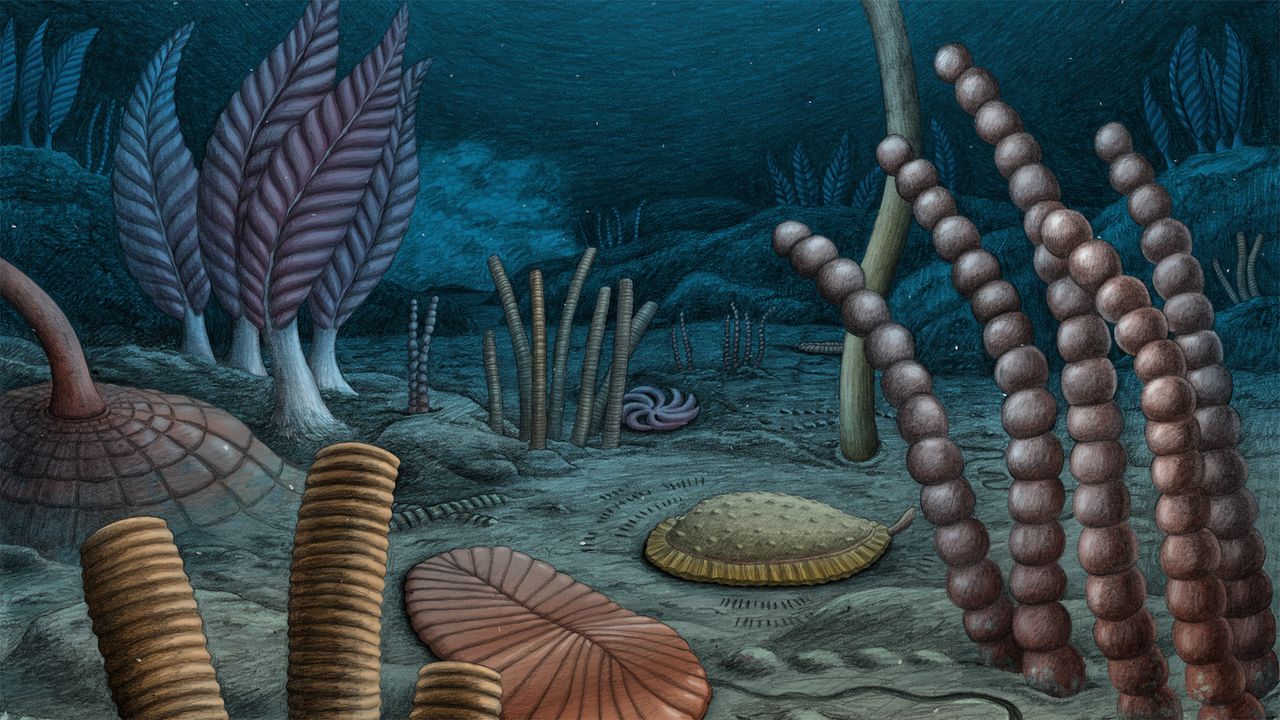
Researchers analyzing a fossil collection from Canada have pushed back the timeline for complex animal evolution by as much as 10 million years, challenging long-held assumptions about when multicellular organisms first emerged.
The discovery centers on the Ediacara fauna, a group of soft-bodied organisms that lived during the late Proterozoic era. Scientists found evidence that these creatures, which represent the earliest known complex animals, appeared earlier than the previous fossil record suggested. This extends the history of animal life deeper into geological time and raises questions about the pace of evolutionary change in Earth's earliest ecosystems.
The fossils reveal organisms that exhibited structural complexity previously associated with much later periods. These animals displayed distinct body plans and what researchers call "unmistakenly animal" characteristics, moving them beyond simple microbial mats and colonial organisms that dominated earlier periods.
The significance of this finding lies in what it tells us about evolutionary rates. If complex animals emerged 10 million years earlier than conventional dating suggested, either evolution proceeded more rapidly during this period than scientists thought, or the conditions allowing for animal life developed sooner than geological models predicted. Both scenarios reshape our understanding of how quickly life diversified once multicellularity became viable.
The Canadian fossil site provides unusually clear preservation of soft tissues, allowing researchers to document detailed morphological features without the distortion common in fossilized remains. This clarity helped paleontologists confidently identify these organisms as animals rather than colonial microbes or other non-animal life forms.
The discovery also suggests that the traditional gaps in the fossil record may be larger than expected, with significant evolutionary events potentially leaving minimal traces. Future excavations in similarly aged deposits worldwide could reveal whether this timeline holds globally or if animal evolution proceeded at different rates in different regions.
These findings appear in peer-reviewed paleontology literature and have generated discussion within the scientific community about revising textbooks and reassessing how we construct the