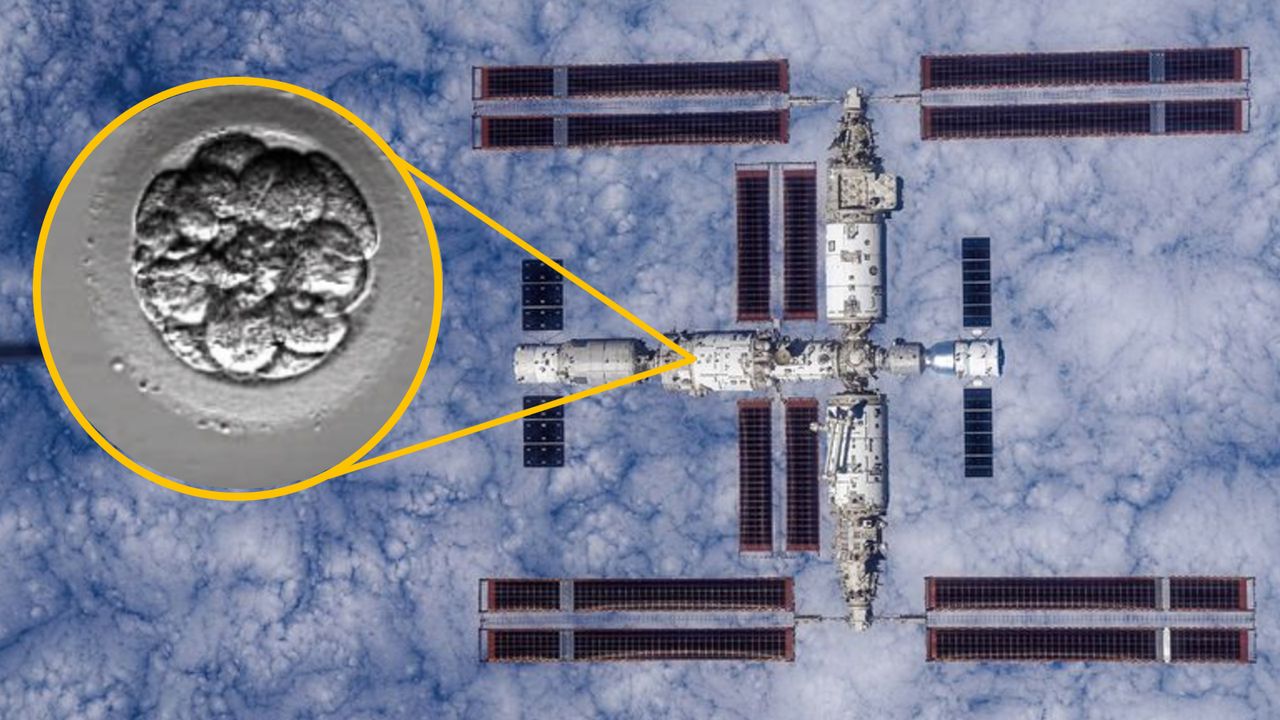
China launched embryo-like structures grown from human stem cells to its Tiangong space station aboard the Tianzhou-10 cargo mission. These synthetic embryos, created in laboratories rather than through fertilization, will undergo experiments in microgravity to test how space radiation and weightlessness affect human reproduction.
The structures represent a new frontier in reproductive biology research. Scientists created them by coaxing stem cells to self-organize into patterns resembling early-stage embryos, without genetic material from sperm or egg. This approach allows researchers to study embryonic development under extreme conditions without ethical complications of traditional embryo research.
The experiments address genuine unknowns about human reproduction beyond Earth. Astronauts on long missions face elevated radiation exposure and prolonged weightlessness, both factors that could theoretically damage reproductive cells or disrupt fetal development. Understanding these effects matters for future crewed missions to Mars or permanent lunar settlements, where colonists would need to reproduce.
Previous animal studies hint at problems. Rodent embryos exposed to space radiation showed developmental abnormalities, and microgravity affects gene expression in reproductive tissues. Human data remains sparse because space agencies have avoided directly studying human reproduction in orbit.
The synthetic embryo approach sidesteps major regulatory hurdles. Chinese researchers can investigate damage mechanisms in stem cell-derived structures that resemble early embryos without using actual human embryos, which face strict international oversight in many countries. This allows faster iteration and more aggressive testing protocols.
Limitations temper the research's immediate applicability. Laboratory-grown embryo models lack the complexity of real pregnancies. They cannot fully replicate placental development, hormonal signaling, or maternal-fetal interactions. Results will provide baseline data on radiation damage and gravitational effects on cells rather than definitive answers about whether humans can safely reproduce in space.
The experiments could run for weeks or months aboard Tiang