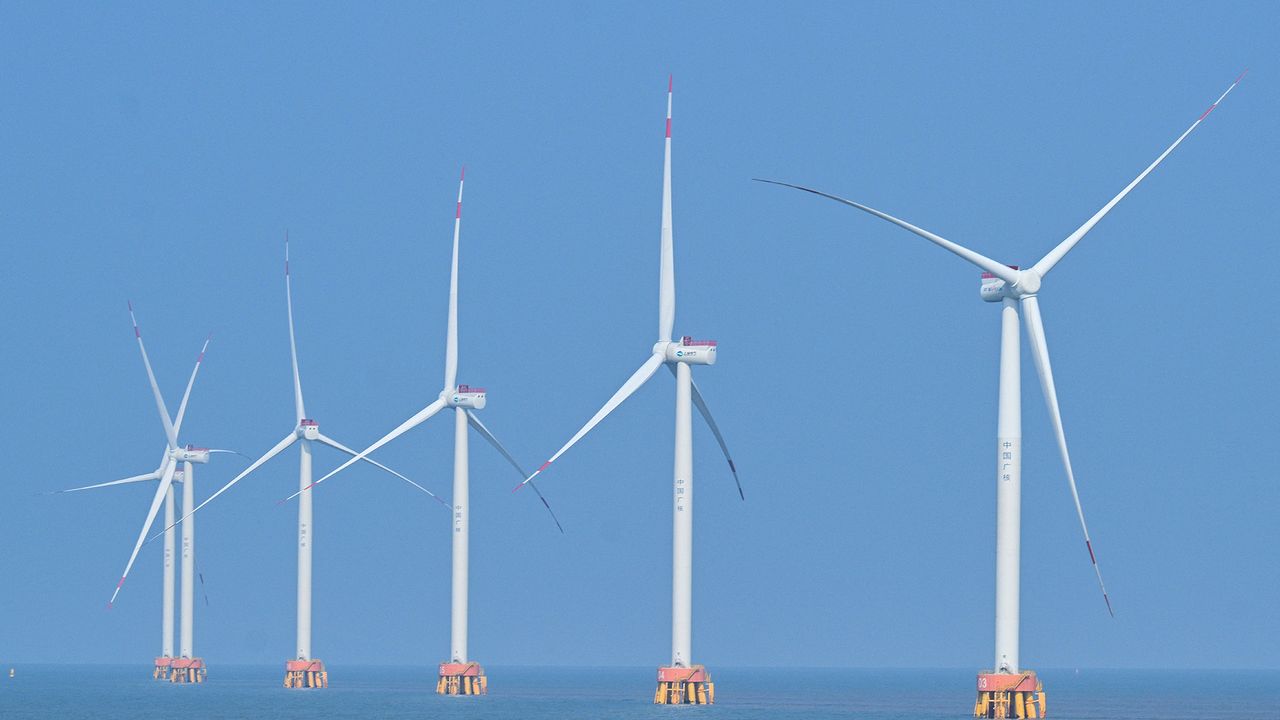
China has deployed the world's largest floating offshore wind turbine in deep water, advancing the nation's renewable energy infrastructure. The Three Gorges Pilot, a 16-megawatt turbine developed by China Three Gorges Corporation, generates sufficient annual electricity to power approximately 4,200 homes.
The turbine operates in deep-water conditions where traditional fixed-foundation offshore turbines cannot function. Floating platforms anchor to the seabed using cables or mooring systems, allowing installation in waters exceeding 60 meters deep. This technology expands viable locations for wind farms beyond shallow coastal zones.
The Three Gorges Pilot represents a scaling milestone. The turbine's 16-megawatt capacity surpasses previous floating wind records, demonstrating engineering advances in platform stability, rotor design, and power transmission. The turbine features a large rotor diameter that captures more wind energy at higher altitudes where wind speeds increase with elevation.
Deep-water wind resources remain largely untapped globally. Floating turbines access these areas, potentially doubling the world's available offshore wind potential. However, challenges persist. Deep-water installations face extreme weather exposure, saltwater corrosion, and complex maintenance logistics. Installation and mooring costs exceed shallow-water projects substantially.
China leads floating wind development alongside Norway and Portugal, which operate smaller commercial installations. The technology particularly benefits China's coastal geography, where continental shelves drop steeply, limiting shallow-water sites. Three Gorges Corporation positions this pilot as a testing ground for future commercial-scale floating wind farms.
The deployment reflects China's renewable energy targets. The nation aims to increase non-fossil fuel energy sources and reduce carbon emissions. Floating offshore wind complements existing solar and hydroelectric capacity, though it remains nascent compared to land-based wind.
Technical performance data from the pilot will inform next-generation turbine designs. Engineers will monitor