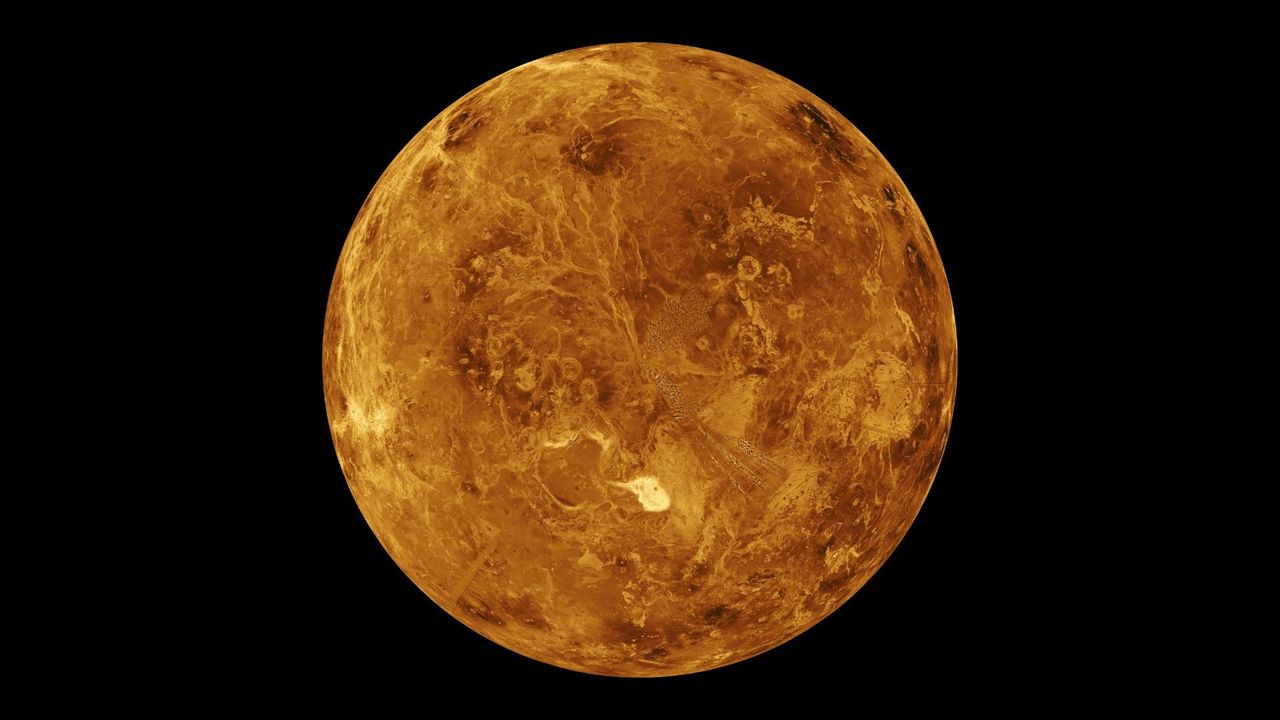
Scientists are mapping unusual bright formations on Venus called coronae to understand their origin. Researchers created detailed 3D maps of these structures, which cover vast areas of the planet's surface and display patterns that defy easy explanation.
Coronae are circular to oval ridged structures unique to Venus. They range from tens to hundreds of kilometers across and appear as raised features on radar imagery. The formations cluster in certain regions and display radial fracture patterns extending outward from their centers, resembling flower petals or target rings when viewed from above.
The origin of coronae remains contested. One leading hypothesis suggests they form from mantle plumes, columns of hot rock rising from deep within Venus that push upward against the crust. This mechanism could explain their circular shape and the fracture patterns radiating outward as the crust stretches and breaks under pressure. Another theory proposes they result from magma chambers that bulge the surface before potentially collapsing.
The new 3D mapping provides researchers with better elevation data and structural details impossible to see in traditional radar images. These high-resolution maps reveal subtle variations in coronae shapes and sizes, helping scientists test hypotheses about formation mechanisms. The work builds on decades of observations from NASA's Magellan spacecraft and more recent data from Venus Express and Akatsuki missions.
Understanding coronae matters for broader Venus geology. The structures provide windows into planetary interior dynamics and volcanism. Venus remains geologically active, and coronae may indicate where heat escapes from the planet's interior. Their presence suggests Venus' interior remains hot and dynamic despite the planet's hellish 900-degree Fahrenheit surface temperatures.
Venus orbits much closer to the sun than Earth and suffers a runaway greenhouse effect. Carbon dioxide atmosphere traps heat, creating conditions hostile to life as we understand it. Yet Venus likely harbored liquid water early in its history, making it a crucial comparative case