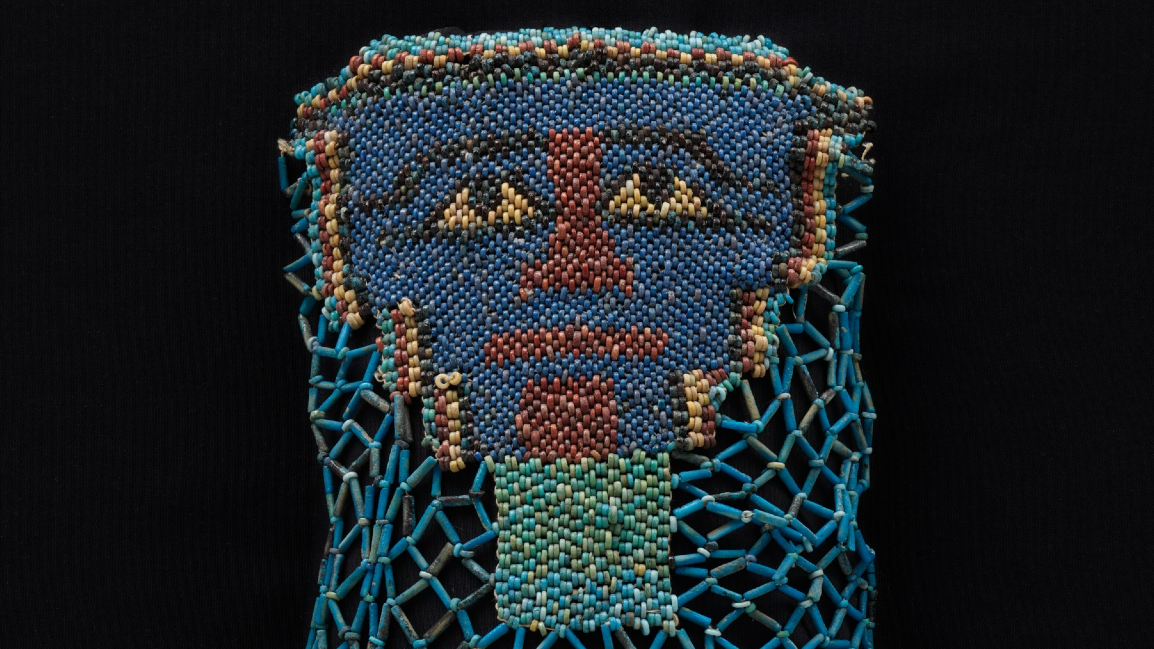
Archaeologists have discovered a 2,500-year-old beaded funerary shroud from Egypt that showcases the deceased's spiritual transformation into Osiris, the god of the afterlife. The shroud, crafted from thousands of multicolored beads, depicts a human face alongside a large scarab beetle, symbolizing rebirth and resurrection in ancient Egyptian religious beliefs.
The artifact represents a sophisticated understanding of Egyptian funerary practices and symbolism during the Late Period. Artisans wove the beads with precision to create intricate imagery that served a spiritual purpose beyond decoration. The scarab beetle held particular significance in Egyptian mythology, representing the sun god Ra's daily journey through the underworld and the cycle of death and rebirth.
The construction of such an elaborate beaded veil required enormous skill and labor. Each bead would have been individually placed and secured, suggesting this was a high-status burial garment made for someone of considerable wealth or social standing. The multicolored composition allowed artisans to achieve detailed facial features and the sculptural form of the beetle.
In ancient Egyptian funerary tradition, such wrappings and decorative shrouds served dual functions. They protected the physical remains while also facilitating the deceased's metaphysical journey through the afterlife. The imagery of Osiris transformation was believed to magically enable the deceased to achieve immortality and join the divine realm.
The discovery adds to scholarly understanding of Late Period Egyptian burial practices and the evolution of funerary art over centuries. It demonstrates that even as Egyptian civilization faced external pressures and political changes during this era, religious and artistic traditions remained deeply valued and executed with remarkable technical sophistication. The preservation of such delicate beadwork provides rare insight into both the material culture and spiritual beliefs of ancient Egypt.