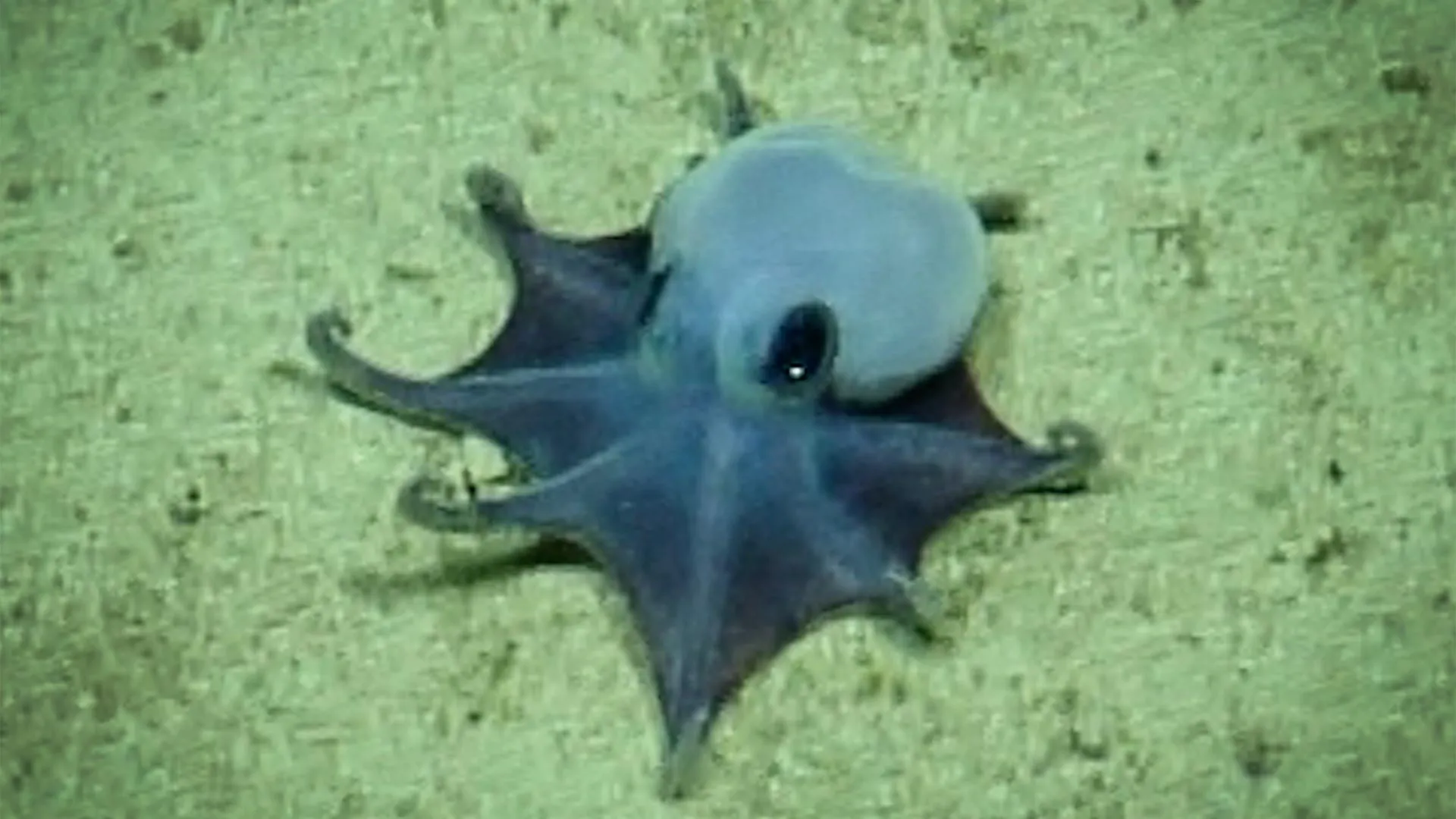
Researchers exploring the deep ocean near the Galápagos Islands have documented a previously unknown octopus species living nearly 6,000 feet below the surface. The tiny creature, roughly the size of a golf ball, caught scientists off guard when it appeared on camera during a deep-sea expedition, crawling across the seafloor near an underwater mountain.
The octopus displays striking blue coloration, distinguishing it from known species in the region. Its small size and deep-water habitat suggest the animal occupies an ecological niche separate from shallow-water octopus populations studied for decades. The discovery underscores how much remains unknown about the ocean's bathypelagic zone, where extreme pressure, cold temperatures, and darkness create conditions hostile to most life forms.
Deep-sea expeditions around the Galápagos continue to reveal unexpected biodiversity. The archipelago's unique geology, including volcanic underwater peaks and hydrothermal vent systems, creates microhabitats that support specialized organisms. This octopus joins hundreds of species documented in recent years from the region's abyssal zones, many found nowhere else on Earth.
The identification process involved analyzing the specimen's morphological characteristics, including arm structure, sucker patterns, and color distribution. These traits distinguish it from the approximately 300 known octopus species worldwide. Genetic analysis likely confirmed its status as a distinct lineage separate from related deep-sea octopuses.
The find highlights the value of continued ocean exploration using remotely operated vehicles and submersibles. As technology improves and expeditions expand into poorly surveyed regions, scientists expect to document thousands more unknown marine species. This Galápagos octopus represents a reminder that even well-studied ecosystems harbor undiscovered inhabitants.