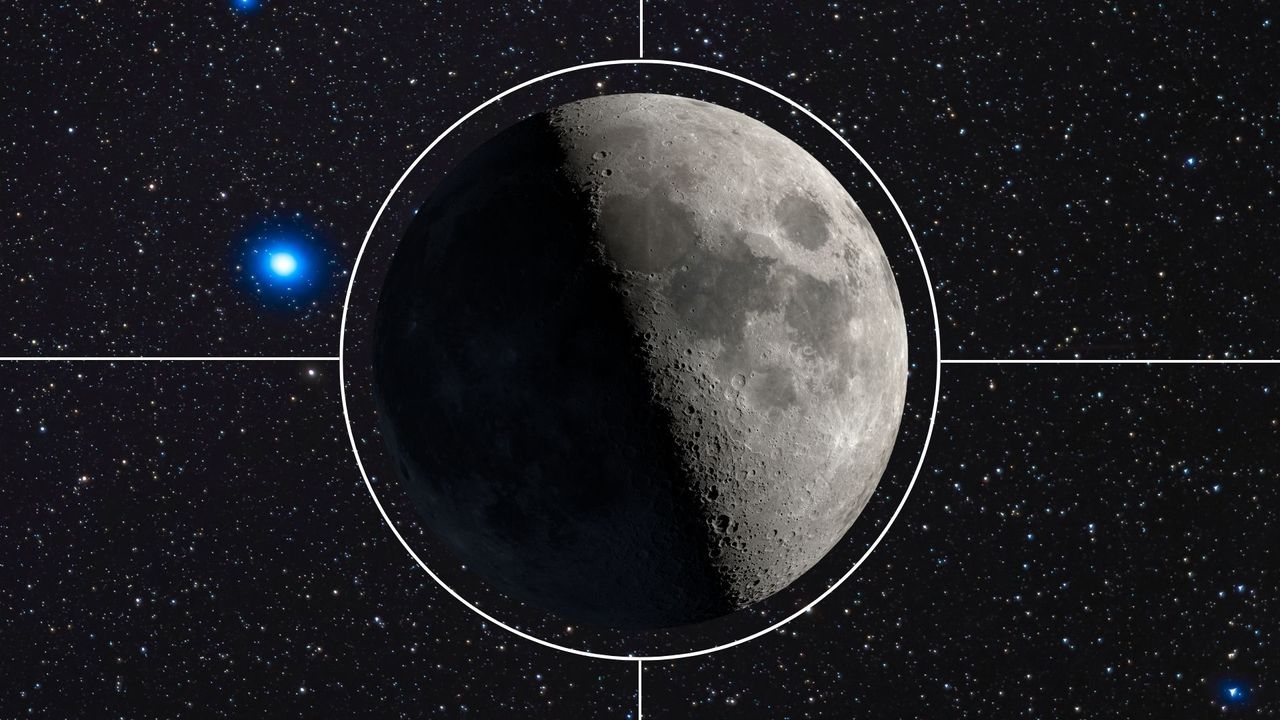
The moon will occult Regulus, the brightest star in the constellation Leo, on May 23, when the lunar disk passes directly in front of the star and blocks its light from Earth. This astronomical event occurs because the moon's orbit occasionally carries it across the paths of bright stars and planets from our perspective.
Visibility depends entirely on geographic location. Observers in parts of North America, northwestern Africa, and Europe will see the occultation, while those outside these zones cannot. The timing and duration of the event vary by precise location within the visibility zone, with observers in different cities witnessing the star disappear and reappear at different moments.
Occultations happen regularly but remain noteworthy for amateur astronomers. Regulus, with a magnitude of 1.36, ranks among the brightest stars visible from Earth. The event offers a practical observation opportunity for skywatchers with telescopes or binoculars, though viewing depends on clear skies and favorable weather conditions.
The moon's path across the celestial sphere, called the ecliptic, naturally intersects with positions occupied by bright stars. Regulus sits close to this path, making lunar occultations of this star a recurring phenomenon. Previous occultations occurred in 2023 and will happen again in coming years as the orbital mechanics continue their cycles.
Observers in the visibility zone should prepare equipment in advance and determine the exact time the occultation occurs at their location using astronomical software or online calculators. Binoculars provide sufficient magnification for most viewers, though telescopes offer enhanced views of the star disappearing behind the moon's edge and emerging from the opposite side.
Cloud cover and moonlight conditions will affect visibility. The moon reaches a gibbous phase on May 23, meaning some illumination will be present. Contrast between the bright lunar disk and the star environment may impact viewing ease, but