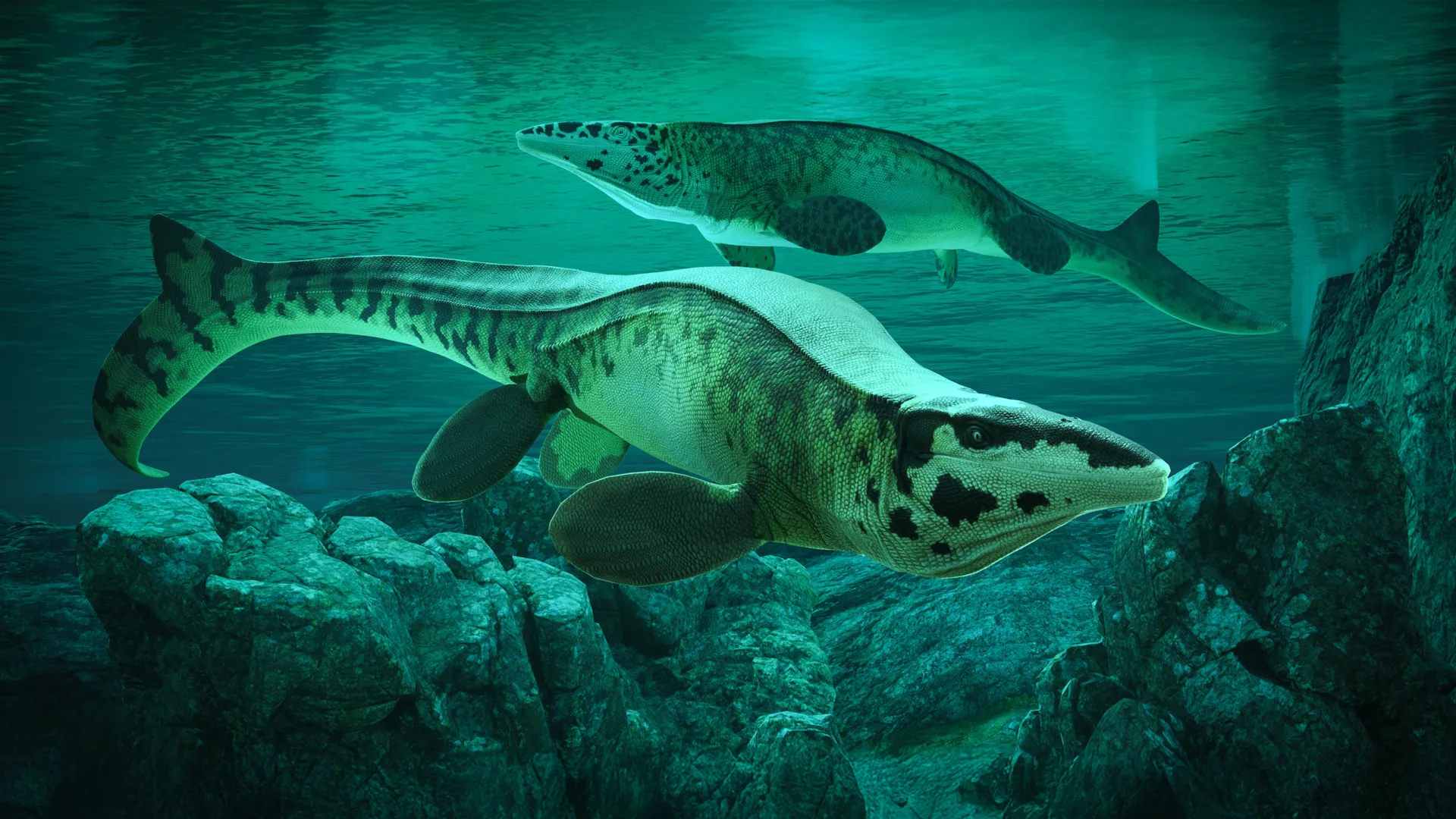
Paleontologists have identified a colossal new mosasaur species called Tylosaurus rex from fossils discovered in Texas. The creature measured 43 feet long and hunted ancient oceans approximately 80 million years ago during the Late Cretaceous period.
The discovery fundamentally alters scientific understanding of mosasaur evolution. Tylosaurus rex ranks among the largest mosasaurs ever documented, challenging previous assumptions about how these apex marine predators developed and diversified.
Mosasaurs dominated Cretaceous seas as voracious carnivores, with teeth designed for gripping struggling prey. Their elongated bodies, powerful tails, and efficient swimming mechanics made them formidable hunters capable of consuming creatures nearly their own size. The Texas specimen demonstrates that mosasaur lineages achieved enormous proportions more rapidly than researchers previously thought possible.
The identification process involved careful analysis of skeletal features distinguishing Tylosaurus rex from related species. Specific cranial characteristics and vertebral proportions provided the key evidence for naming this distinct species. The naming convention references the famous Tyrannosaurus rex, acknowledging this mosasaur's comparable ecological dominance in marine environments.
Finding this specimen in Texas deposits expands knowledge of Late Cretaceous marine ecosystems along the Western Interior Seaway, a vast inland sea that covered much of North America during the Mesozoic era. The preservation quality of fossils from this region provides researchers with detailed anatomical information often unavailable from incomplete remains.
This discovery carries implications beyond simple species cataloging. Understanding how quickly mosasaurs achieved such massive sizes informs broader questions about predator-prey dynamics in ancient oceans, metabolic rates of marine reptiles, and environmental pressures that drove evolutionary gigantism. The identification of Tylosaurus rex suggests that paleontologists may continue finding previously unknown meg