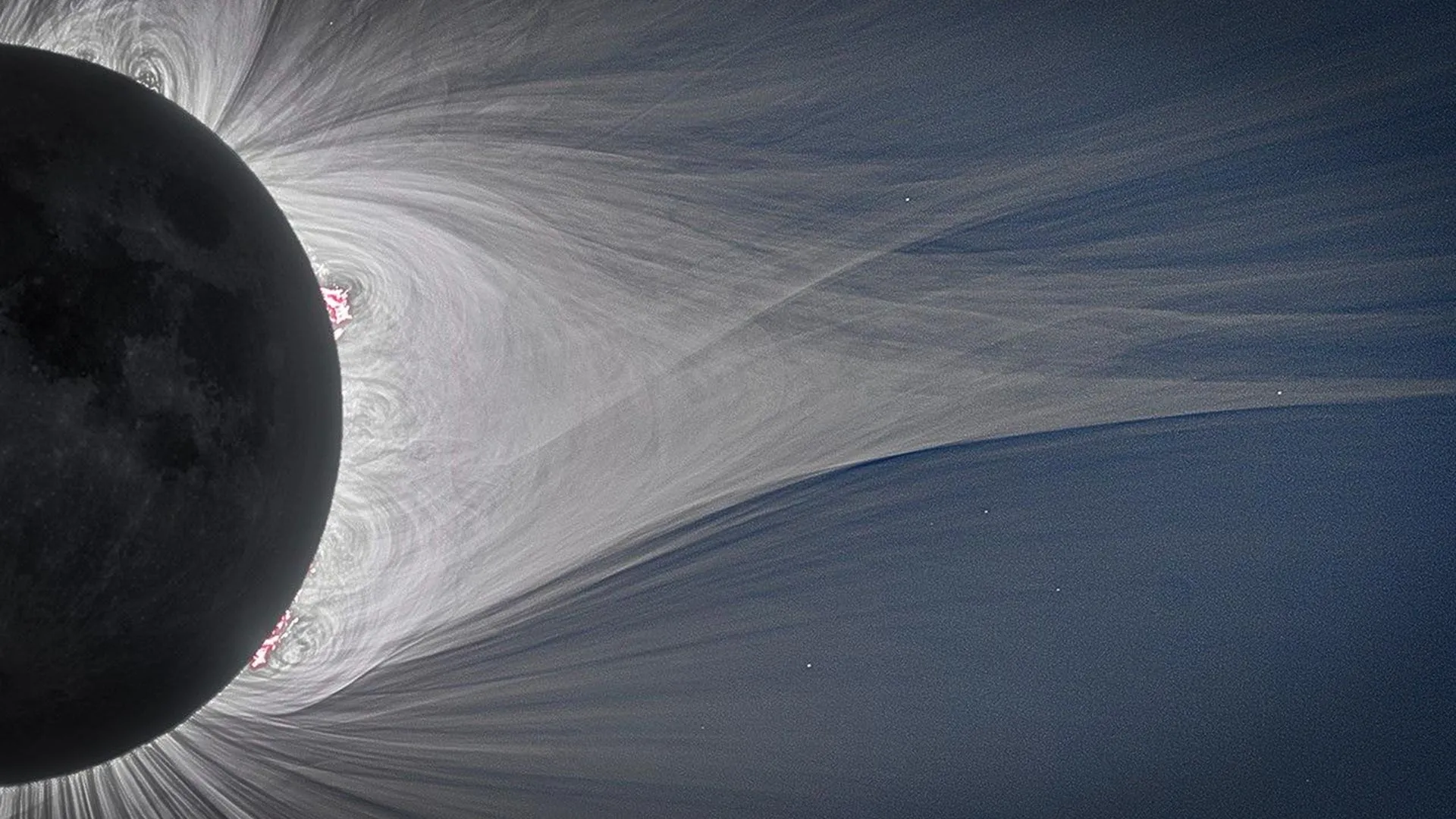
NASA researchers detected an extraordinary solar radio burst that persisted for 19 consecutive days, far exceeding typical durations of hours or days and breaking the previous longevity record. A network of spacecraft positioned throughout the solar system enabled scientists to trace the signal's origin to a helmet streamer, a large magnetic structure on the Sun's surface.
Helmet streamers form where magnetic field lines arch above the solar surface, creating towering structures visible during solar eclipses. These formations typically release energy through coronal mass ejections and solar flares, which generate radio emissions lasting brief periods. The extended duration of this burst challenges existing models of how solar magnetic systems dissipate energy.
The detection represents a rare observational window into solar phenomena. Multiple spacecraft collecting simultaneous data from different vantage points allowed researchers to pinpoint the signal's source with precision impossible from ground-based observations alone. This multi-point measurement strategy has become standard practice for investigating solar transients, where single-observatory data can introduce ambiguity about event characteristics and origins.
The 19-day persistence suggests either an unusually stable magnetic configuration sustaining continued particle acceleration, or a series of successive energy releases from the helmet streamer rather than a single event. Understanding which mechanism operated requires detailed analysis of the radio signal's frequency structure and temporal variations. Such prolonged activity could indicate that helmet streamers maintain more complex, long-lived instabilities than previously recognized.
The findings add to growing recognition that solar radio bursts exhibit greater diversity than older classification systems captured. Recent advances in radio observation technology and satellite networking have revealed burst types and durations invisible to prior-generation instruments. The 19-day event joins other recently documented anomalies in expanding the observational landscape of solar physics.
Further analysis using data from NASA's fleet, including STEREO spacecraft and Parker Solar Probe, may reveal whether this burst represents a distinct new category of solar radio activity or an